The first time Jessi opened her eyes, I almost missed it.
I had been watching her for so long that I no longer trusted myself to recognize a change.
Every little movement made my heart jump.
Every sound from the medical equipment made me look toward the nurses.
And every time someone entered the room, I hoped they were bringing better news.
By then, I had lost track of how many hours I had spent at the hospital.
I remembered the night at Arthur's house clearly.
The rest had become a blur of chairs, hallways, water cups, and questions.
I had barely slept.
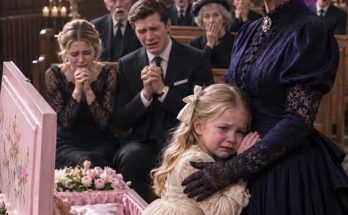
Whenever I closed my eyes, I saw that polished mahogany coffin.
I saw the white satin.
I saw the straps across Jessi's waist and legs.
And I heard her asking whether her punishment was finished.
The doctors had continued treating her.
They had explained that she needed careful monitoring.
Her breathing had been dangerously weak when she arrived.
Her fever was serious.
And her unusually low level of consciousness required continued investigation.
I listened to every explanation.
I asked questions when I did not understand.
For once, nobody told me I was interfering.
That alone almost made me cry.
One morning, a nurse came to find me.
She told me Jessi had shown more signs of responding to the people around her.
I stood immediately.
“Can I see her?”
The nurse explained that a short visit might be possible.
I thanked her.
Then I followed her toward Jessi's room.
My legs were stiff from sitting.
My hands still carried small marks from the coffin buckles.
I had stopped covering them.
They were part of what happened.
I no longer felt embarrassed when someone noticed.
Inside the room, Jessi lay beneath a light hospital blanket.
Her dark hair rested against the pillow.
Without the funeral makeup, she looked more like the little girl I remembered.
Still pale.
Still terribly thin.
But Jessi.
I moved beside the bed.
“Hello, sweetheart.”
I kept my voice soft.
I did not want to frighten her.
The nurse checked that everything was in order.
Then she allowed me to sit nearby.
I reached for Jessi's hand.
It was small and warm.
Not burning the way it had been when I found her.
I knew that did not mean she was well.
But I was grateful for the difference.
I held her fingers lightly.
“It's Grandma.”
Her eyelids moved.
I stopped breathing for a moment.
Then they moved again.
A narrow opening appeared beneath her lashes.
I leaned closer.
“Jessi?”
Her eyes shifted.
For a few seconds, she seemed unable to focus.
I did not ask her to.
I simply stayed beside her.
Then her gaze settled briefly on my face.
I felt my throat close.
She was looking at me.
Not at the ceiling.
Not at the medical equipment.
At me.
“Hello, baby.”
Her lips moved.
No sound came at first.
I watched her carefully.
Then I heard a faint whisper.
“Grandma?”
I nodded.
“Yes.”
I could barely speak.
“It's me.”
Her eyes closed again.
I waited.
Then they opened slightly.
I had imagined this moment so many times.
I thought I would tell her how frightened I had been.
I thought I would say how much I loved her.
I thought I would promise that everything would be different.
Instead, I sat there holding her hand.
Because she was looking at me.
And that was enough.
A nurse came closer.
She spoke gently to Jessi.
She explained where she was and that people were helping her.
I watched my granddaughter's face.
At first, she seemed confused.
Her eyes moved around the room.
She looked at the equipment.
Then at the blanket.
Then back at me.
I saw fear enter her expression.
It happened so quickly that I almost missed it.
Her fingers tightened slightly around mine.
“Jessi?”
Her lips trembled.
I leaned closer.
“What's wrong, sweetheart?”
She looked toward the door.
Then at me.
“Did I do bad?”
My heart felt as though someone had squeezed it.
I shook my head.
“No.”
Her eyes filled.
I had to fight to keep my own voice steady.
“You didn't do anything wrong.”
She looked uncertain.
I repeated it.
“Nothing, Jessi.”
Her fingers moved against mine.
She seemed to be searching my face.
I wanted her to believe me.
I wanted those words to reach whatever frightened place she had been living in for months.
But I understood that one reassuring sentence could not undo everything.
The nurse gently reminded me not to overwhelm her.
I nodded.
I knew Jessi needed rest.
I knew questions about what happened would need to be handled carefully.
I had no intention of making her relive anything for my benefit.
I touched her hand.
“You're in the hospital.”
She blinked.
“People are taking care of you.”
Her eyes moved toward the doorway again.
I noticed.
I wondered who she expected to see.
Then she whispered something.
I leaned closer.
“Daddy?”
The word hurt.
Not because she had asked for him.
Because I did not know whether she wanted him or feared him.
I could not decide that for her.
I did not want to put my own feelings into her mouth.
So I answered carefully.
“Daddy isn't in this room.”
She watched me.
I continued.
“Right now, you're with Grandma and the people helping you.”
Her hand relaxed slightly.
I did not know what that meant.
I only knew that she had not pulled away.
The nurse checked on her again.
Jessi was becoming tired.
I could see it.
Her eyes were struggling to remain open.
I leaned close.
“You can rest, baby.”
She looked at me.
“You don't have to talk.”
Her lips moved.
I waited.
“Not punished?”
I closed my eyes for one brief second.
Then I looked at her.
“No.”
I spoke slowly.
“You are not being punished.”
She seemed to study my face.
I wanted to reach into her mind and take away every frightening thing someone had told her.
I wanted to erase the coffin.
The straps.
The loneliness.
But I could only sit beside her and tell the truth.
“You're sick, sweetheart. People are helping you get better.”
Her eyes drifted closed.
I kept holding her hand until the nurse told me it was time to let her rest.
I released her fingers gently.
For a moment, I was afraid to move.
I had waited so long to hear her voice.
I did not want the moment to end.
But I remembered what I had promised myself.
Jessi would not be responsible for comforting me.
I stood.
I looked at her face one last time.
“I'm proud of you.”
I paused.
“Not because you stayed quiet.”
My voice trembled.
“Because you're here.”
Then I stepped away.
Outside the room, I had to sit down.
My knees were shaking.
A nurse asked whether I was all right.
I nodded.
Then I started crying.
I had cried beside the coffin.
I had cried in the ambulance driveway.
I had cried when Arthur admitted he knew Jessi was alive.
But these tears were different.
Jessi had looked at me.
She had recognized me.
She had spoken.
And the first thing she wanted to know was whether she had done something wrong.
I covered my face.
For six years, I had loved that child.
I had bought her presents.
Held her when she was tired.
Listened to her stories.
Celebrated every little achievement.
Yet somehow, while I was being kept outside her bedroom, she had learned to fear punishment so deeply that she carried it into a hospital bed.
That was the part I could not forgive myself for missing.
A hospital staff member sat nearby.
She did not ask me to stop crying.
I appreciated that.
After a while, I told her what Jessi had said.
I repeated the words carefully.
The question about doing something wrong.
The question about punishment.
The mention of her father.
I made it clear that Jessi had been weak and confused.
I did not claim that every word proved something about Arthur.
I simply wanted the staff to know.
The woman documented what I had observed.
She explained that Jessi's safety and emotional condition were important parts of her care.
I nodded.
I had expected that.
Still, hearing it helped.
I asked whether I should question Jessi about the coffin.
She advised me not to press her for details and explained that the appropriate professionals could speak with her when she was medically ready.
I agreed.
That was important.
I had spent months wishing Jessi could explain what was happening.
Now she might eventually be able to.
But she was still six.
Still ill.
Still recovering.
I would not turn her into someone responsible for solving an adult mystery.
I wanted her to be a child again.
Even if the adults around her had forgotten what that meant.
When I returned to the waiting area, Arthur was there.
He stood when he saw me.
“Did you see her?”
I nodded.
He looked desperate.
“Was she awake?”
“For a little while.”
His eyes filled.
“Did she talk?”
I looked at him carefully.
“Yes.”
He swallowed.
“What did she say?”
I remembered the way Jessi had looked toward the doorway.
I remembered her question about punishment.
I remembered how weak her voice had been.
I was not going to let Arthur question her through me.
“She recognized me.”
He nodded quickly.
“That's good.”
“Yes.”
I sat down.
Arthur remained standing.
“Did she ask about us?”
I looked at him.
“Arthur, she's exhausted.”
He lowered his eyes.
“She needs rest.”
He sat down slowly.
For a while, neither of us spoke.
Then he asked whether he could see her.
I told him that the hospital team was deciding how visits would be handled.
He looked wounded.
I could see it.
I also knew that his feelings could not be the deciding factor.
“You need to speak with the staff,” I said.
He rubbed his forehead.
“I have.”
“Then follow their instructions.”
He looked at me.
“She's my daughter.”
I nodded.
“Yes.”
The words seemed to surprise him.
I continued.
“And she needs to feel safe.”
He looked away.
I watched him struggle with that.
For most of Jessi's life, being her father had given Arthur authority.
He decided where she lived.
What school she attended.
Who cared for her.
Which doctors she saw.
He had treated that authority as something no one else could question.
Now other people were asking whether he had used it properly.
I could see how difficult he found that.
But Jessi's safety mattered more than his discomfort.
Arthur finally spoke.
“Mom, do you think she hates me?”
I looked at him.
It was another question I could not answer.
“She just woke up.”
He nodded.
“She doesn't need to decide how she feels about anyone right now.”
He stared at the floor.
I continued.
“She needs to get better.”
My voice softened slightly.
“And if you love her, you need to let that be enough for now.”
Arthur wiped his eyes.
I looked away.
I could not comfort him.
Not the way I once would have.
There were things he needed to face that no amount of motherly reassurance could make disappear.
Later, someone involved in Jessi's care spoke with me about the questions still being examined.
The medical team was reviewing her condition.
The circumstances at Arthur's house were being investigated.
The restraints and key had been reported.
And the accounts given by the adults involved would need to be checked.
I listened closely.
I asked whether Jessi would have to return to the house immediately.
I was told that her medical and safety needs would be considered before any discharge arrangements were made.
I felt relief.
Not because I wanted to take Jessi away from everyone she knew.
But because I could not bear the thought of her being returned to the same rooms without anyone understanding what had happened there.
I remembered the bedroom door Patricia had kept closed.
The wheelchair.
The sunken living room.
The coffin surrounded by flowers.
I did not want Jessi waking up in that house and wondering whether another punishment was coming.
I looked down at my hands.
The small cuts were healing.
They would probably disappear soon.
But I knew I would keep remembering them.
I had used those hands to free my granddaughter.
Now I needed to use my voice to protect her.
That required something different.
Patience.
Honesty.
The willingness to let professionals do their work.
And the courage to hear things about my family that I might not want to know.
I had once thought courage meant standing up during an argument.
Now I understood that sometimes it meant sitting quietly while the truth became clearer.
Not interrupting.
Not inventing excuses.
Not demanding that everything be settled before the facts were known.
I returned to Jessi's room when another short visit was permitted.
She was resting.
Her eyes were closed.
I did not try to wake her.
I sat beside the bed.
The room was quiet except for the sounds of her care.
I watched her breathe.
That simple movement still felt extraordinary.
I thought about the first time I had seen it beneath the white lace.
So small.
Almost invisible.
I had nearly convinced myself I was imagining it.
Now there were trained people watching her condition.
People who could respond if something changed.
I was grateful for every one of them.
I touched the edge of her blanket.
“Hello, sweetheart.”
She did not move.
That was all right.
I looked at her face.
There was no need to ask questions.
No need to fill the silence.
I could simply be there.
After a while, I spoke again.
“You don't have to be brave for me.”
I paused.
“You don't have to tell me anything you're not ready to say.”
My throat tightened.
“I just want you to get better.”
I sat for a few more minutes.
Then I stood.
Before leaving, I looked at her one last time.
She was still a very sick little girl.
There would be difficult days ahead.
There might be things she remembered that none of us wanted to hear.
There might be questions we could never answer completely.
But she had opened her eyes.
She had recognized me.
And someone had finally told her she was not being punished.
I walked out of the room knowing that this was not the end of her recovery.
It was the beginning of learning how to make her feel safe.
Click here to continue reading: PART 14: As the Investigation Continued, My Son Had to Face the Decisions He Made While Jessi Was Too Weak to Protect Herself
I Stayed Behind After Everyone Went Upstairs Because Something About My Granddaughter’s Funeral Had Been Troubling Me for Months
Part 13 of 15