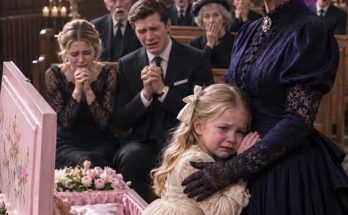
I used to think the worst day of my life would be the day I buried Jessi.
I was wrong.
The worst day was the day I discovered how close I had come to letting it happen.
And the most important day was the one when my granddaughter finally began to believe she was safe.
Those two days changed everything.
Not all at once.
Not in the way people sometimes imagine after something terrible happens.
There was no single conversation that repaired our family.
No apology that made the fear disappear.
No morning when Jessi woke up completely well and forgot what had happened.
Recovery was slower than that.
Much slower.
The doctors continued caring for her.
They watched her breathing.
They monitored her strength.
They worked to understand the illness and the condition in which she had been found.
There were good days.
There were difficult days.
Some mornings, Jessi seemed more alert.
Other times, she was exhausted before she had finished a short conversation.
I learned not to rush her.
I learned that improvement could be small.
A little more energy.
A longer period with her eyes open.
A few words spoken without as much effort.
Those things became precious to me.
I stopped measuring my days by the clock.
I measured them by Jessi.
One afternoon, I was allowed to sit beside her while she rested.
She looked at me and asked for water.
It was such an ordinary request.
I nearly cried.
For months, I had watched other people decide what she needed.
Now she was telling someone herself.
I helped her as the nurse instructed.
Then I sat beside her again.
She looked toward the window.
The light was soft.
Her hair lay loosely against the pillow.
She looked tired.
But there was more life in her face.
I remembered the child who used to run into my arms.
For the first time, I allowed myself to hope I might see that child again.
Not exactly as she had been.
I knew too much had happened.
But perhaps she would laugh again.
Perhaps she would feel comfortable asking for things.
Perhaps she would stop watching every doorway as though someone might arrive to punish her.
I wanted those things more than anything Arthur could have bought.
More than the mansion.
More than his success.
More than every beautiful object in that terrible house.
I looked at Jessi.
“Would you like me to stay a little longer?”
She nodded.
I smiled.
“Then I will.”
It felt good to ask her.
I had spent months being told what she supposedly wanted.
Now I wanted to hear it from her whenever she was able to say.
The questions about what happened at Arthur's house did not disappear while Jessi recovered.
The investigation continued.
The hospital records were reviewed.
The circumstances surrounding her supposed death were examined.
Arthur and Patricia were questioned about the care they had provided and the decisions that led to the funeral.
The coffin and restraints were no longer simply awful memories I carried.
They were matters that needed explaining.
So was the silver key.
I had sometimes wondered whether anyone would believe the whole story.
It sounded impossible.
A child declared dead.
A funeral arranged inside a mansion.
A grandmother opening the coffin late at night.
A living little girl restrained beneath white satin.
Even when I repeated it, the facts seemed unreal.
But I had not imagined them.
The restraints had been there.
The key had opened them.
And Jessi had been taken from that house alive.
Those facts could not be changed by an expensive lawyer, a tearful apology, or another carefully worded explanation.
As the medical evaluation progressed, it became clear that the story we had been given about Jessi's illness could not simply be accepted as complete.
The doctors were concerned about her weakened condition and altered responsiveness.
The question of what she had received during the months before her supposed death required careful examination.
I was not given every medical detail.
Nor did I pretend to understand all of them.
But I learned enough to know that the circumstances of Jessi's decline needed far more scrutiny than Arthur and Patricia had ever allowed.
The explanations I had heard for eight months were not answers.
They were claims.
And claims needed evidence.
That distinction changed the way I thought about everything.
For so long, I had trusted Arthur because he was my son.
I had trusted Patricia because she was Jessi's mother.
I had assumed that people who loved a child would always do what was necessary to keep her safe.
I no longer believed that love, by itself, guaranteed good decisions.
A parent could be frightened.
A parent could be controlling.
A parent could be more concerned with consequences than with a child's needs.
And a parent could fail so badly that other people had to intervene.
It was painful to admit that about my own family.
But the truth did not become less true because it embarrassed me.
Arthur eventually stopped asking me to protect him.
That change did not happen immediately.
At first, he kept trying to explain how overwhelmed he had been.
How much Patricia controlled Jessi's care.
How frightened he was of everything falling apart.
I listened when it was necessary.
But I no longer reassured him.
I kept returning to the same question.
“What did Jessi need from you?”
He had difficulty answering.
I could see that.
I wondered whether he had spent so long thinking about his marriage and reputation that he had lost sight of his daughter's needs.
Eventually, he admitted that his fear had influenced his decisions.
He acknowledged that he had not stopped what happened at the coffin.
He acknowledged that he had known Jessi was alive.
And he acknowledged that he had failed to get her the help she needed.
Those admissions mattered.
They did not erase his responsibility.
But they meant he was no longer asking me to pretend he had done nothing wrong.
Patricia's role remained a matter of serious concern.
I had watched her control access to Jessi.
I had heard her describe my granddaughter as difficult to manage.
I had seen her anger when I called emergency services.
And I remembered her words about Arthur expecting Jessi not to wake up.
The investigation had to consider those things alongside the medical evidence and the accounts of everyone involved.
I did not decide which facts proved every accusation.
That was not my responsibility.
I had learned the danger of accepting a story simply because I wanted it to be true.
I would not make the opposite mistake by inventing certainty out of anger.
What I knew was terrible enough.
Jessi had been placed inside a coffin while alive.
She had been restrained.
Her parents knew more about the circumstances than they originally admitted.
And she had been frightened into believing she was being punished.
I did not need to embellish any of that.
As the questions continued, the arrangements for Jessi's care became one of the most important matters in my life.
I made it clear that I wanted to help.
I was her grandmother.
I knew her.
I loved her.
And I had been the person who found her.
But I also understood that love did not automatically make me entitled to decide everything.
Her medical needs mattered.
Her safety mattered.
Her wishes mattered as she became well enough to express them.
I cooperated with the people responsible for assessing those things.
I answered questions about my home.
About my ability to care for her.
About whether I understood the support she might need.
I did not pretend that caring for Jessi would be simple.
She had been seriously ill.
She had experienced something frightening.
She would need time.
She might need support from doctors and other professionals long after leaving the hospital.
I knew that.
I was willing to accept help.
I had learned what happened when adults decided they did not need anyone questioning their choices.
I was not going to repeat that mistake.
Eventually, arrangements were made for Jessi to remain in a safe environment while the concerns about her parents were addressed.
I was able to take a central role in caring for her, with the necessary oversight and support.
I did not treat that as a victory over Arthur or Patricia.
It was not a prize.
It was a responsibility.
And I took it seriously.
When I was told Jessi would not be returned immediately to the circumstances from which she had been taken, I felt an enormous sense of relief.
I thanked the people involved.
Then I went somewhere quiet and cried.
I had been holding that fear inside me since the night of the funeral.
The fear that someone would send her back.
That another adult would close a door.
That her frightened words would be dismissed.
That I would be told once again to respect her parents and stop interfering.
Now those concerns were being taken seriously.
The relief was almost painful.
But it did not mean the story was finished.
There were still medical appointments.
Still questions.
Still difficult conversations.
And there was still Jessi herself.
She was not a problem to be solved.
She was a little girl who needed to feel safe.
I thought about that every time I visited her.
One afternoon, while she was becoming stronger, she asked me a question I had been afraid to hear.
“Grandma, was I dead?”
I looked at her.
She was sitting up with support.
Her hair had fallen across one cheek.
I moved it gently aside.
“No, sweetheart.”
She watched me.
“You were very sick.”
She looked down at her hands.
“I was in the box.”
My throat tightened.
“Yes.”
She was quiet for a moment.
Then she looked at me.
“You opened it.”
I nodded.
“I did.”
She studied my face.
I could see how carefully she was thinking.
“Why?”
The question almost broke me.
Why had I opened it?
Because I could not bear to leave.
Because I wanted to say goodbye.
Because I had spent months worrying that something was wrong.
Because I loved her.
I chose the simplest answer.
“I wanted to see you one more time.”
She looked down.
Then back at me.
“You found me.”
I smiled through my tears.
“Yes, baby.”
Her fingers moved toward mine.
I took her hand.
For several seconds, she was quiet.
Then she whispered, “I thought I had to stay there.”
I felt my chest ache.
I remembered her asking whether her punishment was finished.
I remembered her fear of waking up.
I looked at her carefully.
“You never deserved to be there.”
She watched me.
“Not for anything.”
Her eyes filled.
I did not rush to ask more questions.
I did not demand to know who told her what.
Those matters were being handled carefully.
This moment belonged to Jessi.
She needed to hear that she had not earned what happened.
I held her hand.
“You can tell someone when you're scared.”
She nodded slightly.
“And you can ask for help.”
She looked at me.
“Even if somebody says quiet?”
I swallowed.
“Even then.”
Her face changed.
It was not a dramatic expression.
Just a small release of tension.
A little less fear around her eyes.
I knew one conversation would not repair everything.
But perhaps it could become one of the memories she carried forward.
A grandmother sitting beside her.
Listening.
Believing her.
Telling her she had the right to ask for help.
That was the kind of memory I wanted to give her.
Not another expensive gift.
Not another promise I could not keep.
Something real.
As time passed, Jessi became well enough for more ordinary moments.
They were small at first.
A question about what day it was.
A request for something to drink.
A little conversation that did not immediately exhaust her.
Sometimes she asked me to sit beside her without talking.
I did.
Sometimes she wanted to hold my hand.
I let her.
Sometimes she was frightened for reasons she could not explain.
I did not tell her she was being silly.
I did not insist that she had nothing to fear.
I listened.
Then I helped her get the support she needed.
There were days when I felt helpless.
Days when I wanted to fix everything immediately.
But I remembered the mistakes I had made before.
I had wanted to believe the situation was under control.
Now I understood that caring for someone meant paying attention even when the answers were uncertain.
I began to see changes in Jessi.
Not the kind that erased the past.
But the kind that gave me hope.
She started expressing preferences more freely.
She told me when she was tired.
She said when she wanted a visit to end.
And one day, she told me she did not like the smell of lilies.
I went very still.
I had not expected those words.
I looked at her.
“That's all right.”
She watched me.
“We don't have to have them around.”
She nodded.
I did not ask why.
I understood enough.
The scent had followed me through the worst night of my life.
I could only imagine what it might mean to her.
After that, I avoided lilies whenever I could.
It was such a small thing.
But it mattered.
Jessi deserved to have her preferences respected.
Even the simple ones.
Especially the simple ones.
I thought about the funeral arrangements.
The expensive flowers.
The velvet-draped platform.
The shining coffin.
All of it had been prepared by adults.
All of it had been presented as something honorable.
And none of it had reflected what Jessi needed.
What she needed was care.
Safety.
A chance to speak.
People willing to listen.
I wished I had understood that before the funeral.
But I could understand it now.
Arthur's relationship with me changed permanently.
I still loved him.
I do not know how to stop being his mother.
But I no longer confused loving him with defending him.
He had to answer for what he had done.
The investigation and the decisions made to protect Jessi had consequences for him and Patricia.
They could not simply return to ordinary life and pretend the funeral had been a tragic misunderstanding.
Their actions were examined.
Their explanations were challenged.
And decisions about their access to Jessi had to be made around her safety rather than their wishes.
I did not ask for special treatment because Arthur was my son.
I did not try to make the situation disappear quietly.
I had already spent too many months worrying about family peace.
I finally understood that peace built on a child's silence was not peace.
It was fear.
And I would not help preserve it again.
There were times when Arthur called me.
Sometimes he wanted to know how Jessi was doing.
Sometimes he wanted to apologize.
Sometimes he sounded like a man who had finally begun to understand what he had lost.
I answered when it was appropriate.
I gave information only when I was permitted to share it.
And I did not allow him to use our conversations to pressure me.
One day, he said something that stayed with me.
“Mom, I thought I was protecting my family.”
I was quiet for a moment.
Then I answered.
“You forgot that Jessi was your family.”
He began crying.
I did not take the words back.
They were true.
I had spent years believing that family meant staying loyal.
Now I understood that loyalty sometimes required refusing to participate in someone's wrongdoing.
Sometimes the most loving thing a mother could do was stop protecting her grown child from the consequences of his choices.
It was not easy.
I doubt it ever would be.
But I could look at Jessi and know why it mattered.
One afternoon, after she had made more progress in her recovery, Jessi sat beside me with her hand resting in mine.
The light was coming through the window.
Her hair was loose around her shoulders.
She looked tired but peaceful.
For a while, we said nothing.
Then she leaned toward me.
“Grandma?”
“Yes, sweetheart?”
“Will you stay?”
I looked at her.
There was no anger in her face.
No accusation.
Just a little girl asking a question she should never have needed to ask.
I put my arm gently around her.
“Yes.”
She looked up.
“Even if I'm not good?”
I felt tears fill my eyes.
I remembered the coffin.
Her tiny voice.
The words about punishment.
I held her hand more firmly.
“You don't have to earn my love by being good.”
She watched me.
“You don't have to stay quiet.”
I paused.
“And you never have to be perfect.”
Her eyes filled.
I brushed her hair away from her face.
“I love you because you're Jessi.”
She leaned against me.
For a long time, neither of us spoke.
I listened to her breathing.
It was an ordinary sound.
A child resting beside someone she trusted.
I had once thought I would never hear it again.
I looked down at her.
Her eyes were closed.
Not because someone had forced her to remain still.
Not because she was hidden in a coffin.
She was simply resting.
And when she opened her eyes again, she would not be punished for it.
That was the difference.
That was what I wanted her to learn.
I thought about the night I had stood beside Arthur's front door.
My handbag in one hand.
My wool shawl in the other.
I had been ready to leave.
I had almost accepted that there was nothing more I could do.
Then I turned around.
I walked back into the living room.
I lifted the coffin lid.
And I found my granddaughter alive.
For a long time afterward, I blamed myself for the months before that moment.
I still regret them.
I regret every visit I cut short because Patricia told me Jessi needed rest.
I regret apologizing when Arthur rejected my request for another medical opinion.
I regret all the times I told myself I should not interfere.
Those regrets will remain with me.
But I have learned something from them.
I cannot protect Jessi by spending the rest of my life hating myself.
I can protect her by listening now.
By asking questions.
By respecting what she tells me.
By making sure she knows that adults are responsible for keeping children safe, not the other way around.
And by refusing to stay quiet when something is wrong.
I looked at my granddaughter resting against me.
For six years, I had loved her.
For eight months, I had watched her fade without understanding why.
For one terrible night, I had believed she was dead.
Now I could hold her hand.
I could hear her voice.
I could watch her begin to find comfort in ordinary things again.
That did not make what happened acceptable.
It did not erase Arthur's choices.
It did not excuse Patricia's actions.
And it did not mean Jessi would never struggle with what she remembered.
But it meant there was still a future.
A future she had almost been denied.
I gently moved a loose strand of hair away from her cheek.
She stirred.
Then opened her eyes.
For one instant, I remembered the funeral.
The white satin.
The heavy makeup.
The faint movement beneath the lace.
I remembered how frightened I had been when her eyelashes first fluttered inside that coffin.
Then Jessi looked at me.
“Grandma?”
I smiled.
“Yes, baby.”
She smiled faintly in return.
Nothing terrible happened.
Nobody told her to close her eyes.
Nobody asked her to stay quiet.
Nobody said she would ruin anything by waking up.
I held her hand.
And I finally understood what I had wanted to tell her that night.
I had gone to the coffin to say goodbye.
Instead, I had been given another chance to love her properly.
Not by trusting every adult who claimed to know what was best.
Not by protecting the appearance of a happy family.
But by seeing her.
Hearing her.
Believing her.
And staying beside her when she needed me.
Jessi rested her head against my arm.
I listened to her breathe.
Then I whispered the words I wished I had said months earlier.
“You can always tell me the truth, sweetheart.”
She looked up.
I touched her hair.
“Even when it's hard.”
She nodded.
Then she settled against me again.
Outside, the day continued.
People went to work.
Children played.
Cars passed along the street.
The world had not stopped because our family had changed.
And for the first time, I was grateful for that.
Jessi had a life waiting for her.
Not the life her parents had tried to arrange behind closed doors.
Her own life.
One in which she could speak.
One in which she could be frightened and still ask for help.
One in which waking up was never something she had to fear.
I looked at her face.
Then I closed my eyes for a moment.
Not to say goodbye.
Not to mourn.
Only to feel the small, steady warmth of her hand in mine.
My granddaughter was alive.
And this time, I was listening.
The End
Read more original stories on readdramaus.
I Stayed Behind After Everyone Went Upstairs Because Something About My Granddaughter’s Funeral Had Been Troubling Me for Months
Part 15 of 15