The investigation had answered an important question.
Gregory Hale's relationship with Northstar Urban Services was not an innocent coincidence.
He had concealed a financial interest.
He had influenced the contractor selection process.
And the company had received inflated contracts.
Those conclusions were supported by the independent review.
I knew how serious they were.
But as I sat in Beaumont's boardroom, I also understood what the investigation could not answer.
It couldn't explain why my parents had spent twelve years treating me like a disappointment.
It couldn't tell me why Melissa had always needed to make my business sound small.
And it couldn't decide whether the conversations we had at Christmas would change anything between us.
Those questions belonged somewhere else.
I knew that.
I just hadn't expected them to follow me into the meeting.
I looked at Melissa.
She was listening quietly.
I remembered how different she had sounded when Arthur first arrived at my parents' house.
She had been pleased to introduce him.
He was her chairman.
She expected my parents to be impressed.
I had understood that.
Arthur was an important person in her professional life.
But she hadn't known he already knew me.
When he recognized me, her expression changed.
I remembered the confusion.
Then the disbelief.
Then the accusation.
She thought I had somehow arranged the moment to embarrass her.
That hurt.
Because the truth was so ordinary.
Arthur and I had been meeting about Harbor District.
Rowan Capital had been evaluating a possible investment.
I hadn't told my family because I had stopped discussing my business with them.
That was all.
I hadn't known Arthur would come for Christmas dessert.
I hadn't asked him to explain my company.
And I hadn't wanted a family celebration to become a discussion about Beaumont's financing difficulties.
Yet Melissa couldn't imagine that I had a professional life she knew nothing about.
I kept returning to that thought.
She knew me as her sister.
She knew I had left a corporate job.
She knew I bought a duplex twelve years earlier.
She knew I owned rental properties.
But she didn't know Rowan Capital.
Not really.
She hadn't asked about the portfolio.
She hadn't asked about the people I worked with.
She hadn't asked how we evaluated investments.
And she hadn't asked what I actually did during an ordinary working day.
Instead, she had built a story from the limited information she possessed.
Claire owned a few rentals.
Claire collected rent.
Claire had a little landlord business.
I had allowed that story to continue.
I knew that.
Every time she made a joke, I had usually smiled and changed the subject.
Every time Dad suggested a stable job, I had stopped explaining.
Every time Mom worried that I was pretending to be more successful than I was, I had kept my achievements to myself.
Eventually, silence became easier than another argument.
But silence had consequences.
My family never learned what I was building.
And I stopped expecting them to care.
I wasn't proud of that distance.
I had chosen it because I was tired.
I remembered calling Mom about the broken heating system in my first duplex.
I had been frightened.
The repair costs seemed overwhelming.
I didn't know whether I could afford everything the building needed.
I had been twenty-eight.
I had left a job that offered a reliable salary.
And suddenly I was responsible for an old property with a problem I couldn't postpone.
I wanted my mother to tell me I would work it out.
Instead, she reminded me that Dad had warned me against leaving my job.
I remembered feeling ashamed.
Not because I believed I had failed.
Because I had wanted reassurance and received another judgment.
For years afterward, that conversation remained between us.
Not because we discussed it.
Because we didn't.
Every time I faced a difficult decision, I remembered it.
Every time I considered telling my parents about a problem, I wondered whether they would use it as proof that my career was a mistake.
So I stopped telling them about the problems.
Then I stopped telling them about the successes.
It was easier that way.
At least, I thought it was.
By Christmas, the silence had lasted so long that my parents genuinely seemed surprised to discover what Rowan Capital had become.
Mom had asked why I hadn't told them.
Dad had asked the company's value.
Melissa had questioned whether Arthur understood who I was.
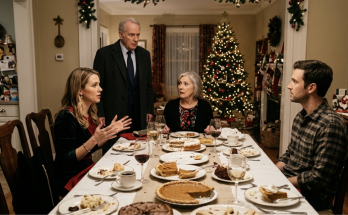
I could see the evening clearly.
The candles on the table.
The food cooling.
The dessert Mom had carried from the kitchen.
Arthur standing beside his gift bag.
My father holding his wineglass.
Those details had become fixed in my memory.
I wondered how differently the evening might have gone if I had continued sharing my work over the years.
But I couldn't know.
Maybe my family would have listened.
Maybe they would have dismissed each achievement until Arthur confirmed it.
Maybe nothing would have changed.
I had no way to answer that question.
I knew only what had happened.
I had tried telling them about my first property.
They had responded with warnings.
I had continued building the business.
They had continued assuming it was small.
And eventually, I had chosen not to explain.
That was our history.
I looked down at the financial documents.
It seemed strange to be thinking about family resentment while a major redevelopment investment remained undecided.
But the connection was difficult to ignore.
My parents had always associated security with a stable employer.
They had believed I was taking unnecessary risks by owning property.
They worried about loans.
Repairs.
Contractors.
Uncertain income.
Those concerns weren't unreasonable.
Property investment could be risky.
I knew that better than they did.
But they had treated risk as proof that the decision was wrong.
That was where they misunderstood me.
I had never believed leaving my corporate job made every future choice easy.
I knew there would be problems.
I knew some investments would require more work than expected.
I knew financing could be difficult.
And I knew I would make mistakes.
I simply believed the work was worth doing.
Twelve years later, I still believed that.
I thought about how much had changed since the first duplex.
Rowan Capital now owned and managed residential, commercial, and industrial properties.
We had a professional team.
Daniel worked as our chief financial officer.
We evaluated opportunities that required careful financial analysis.
And we were capable of considering a substantial investment in Harbor District.
None of that had happened overnight.
It had taken years.
It had required decisions my parents never saw.
But the growth didn't erase the difficult beginning.
I was still the woman who had slept on the floor of her first building.
I was still the woman who had worried about a heating repair.
I was still the daughter who wished her mother had listened.
Those things were part of me.
I didn't need to hide them.
I just didn't want them used as evidence that I was a failure.
I looked toward the auditors' documents.
The investigation had taught another lesson about appearances.
Gregory had held a senior position at Beaumont.
He had possessed the kind of title my parents admired.
He had been trusted with important decisions.
Yet the investigators found that he had concealed a financial interest and influenced contracts for personal benefit.
I didn't take pleasure in that comparison.
I didn't believe every corporate executive was dishonest.
I had spent years working with capable, trustworthy professionals.
Arthur and Daniel were examples of people I respected.
But Gregory's conduct showed why a title alone wasn't enough.
A person's authority didn't make their decisions responsible.
And a person's lack of a prestigious title didn't mean their work was insignificant.
I wished my family understood that.
I thought about Melissa's involvement.
She had relied on Gregory.
She had believed he had completed checks that should have been independently verified.
She had followed instructions to restrict certain discussions.
Those decisions had consequences.
But the investigation hadn't found evidence that she knew about Gregory's hidden arrangement.
That distinction mattered.
I wondered whether her experience would change how she thought about authority.
Perhaps she would become more careful.
Perhaps she would question instructions that didn't seem right.
Perhaps she would learn that confidence wasn't a substitute for documentation.
I hoped so.
But I couldn't claim that she had learned anything yet.
She hadn't told me.
The board hadn't made a final personnel decision.
And the meeting was still focused on the company's financial position.
I had to remain within what I actually knew.
I looked at Rowan Capital's proposal.
The conditions were clear.
We needed full transparency.
The construction liabilities had to be addressed.
The lender agreements required proper treatment.
And the company needed safeguards that responded to the failures revealed by the investigation.
Those were not unreasonable demands.
They were necessary.
I had explained that during my presentation.
I remembered how nervous I had been when I first started negotiating property deals.
I used to worry about asking too many questions.
I worried that lenders would think I was inexperienced.
I worried that contractors would become impatient.
I worried that experienced businesspeople would dismiss me.
Sometimes they did.
But I learned that questions were part of the work.
If a number didn't make sense, I needed an explanation.
If a contract contained an obligation I didn't understand, I needed clarity.
If someone refused to provide information, I needed to consider why.
Those lessons had protected me.
And they were the same lessons I was applying to Harbor District.
I wasn't being difficult.
I was doing my job.
I thought about Arthur's reaction when I raised concerns about the lender agreements at Christmas.
He hadn't dismissed them.
He had acknowledged that the issues needed more work.
That response helped me trust the process.
But it didn't remove the need for verification.
I couldn't base an investment solely on the chairman's willingness to cooperate.
The financial records had to support the decision.
And the board had to accept the safeguards.
I looked around the room.
The directors had heard our position.
They had heard the investigation findings.
They knew that Rowan Capital was not offering an unconditional commitment.
I had been clear.
I wasn't there to punish Beaumont for Gregory's misconduct.
Nor was I there to excuse the company's failures.
I was there to determine whether the project could be restructured on responsible terms.
That was the only basis on which I could proceed.
I thought again about Dad's question.
How much was my company worth?
At the time, I had refused to answer.
I knew he was my father.
I knew he was curious.
But I wanted him to understand that our relationship couldn't suddenly become a discussion about money simply because Arthur had praised Rowan Capital.
I wanted him to ask how I was doing.
I wanted him to understand the years he had dismissed.
And I wanted him to recognize that I didn't need his approval to continue building my life.
Those things mattered more than a valuation.
I wasn't sure whether he understood that.
Mom had cried.
Dad had admitted he was afraid I would fail.
Melissa had left before dessert.
We had spoken more honestly than we had in years.
But honesty at one dinner didn't guarantee change.
I knew that.
I wasn't going to pretend our family problems had been solved simply because they finally heard the truth about my business.
The same applied to Beaumont.
The investigation had revealed serious problems.
The board had heard them.
But hearing the truth was only the beginning of addressing it.
The company still had financial obligations.
It still needed proper controls.
And any restructuring still required responsible decisions.
I looked at the two sets of problems in my mind.
My family needed to stop relying on old assumptions.
Beaumont needed to address the failures exposed by the investigation.
Neither could accomplish that through words alone.
I couldn't make my family change.
I couldn't make Beaumont's board approve the safeguards.
And I couldn't decide Melissa's employment outcome.
But I could remain clear about my own responsibilities.
I had presented Rowan Capital's conditions.
I had insisted on a fair investigation.
And I had refused to let my personal feelings determine the conclusions.
That was what I could control.
I looked toward Melissa once more.
I still wanted a different relationship with her.
One where she didn't need to make my achievements smaller to feel proud of her own.
One where we could discuss our work without comparing titles.
One where she could ask me a question because she was interested rather than because she wanted to challenge me.
But I couldn't create that relationship by myself.
She would have to want it too.
I returned to the financial documents.
The meeting remained unfinished.
The proposed investment remained conditional.
And the personal questions I carried from Christmas remained unanswered.
For once, I was willing to let those questions stay open rather than invent answers that made me feel better.
Click here to continue reading: PART 15: My Sister Had Not Been Proven Dishonest, but the Financial Records Showed Why Neither of Us Could Afford to Ignore Difficult Questions
I Thought Christmas Dinner Would Be Another Evening of Quiet Insults Until a Guest Looked at Me Like He Knew Something
Part 14 of 18