I used to believe that being understood would fix everything.
That was probably my biggest mistake.
I thought that if my family finally recognized what I had accomplished, the years of criticism would somehow lose their power.
I thought my father would stop seeing me as the daughter who abandoned a secure career.
I thought my mother would stop worrying that I was pretending my business was successful.
And I thought Melissa would finally understand that owning property was not the small, unimportant occupation she imagined.
Christmas had changed what they knew.
But it hadn't automatically changed who we were to one another.
I understood that as I sat in Beaumont's boardroom.
Arthur had introduced the truth about Rowan Capital to my family.
He had recognized me professionally.
He had explained the scale of our operations.
And he had confirmed that I was involved in deciding whether we would participate in Harbor District.
For the first time, my family had been unable to dismiss my work with a joke.
But that revelation hadn't erased twelve years of silence.
It hadn't erased the arguments.
And it hadn't removed the resentment I had carried.
I remembered the beginning of that Christmas evening.
My sister had been proud of her career.
My parents had been proud of her too.
I didn't begrudge them that.
Melissa had worked in acquisitions for Beaumont.
She had a professional role that mattered to her.
There was nothing wrong with being proud of it.
The problem was the comparison.
Her career was treated as respectable.
Mine was treated as questionable.
Her company was important.
Mine was a little rental business.
Her professional decisions were serious.
Mine were the sort of choices my parents still thought I should reconsider.
I had lived with that difference for years.
At first, I tried to explain.
Then I tried to laugh.
Eventually, I stopped talking about work almost entirely.
I told myself I was protecting my peace.
And I was.
But I was also protecting myself from the possibility that the people I loved would never see me the way I wanted them to.
I hadn't admitted that before.
Not even to myself.
I thought about the first duplex.
I could still remember how frightened I felt when the heating system broke.
The repair costs seemed enormous.
I wasn't sure how much room I had left financially.
I had borrowed money to buy the building.
I had walked away from a corporate salary.
And suddenly, I was facing a problem that required money I was afraid I didn't have.
I called Mom.
I wanted reassurance.
She reminded me I should have listened to Dad.
I remember how quiet I became after that.
I didn't need someone to pretend the problem was harmless.
I knew it wasn't.
I needed someone to understand that I was trying.
That was all.
But Mom saw the failed heating system as confirmation of something she already believed.
I had taken too great a risk.
I should have stayed employed.
I should have listened.
For years afterward, every difficulty seemed to bring us back to that same conclusion.
The business changed.
The portfolio grew.
My responsibilities increased.
But the family story remained almost untouched.
Claire had left a good job.
Claire had bought old buildings.
Claire was still playing landlord.
I became so accustomed to that story that I stopped challenging it.
Then Arthur arrived.
A gift bag in his hand.
His coat still on.
He saw me across the dining room and greeted me as someone he already knew.
I remembered Melissa looking surprised.
She asked why we were speaking about Harbor District.
Arthur explained.
He spoke about Rowan Capital's investments.
He described our property portfolio.
He acknowledged the work our team had done identifying opportunities.
Then he explained that I was evaluating a significant investment in Beaumont's redevelopment business.
My mother put the dessert down.
Dad lowered his glass.
And Melissa sat down.
I had pictured my family discovering my success before.
But not like that.
I hadn't wanted an outsider to make them take me seriously.
I wanted my words to matter.
That was what hurt most.
I remembered Mom asking why I hadn't told them.
I told her about the first building.
About the heating system.
About the call when I was frightened.
And about the years when every conversation ended with another reminder that I should find a secure job.
Dad admitted that he and Mom had worried about me failing.
I believed him.
But worry had never been the whole problem.
They had allowed their worry to become the only way they saw me.
I had spent twelve years becoming someone they barely knew.
Not because I had disappeared.
Because they had stopped asking questions I wanted to answer.
I thought about the way Dad asked what my company was worth.
I could hear his voice clearly.
It was the first financial question he seemed genuinely eager to have answered.
But I didn't want that conversation.
Not at Christmas.
Not after years of being dismissed.
I didn't want the value of Rowan Capital to become the only reason he respected me.
I wanted him to know the work.
I wanted him to know what I had learned.
I wanted him to know that the daughter he worried about had built a life without following the plan he preferred.
I had refused to give him a valuation.
I didn't regret it.
I wasn't punishing him by keeping that information private.
I was protecting a boundary.
My company wasn't a family trophy.
And my work wasn't suddenly more worthy because somebody important had recognized it.
I looked toward the boardroom documents.
That truth felt even clearer now.
Rowan Capital's investment evaluation was complicated.
It involved financial projections.
Construction liabilities.
Lender agreements.
Independent audits.
And risks that could have serious consequences.
It required difficult decisions.
Not the kind of work my family had imagined when they joked about collecting rent.
But even if the company had remained small, their jokes would still have hurt.
That was something I finally understood.
I hadn't needed Rowan Capital to become a major investment business before I deserved respect.
I had deserved respect when I bought the first duplex.
When the heating failed.
When I slept on the floor.
When I was frightened about the repair bill.
Even if the business had failed, I would still have deserved to be treated like their daughter rather than a disappointment.
I wished I had understood that earlier.
Maybe I would have spent less time trying to prove myself.
Maybe I would have been more willing to tell my family when their comments hurt.
Maybe I wouldn't have carried the silence for so long.
But I couldn't change those years.
I could only understand them differently.
The investigation into Harbor District had taught me another lesson.
It had shown how important it was to separate what people believed from what the evidence established.
At Christmas, Melissa believed I couldn't understand a large redevelopment project.
Arthur knew otherwise.
The records supported my company's involvement.
Our meetings had been real.
Our review had been substantial.
And Rowan Capital had the experience to consider the proposed transaction.
Melissa's assumption had been wrong.
But the investigation also forced me to examine my own assumptions about her.
When Daniel first reported the construction discrepancy, I remembered her frightened expression.
I remembered her warning that more was happening inside Beaumont than I understood.
I could have treated those things as proof she was involved.
I didn't.
I asked for independent verification.
Daniel agreed.
And the investigation established a more complicated truth.
Gregory Hale had deliberately influenced contracts involving Northstar Urban Services.
He had concealed a financial interest through an intermediary connected to his family.
The contractor received inflated contracts.
And Beaumont's internal controls had failed to prevent or properly identify the problems.
Those findings were serious.
Melissa's involvement was also examined.
She had recommended Northstar.
She had failed to complete required ownership checks.
She had followed Gregory's instructions to restrict certain discussions.
And she hadn't escalated some communications as company policy required.
Those were her mistakes.
I wouldn't erase them.
But the investigators found no evidence that she received payments.
No evidence that she shared in the profits.
And no evidence that she knowingly participated in Gregory's deliberate financial arrangement.
That mattered.
I had told Arthur I wanted her treated fairly.
Not protected because she was my sister.
Not punished because she was my sister.
Fairly.
The investigation had given the board evidence on which to base its decisions.
That was the outcome I had insisted upon.
It did not guarantee that Melissa would keep her job.
It did not excuse the mistakes she had made.
And it did not place the decision about her employment in my hands.
I had to accept that.
I remembered how frightened she sounded when she called me.
She wanted to know whether Arthur had shown me the documents.
She wanted to explain why she trusted Gregory.
Then she asked whether I could help her.
I knew she was scared.
I also knew I couldn't make the evidence disappear.
I had told her so.
I could hear the disappointment in her voice.
But I didn't take back my answer.
I couldn't protect her by weakening the investigation.
That would have been unfair to Beaumont.
Unfair to the people who had raised concerns.
Unfair to Rowan Capital.
And ultimately unfair to Melissa herself.
She needed the truth.
Not a favor.
I looked toward her at the far end of the table.
The investigation findings had been presented.
Her procedural failures had been identified.
The absence of evidence of knowing participation had also been made clear.
Legal counsel had explained that the board remained responsible for any personnel decision.
I did not know what that decision would be.
I couldn't claim otherwise.
And I wasn't going to invent a result simply because I wanted the uncertainty to end.
That was part of the cost of being responsible.
Sometimes caring about someone meant refusing to make promises you couldn't keep.
Sometimes fairness meant accepting that another person had to face their own consequences.
And sometimes the most difficult thing you could do was remain quiet while the people with the proper authority considered what came next.
I had learned that through the investigation.
I looked back at the financial proposal.
The project still faced serious challenges.
The independent review had revealed approximately 4.8 million dollars in discrepancies between invoiced amounts and independently verified construction work.
The investigation had explained the deliberate arrangement behind important parts of the problem.
But explaining misconduct did not eliminate the project's financial liabilities.
The outstanding lender agreements still mattered.
The construction risks still required attention.
And Beaumont still needed a financially responsible restructuring.
That was why Rowan Capital had been invited to participate in the discussions.
I had presented our proposal.
I had explained the conditions.
The board needed to accept safeguards that would address the risks our review had identified.
It needed to provide the transparency necessary for an informed investment decision.
And the remaining financial obligations needed proper treatment.
Without those things, I could not approve participation.
I had told Arthur that before Christmas.
I repeated it after the investigation began.
And I maintained the same position during the January sixth meeting.
I didn't do it to appear powerful.
I didn't do it to make the directors uncomfortable.
And I didn't do it to show Melissa how important my company had become.
I did it because the money I managed came with responsibilities.
Rowan Capital had not become successful through careless commitments.
I had learned that every opportunity deserved careful examination.
An investment could look attractive.
A chairman could be persuasive.
A development could offer potential.
But none of those things removed the need to understand the financial risks.
I had spent twelve years learning how costly assumptions could be.
I wasn't going to abandon that knowledge now.
I thought about Arthur.
He had been respectful during our negotiations.
He had acknowledged the company's financial difficulties.
He had supported independent review.
And he had agreed that Melissa should be treated fairly.
I appreciated that.
But his cooperation couldn't guarantee a final investment.
The decision still depended on the safeguards and the project's financial position.
I knew he understood.
When he asked whether I remained comfortable presenting the proposal, I had given him a conditional answer.
If the board accepted the safeguards, Rowan Capital remained willing to consider participation.
That was all I could promise.
And that was all I had promised.
I thought about the difference between being needed and being responsible.
Arthur had explained at Christmas that Beaumont faced a significant financing problem.
He believed Rowan Capital could help.
My sister had been shocked.
My parents had looked at me differently.
For a moment, it seemed as though everyone finally understood that my company mattered.
But being needed wasn't the same as being free to do whatever I wanted.
If anything, it made careful judgment more important.
I couldn't invest because the opportunity made me feel respected.
I couldn't use Rowan Capital to settle a family argument.
And I couldn't commit money simply to prove that Melissa had underestimated me.
That would make my family's opinion more important than the responsibilities I had spent years learning to carry.
I refused to do that.
The board had the financial information.
It had the investigation findings.
It had Rowan Capital's proposal.
The decision about whether to accept the safeguards remained unresolved in the account I could give.
So did the ultimate investment commitment.
And so did Melissa's employment outcome.
I could not honestly describe a completed rescue of Harbor District.
I could not claim that the board approved every condition.
And I could not claim that Melissa was dismissed, retained, or promoted.
Those decisions had not been established.
What had been established was important enough.
Gregory's concealed arrangement had been uncovered.
Melissa's conduct had been examined without treating her as guilty of misconduct the evidence didn't support.
The financial risks had been identified.
And Rowan Capital had made its position clear.
I looked down at my hands.
I thought about the first duplex again.
Twelve years earlier, those hands had been cold as I tried to manage a building I was afraid I couldn't afford to repair.
I had doubted myself.
I had been exhausted.
I had wanted reassurance from my family.
And I had continued despite not receiving it.
Now those same hands rested on a proposal involving a major redevelopment project.
The work was different.
The sums were larger.
The questions were more complicated.
But the lesson was familiar.
I had to make decisions I could defend.
Even when they frightened me.
Even when other people disagreed.
Even when the outcome remained uncertain.
I thought about Dad.
I hoped he would eventually understand that stability wasn't something I found by avoiding every risk.
It was something I had worked to build through careful decisions.
I hoped Mom would understand that the frightened woman who called about a broken heating system had needed kindness, not another reminder that she had chosen badly.
And I hoped Melissa would understand that my success did not diminish hers.
I had never needed her to fail.
I had only wanted her to stop treating my work as a joke.
But I couldn't make any of them understand those things.
That was the truth.
My family could choose whether to listen.
Melissa could choose whether to take responsibility for her mistakes.
Beaumont's board could choose how to respond to the investigation and the proposed restructuring.
And I could choose what I was willing to accept.
Those were separate decisions.
For years, I had confused my responsibility with other people's reactions.
I thought I needed my parents to approve of my career before I could fully enjoy it.
I thought I needed Melissa to recognize my achievements before they counted.
I thought that one day I would finally explain myself so perfectly that nobody could misunderstand me again.
Christmas showed me how unrealistic that hope had been.
Arthur explained my business clearly.
My family finally heard about its scale.
And there were still arguments.
There were still accusations.
There were still years of hurt that couldn't be erased.
Recognition wasn't reconciliation.
I had learned that.
But I had also learned something more comforting.
I didn't need reconciliation to know what I had built.
I didn't need my father's permission to be proud of twelve years of work.
I didn't need my mother's approval to accept that leaving my corporate job had become a meaningful career choice.
And I didn't need Melissa's admiration to understand that Rowan Capital was a serious business.
The buildings were real.
The responsibilities were real.
The work was real.
They had always been real.
Long before Arthur Caldwell walked into my parents' dining room.
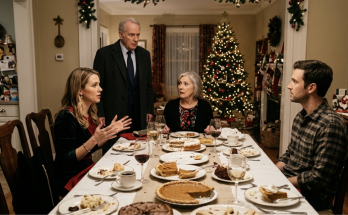
I remembered the dessert plate.
It was a small thing.
Mom had been carrying it when she heard Arthur explain my company.
She had set it down because she was too surprised to continue.
For some reason, that detail stayed with me.
The candles were still burning.
The food was getting cold.
Everything looked like Christmas.
But the familiar way my family saw me had finally been challenged.
I had imagined that moment would feel like the end of something.
Now I understood it was only the end of pretending that nothing had changed.
My family knew more than it had known before.
But knowledge alone couldn't repair our relationships.
Only honest conversations and different behavior could begin doing that.
And I had no evidence yet that everyone was ready.
I wouldn't claim otherwise.
I looked toward Melissa.
I still loved my sister.
I was still disappointed in her.
I still hoped she would be treated fairly.
And I still believed she needed to accept responsibility for the mistakes the investigators established.
None of those feelings canceled the others.
They simply belonged to the truth.
I looked toward Arthur.
I respected his willingness to confront the company's problems.
I recognized Beaumont's need for a responsible financial partner.
But I would not approve an investment without the safeguards Rowan Capital required.
That remained my decision.
Then I thought about myself.
The woman who had once been frightened by a heating bill.
The daughter whose parents believed she had abandoned a promising future.
The sister whose work had been dismissed as a little landlord business.
And the investor now responsible for evaluating a complicated redevelopment transaction.
I was all those people.
I didn't have to erase the difficult beginning to respect what came afterward.
I didn't have to turn my sister into a villain to acknowledge how much her words had hurt.
And I didn't have to turn a conditional investment proposal into a guaranteed success to make the story of Rowan Capital meaningful.
I had built something substantial.
I had protected it through difficult decisions.
I had insisted on evidence when personal feelings could have distorted my judgment.
And I had refused to use my position to punish or protect my sister improperly.
Those were the outcomes I could stand behind.
The remaining decisions were still open.
I accepted that.
For twelve years, I had been waiting for my family to see me differently.
At Christmas, they finally had a reason to question the story they had told themselves.
But the greater change was happening in me.
I no longer wanted to spend my life proving that I deserved a place at their table.
I wanted to sit there as their daughter.
Not as a disappointment.
Not as a financial success they could boast about.
And not as somebody who needed to defend every choice she had made.
Just Claire.
A woman who had taken a risk twelve years earlier.
Made mistakes.
Learned from them.
Built a business.
And continued working even when the people closest to her didn't understand.
I couldn't promise that the next family gathering would be different.
I couldn't promise that Melissa and I would suddenly become close.
And I couldn't promise a final outcome for Harbor District that had not yet been decided.
But I knew what I would no longer do.
I would no longer make myself smaller to preserve an uncomfortable peace.
I would no longer confuse somebody else's approval with my own responsibility.
And I would no longer allow family loyalty to replace facts when serious decisions had to be made.
I looked at Rowan Capital's proposal one final time.
The safeguards remained necessary.
The financial questions remained real.
And the company I had spent twelve years building remained worth protecting.
That was enough for me to know where I stood.
My family had finally discovered that the business they mocked was far larger than they imagined.
But I had discovered something more important.
I didn't need them to recognize me before I could recognize the value of my own work.
I already knew what it had cost.
I remembered the cold floor of that first duplex.
I remembered the repair bill.
I remembered the silence after calling my mother.
And I remembered continuing anyway.
That was where my confidence had begun.
Not in Arthur's praise.
Not in Melissa's surprise.
Not in my father's sudden curiosity about money.
In the decision to keep going when nobody at home believed I should.
I had carried that decision through twelve years.
And whatever Beaumont's board decided next, I wasn't going to abandon it.
The End
Read more original stories on readdramaus.
I Thought Christmas Dinner Would Be Another Evening of Quiet Insults Until a Guest Looked at Me Like He Knew Something
Part 18 of 18