The bus carried Mason only as far as Indianapolis.
He told Eleanor that while sitting at the same table where she had once watched him eat his first hot meal in days. Ruth remained nearby, though she made a point of becoming intensely interested in arranging sugar packets so Mason could speak without feeling observed.
“I thought I was being smart,” Mason said. “I had a plan.”
Eleanor lifted one eyebrow.
“At sixteen?”
“It was a very sophisticated plan.”
“Which was?”
“Go somewhere you couldn’t find me.”
Eleanor stared at him.
Mason grimaced.
“I told you it wasn’t a good plan.”
He had left Willow Hearth before three in the morning because he knew Eleanor would be asleep. At the station, he bought the cheapest ticket he could afford and boarded with one bag, Daniel’s old coat, Ed Mercer’s gloves, and the remaining money in his pocket.
“You kept Daniel’s coat?”
“For eleven years.”
Eleanor looked down.
“What happened to it?”
“Engine oil.”
“That man ruined every shirt he owned with engine oil. Appropriate.”
Mason smiled.
In Indianapolis, his careful plan collapsed within forty-eight hours.
A shelter had no open beds. A man who offered cash work disappeared after Mason spent nine hours carrying broken furniture from an abandoned house. He slept one night beneath an overpass and another inside a bus station until security sent him out.
“I almost came back then,” Mason admitted.
“Why didn’t you?”
“Pride.”
“You were freezing.”
“I had a great deal of pride and very little sense.”
“I remember.”
On the third day, Mason found work unloading produce at a wholesale market. The foreman asked no questions as long as he arrived at four in the morning and moved quickly.
Mason lasted twelve days.
“What happened?”
“I punched somebody.”
Eleanor closed her eyes.
“He deserved it.”
“That is rarely a useful employment defense.”
“I know that now.”
He moved north after that, following rumors of jobs and cheap rooms.
For a while he lived in Lafayette.
Then Marion.
Then Fort Wayne.
He worked warehouses, construction sites, loading docks, and a car wash.
He lost jobs through layoffs.
He lost others because he still interpreted criticism as the first stage of rejection and sometimes responded before anyone had actually rejected him.
“I wasn’t easy,” he said.
“You were scared.”
“Scared people can be difficult.”
“That does not make them bad.”
Mason smiled faintly.
“You still separate those things.”
“Someone has to.”
He reached Fort Wayne at eighteen with more confidence than money and more anger than confidence.
By then he had earned a GED through a community program after an instructor named Mrs. Harris threatened, in his words, to personally drag him into the testing room if he skipped the exam.
Eleanor laughed.
“I like her.”
“She was terrifying.”
“Excellent.”
He passed.
His score surprised him.
The result became one of the first pieces of evidence that his assumptions about himself were not always reliable.
“It sounds stupid now,” Mason said, “but I thought smart people knew they were smart.”
“No.”
“I figured if school had always gone badly, I must be bad at learning.”
Eleanor shook her head.
“School and learning are cousins. They are not twins.”
“That would have saved Mrs. Harris many arguments.”
Mason eventually found a room above a laundromat and a job sweeping floors at Ruiz Automotive.
The owner, Luis Ruiz, was fifty-eight, broad through the shoulders, and chronically irritated by wasted motion.
Mason swept too slowly because he kept watching repairs.
Luis noticed.
“He asked if I wanted to clean the floor or marry a transmission.”
Eleanor laughed.
“What did you say?”
“I said I was trying to understand what he was doing.”
“And?”
“He threw me a manual.”
Luis began teaching him after closing.
Not generously, Mason insisted.
Impatiently.
If Mason asked a lazy question, Luis refused to answer it.
If he made the same mistake twice, Luis made him take the part apart and begin again.
If Mason arrived late, Luis docked his pay.
If he arrived early, Luis found more work.
“He was the first person after you who could be hard on me without making me think I was disposable.”
Eleanor understood the distinction immediately.
“Rules that didn’t move.”
“Exactly.”
Luis did not threaten abandonment.
He threatened to make Mason clean the parts washer.
Apparently this was worse.
Within a year, Mason could handle basic repairs.
Within two, he had earned certifications.
He saved money because spending still frightened him.
The old habit of keeping emergency food in hidden places transformed into emergency cash folded inside envelopes.
“Still hiding bread?”
“Not bread.”
“What?”
“Protein bars.”
Eleanor groaned.
“I taught you nothing.”
Mason laughed.
Luis discovered the money by accident when a toolbox drawer jammed.
He sat Mason down and told him cash hidden beneath sockets was not a financial strategy.
Then he helped him open a proper bank account.
“That felt worse than the dresser.”
Eleanor remembered instantly.
“Drawers meant staying.”
“So did a bank account.”
Mason looked toward the kitchen.
“It meant having an address long enough for statements to arrive.”
Eleanor let the thought settle.
When Mason was twenty-one, Luis had a heart attack.
He survived, but the recovery kept him away from work for months.
Mason and another mechanic kept the shop running.
“What was the other mechanic’s name?”
“Darren Pike.”
“Competent?”
“Very.”
“Reliable?”
“Mostly.”
“That pause concerns me.”
“He married my sister.”
Eleanor straightened.
“You have a sister?”
Mason’s face softened.
“Half sister. I found her later.”
“You are skipping entire chapters.”
“I have twenty-one years to cover.”
“You arrived with ninety-seven people. I assume you cleared your schedule.”
He laughed.
During Luis’s recovery, Mason discovered he was good at more than repair work.
He understood customers.
Not because he enjoyed talking.
Because he understood what it felt like to be embarrassed by something you did not understand.
He explained problems without making people feel foolish.
Business improved.
When Luis returned, he made Mason an offer: buy into the shop gradually.
Mason thought it was a trick.
“Of course you did.”
“I asked him why.”
“What did he say?”
“He said, ‘Because you’re standing in front of me and I’m tired.’”
Eleanor smiled.
“Daniel would have liked him.”
“I think so.”
Mason bought ten percent.
Then twenty.
By twenty-six, he owned half.
When Luis retired, Mason bought the rest with financing that terrified him so badly he reread every page of the loan documents twice.
Ruiz Automotive stayed Ruiz Automotive.
“You didn’t put Caldwell over the door?”
“Luis built it.”
Eleanor approved.
The motorcycle side began almost by accident.
Mason bought a damaged bike cheaply and rebuilt it after hours.
Then a customer asked him to repair another.
Then another.
A separate service bay became necessary.
Eventually he opened Caldwell Cycle Works across town, though he kept Ruiz Automotive too.
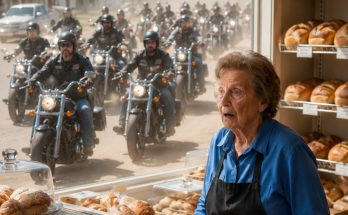
Eleanor looked toward the motorcycles outside.
“There we are.”
“Not quite.”
The businesses expanded.
Mason opened a second repair shop.
Then a parts warehouse.
Then he became a partner in a towing company after watching one of his shops lose too much money to unreliable contractors.
He did well.
Better than he expected.
Money stopped being an immediate emergency.
That created another problem.
“I didn’t know what I wanted it for.”
Eleanor studied him.
“That surprises you?”
“I thought having money would make me feel safe.”
“Did it?”
“For about fifteen minutes.”
He bought a house.
Barely furnished it.
Spent more time at the shop.
Worked nights he no longer needed to work.
Slept badly in rooms larger than the storage room at Willow Hearth.
“I had spent so many years trying to become stable that once I was stable, I didn’t know what to do next.”
Eleanor nodded.
Grief had taught her something similar.
Survival goals were simple.
Living goals were not.
The first person who changed Mason’s direction was named Devon Price.
Devon was nineteen and had come into Caldwell Cycle Works looking for work.
“He lied on the application.”
“What about?”
“Almost everything.”
Eleanor smiled despite herself.
“Familiar?”
“Painfully.”
Devon claimed experience he did not have.
He gave a false address.
His listed reference turned out to be the phone number of a pizza place.
Mason should have dismissed him.
Instead he noticed that Devon kept looking at the shop refrigerator.
“You fed him.”
“A sandwich.”
“With something sweet?”
Mason looked offended.
“I had cinnamon rolls.”
Eleanor put one hand over her heart.
“I may cry.”
He grinned.
Devon slept on a friend’s couch until that arrangement ended.
Mason helped him find a room.
Then helped him enroll in a technical program.
The process was chaotic.
Devon quit twice.
Returned twice.
Once disappeared for six days.
Mason nearly gave up.
“What stopped you?”
“You.”
Eleanor frowned.
“I wasn’t there.”
“I knew what you would have done.”
“Probably yelled.”
“You never yelled at me.”
“I considered it.”
Mason smiled.
Devon eventually finished his training and became one of Mason’s best technicians.
Then another young person showed up.
A woman named Keisha whose family had thrown her out.
Then Aaron, recently released from juvenile detention.
Then Miguel, who could diagnose an engine by sound but could not read well enough to complete a job application without help.
Mason began saying yes more often.
Not blindly.
Not without rules.
But often enough that the shop developed a reputation.
“If you needed a chance and were willing to work,” Mason said, “someone eventually sent you to us.”
Eleanor listened without interrupting.
“What did Luis think?”
“He said I’d finally found something useful to do with all my stubbornness.”
“Definitely Daniel’s kind of man.”
Mason reached into his wallet and removed a photograph.
He slid it across the table.
The image showed Mason several years younger standing beside an older Latino man with silver hair and a thick mustache.
Luis Ruiz.
Between them stood Devon in a grease-stained uniform.
All three were laughing.
Eleanor touched the edge of the photograph.
“Is Luis alive?”
“Yes.”
“Why isn’t he outside?”
“He hates motorcycles.”
Eleanor laughed.
“After all that?”
“Says they’re cars missing important pieces.”
Mason tucked the photograph away.
The informal assistance grew beyond what one repair shop could manage.
They needed housing contacts.
Tutors.
Counselors.
Legal help.
People who could teach financial basics.
People who understood addiction.
People who understood trauma without treating every difficult young adult as fragile.
“So you built something.”
“We tried.”
“What?”
Mason looked toward the riders outside.
“At first, just a network.”
“What kind?”
“People who had made it through something and were willing to help the next person.”
Eleanor glanced through the window.
Mason followed her gaze.
“Then the network needed a name.”
“What did you call it?”
He smiled.
“Second Mile.”
Eleanor raised an eyebrow.
“Why?”
“Because the first mile gets you out of immediate trouble.”
His expression became serious.
“The second is where you learn how to build a life.”
Eleanor liked that.
Mason took a slow drink of coffee.
“Eventually we stopped improvising.”
He described leased apartments.
Paid apprenticeships.
Scholarships.
Partnerships with community colleges.
Counseling.
Basic medical services.
A small emergency fund.
Rules about attendance and work.
Rules about sobriety where necessary.
Rules about respect.
Consequences that did not automatically become exile.
Eleanor noticed his emphasis.
“You remembered the difference.”
“Between consequences and a life sentence?”
“Yes.”
“I remember almost everything you said.”
“That is unfortunate. I’m sure some of it was nonsense.”
“Plenty.”
She kicked him lightly under the table.
Mason laughed.
Then he looked through the front window again.
The humor faded into something quieter.
“Those people out there are part of it.”
“All ninety-six?”
“Every one.”
Eleanor turned.
“They were all in the program?”
“Not exactly.”
“Then what?”
Mason folded his hands.
“Some needed help.”
He nodded toward the window.
“Some gave it.”
“And the others?”
Mason looked at Eleanor.
“Both.”
The word changed the riders outside.
They were no longer a crowd.
They became a chain.
Eleanor rose slowly from the table.
Mason stood beside her.
Outside, the ninety-six riders began removing their jackets.
Beneath several were shirts carrying the same small emblem over the heart.
A simple open doorway.
Eleanor stared at it.
Mason spoke quietly.
“That symbol came from Willow Hearth.”
Her eyes filled.
“No.”
“Yes.”
She shook her head.
“I opened one door.”
Mason looked at her.
“That was enough for us to learn how.”
Then he reached for the bakery handle.
“Come meet what happened next.”
Click here to continue reading: PART 11: When Eleanor Stepped Outside, Ninety-Six Strangers Showed Her How One Open Door Had Been Passed From Life to Life
Ninety-Seven Engines Rolled Into Maple Glen at Dawn, and Eleanor Whitaker Knew the Morning Had Come Looking for Her
Part 10 of 15