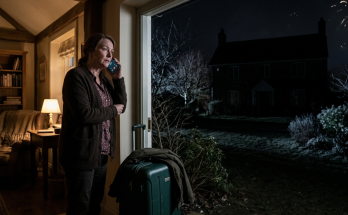
Sarah began moving out on a Thursday morning under a sky the color of unpolished steel.
I knew because she called me at seven forty-three.
Not to ask for help.
To tell me she had decided she wanted me there.
“I know what I said before,” she began. “About asking if I needed you.”
“I remember.”
“I need you.”
The words affected me more than I expected.
Not because she had asked.
Because she had chosen to ask instead of assuming I would appear.
“I’ll come.”
Claire was already parked in the driveway when I arrived.
Her hatchback stood open, the back seats folded flat beneath a stack of flattened cardboard boxes. She hugged me before saying hello properly.
“You look better than New Year’s morning.”
“That is a low standard.”
“Still counts.”
Sarah came out carrying a plastic storage bin filled with shoes.
She wore leggings, an old university sweatshirt, and her hair tied back without effort.
When she saw me, she stopped.
For a second neither of us knew whether we were supposed to hug.
Then Sarah set down the bin and crossed the driveway.
She wrapped both arms around me.
I held her.
No speech.
No apology.
Just weight and warmth and the sharp winter smell caught in her hair.
When she stepped back, her eyes were already damp.
“I’m taking the guest room first.”
“Your old room?”
She shook her head.
“David turned that into his office.”
Of course he had.
We entered through the side door.
The house felt unfamiliar despite containing more of my history than any other place on earth.
Boxes sat along the hallway.
A stack of flattened packing paper leaned against the wall.
The dining room table was covered with Sarah’s belongings separated into uneven groups.
Keep.
Donate.
Ask David.
I noticed that last category.
Not everything in a marriage could be divided cleanly.
Sarah followed my gaze.
“I don’t know what to do with half of it.”
“You don’t have to decide all of it today.”
“I want to.”
“That doesn’t mean you can.”
She sighed.
“I hate when you sound like Patricia.”
“I hate when she sounds like herself too.”
That pulled a faint smile from her.
We started upstairs.
The guest room had become more Sarah’s than I realized.
Clothes filled the closet.
Books occupied the shelves.
A framed photograph of her and David from their first anniversary stood beside the bed.
She picked it up.
Looked at it.
Then placed it face down.
I did not comment.
She began folding sweaters into boxes.
For nearly twenty minutes, we talked only about practical things.
Which clothes were hers.
Whether Claire had enough trunk space.
Where Sarah could store winter coats.
Whether she needed another tape dispenser.
Then we heard the front door.
Sarah froze.
Claire looked toward the hallway.
David called from downstairs.
“Sarah?”
Her shoulders tightened.
“You told him?”
“No.”
“Do you want me to leave?” I asked.
“No.”
The answer came immediately.
Then she added, “Please stay.”
David appeared at the bedroom door.
He stopped when he saw me.
Then Claire.
Then the boxes.
His face changed.
Not dramatically.
A slight collapse around the mouth.
“You’re really doing this.”
Sarah did not stop folding.
“I told you I was.”
“I thought we were giving it a few days.”
“You said you wanted a few days.”
“I thought you agreed.”
“I said I would think.”
“And?”
“I thought.”
He looked at me.
I turned back toward the box in front of me.
I had promised myself I would not become part of their marriage conversation.
David seemed to understand that my silence was deliberate.
He stepped farther into the room.
“Can we talk privately?”
Sarah folded another sweater.
“No.”
His jaw tightened.
“Why is everyone suddenly afraid to speak without an audience?”
Claire raised an eyebrow.
Sarah answered before she could.
“Because every private conversation with you seems to produce a version of events nobody else heard.”
David flinched.
“That’s not fair.”
“It’s accurate.”
He looked tired again.
Not the polished fatigue from a long workweek.
The hollow kind.
“When did we become people who talk like lawyers?”
Sarah stopped folding.
“When we started needing them.”
That shut him up.
For a moment.
Then he said, “Hearthstone may have an investor.”
Sarah looked up.
I remained still.
David continued.
“If it closes, I can replace most of the money.”
“Most?”
“Eventually all.”
Sarah laughed once.
“There’s that word.”
“What?”
“Eventually.”
He frowned.
She turned toward me.
“Mom used to say temporarily was dangerous.”
“I never said that.”
“You should have.”
David stepped closer.
“I’m trying to fix this.”
Sarah met his eyes.
“You’re trying to fix the financial part.”
“Yes.”
“That isn’t the whole thing.”
“I know.”
“Do you?”
“Yes.”
He looked toward me again.
Then away.
“I know I hurt both of you.”
Sarah’s face hardened.
“Don’t group us together.”
He blinked.
“What?”
“You hurt Mom one way. You hurt me another. Stop packaging it into a family problem so you don’t have to name what you did.”
I saw the sentence land.
A month earlier, Sarah would not have said it.
A week earlier, perhaps not.
Now she stood among boxes and forced him to be specific.
David leaned against the doorframe.
“I lied about the account.”
“Yes.”
“I moved money without telling you.”
“Yes.”
“I involved your mother’s property in a financing plan before she agreed.”
“Yes.”
“I told you she wanted the cottage.”
“Yes.”
He closed his eyes.
“I’m sorry.”
Sarah’s mouth trembled.
She looked down.
For a second I thought she might move toward him.
Then she asked, “Why did you tell me Mom wanted the cottage?”
He opened his eyes.
“I thought it would make the arrangement easier.”
“For who?”
“All of us.”
“That isn’t an answer.”
David rubbed his face.
“You were worried she’d feel displaced.”
“I was.”
“And she kept refusing to make decisions about the house.”
I stared at him.
Sarah did too.
“What decisions?” she asked.
“Repairs. Rooms. Renovations.”
“She owned it.”
“I know.”
“So she did not have to make changes because you wanted them.”
He looked frustrated.
“I’m explaining the context.”
“No. You’re explaining why you thought lying was efficient.”
His shoulders dropped.
“Yes.”
The honesty surprised all of us.
Sarah swallowed.
“Thank you.”
David looked at her.
“For what?”
“For finally answering the question.”
He took one step toward her.
“Does that matter?”
“Yes.”
“Enough to try again?”
The room went quiet.
I looked toward the window.
Claire did the same.
Sarah stared at David for a long time.
“I don’t know.”
He nodded too quickly.
“That’s enough.”
“No.”
His face tightened.
She continued.
“I mean I genuinely don’t know. That is not permission for you to turn uncertainty into a promise.”
He looked away.
Again, she had named the pattern.
Take hesitation.
Call it agreement.
Take silence.
Call it permission.
Take love.
Call it access.
David shoved his hands into his pockets.
“What would trying again look like?”
Sarah sat on the edge of the bed.
“Separate houses.”
He winced.
“For how long?”
“I don’t know.”
“Therapy?”
“Maybe.”
“Marriage counseling?”
“Maybe.”
“Financial transparency?”
“Yes.”
“Complete?”
“Yes.”
He nodded.
“I’ll do it.”
Sarah looked at him.
“You say yes very quickly.”
“Because I don’t want to lose you.”
She closed her eyes.
“That sounds romantic.”
“It’s true.”
“It can be true and still not be enough.”
David sat in the desk chair.
For the first time since entering, he seemed to understand that there was no sentence that could return the room to before.
Sarah stood again.
“I’m taking my clothes, personal files, jewelry, books, and the furniture that came from my apartment before we married.”
“Fine.”
“I’m leaving anything disputed.”
“Fine.”
“Naomi will send a list.”
He laughed bitterly.
“Naomi.”
“Yes.”
“Does she decide everything now?”
“No.”
Sarah picked up a box.
“She makes sure I don’t decide things because you exhaust me.”
That silenced him.
Claire carried the first load downstairs.
I followed.
Halfway down, David called after me.
“Ellen.”
I stopped.
Sarah immediately appeared behind him.
“What?”
He ignored her and looked at me.
“Can I ask you something?”
“You can ask.”
“If Hearthstone gets the investor and Sarah’s money is repaid, does that change anything for you?”
I knew what he meant.
Not our relationship.
The house.
“No.”
His face fell.
“You won’t reconsider the sale.”
“No.”
“The Bennetts offered less.”
“Yes.”
“You know that’s irrational.”
Sarah inhaled sharply.
I raised one hand before she spoke.
“I know exactly what I gave up.”
“Then why?”
“Because maximum price stopped being my maximum priority.”
“That makes no financial sense.”
“It makes perfect financial sense if I can afford the difference.”
He stared.
“You’re punishing us.”
“No.”
“Then sell to someone offering more.”
“No.”
“Why not?”
I looked toward the back windows.
From the stairs I could see the top of the cottage roof.
“Because some numbers carry costs that never appear on paper.”
David shook his head.
“You don’t trust Bell because of my father.”
“Correct.”
“He didn’t do anything illegal.”
“That is not the standard I use for deciding who gets my house.”
His expression hardened.
“So Robert makes one suggestion and everyone treats him like a criminal.”
Sarah spoke from behind him.
“He built a business plan around money Mom never offered.”
David turned.
“He thought she’d help.”
“She said no.”
“She never said no because no one asked properly.”
The sentence hung there.
Even David seemed to hear it.
Sarah whispered, “That is exactly the problem.”
He looked from her to me.
Then sat down on the stairs.
For a second, he appeared much younger.
Not innocent.
Just stripped of confidence.
“I thought families helped each other.”
I surprised myself by answering gently.
“They do.”
He looked up.
“But help has to remain voluntary.”
His eyes dropped.
I continued downstairs.
By noon, Sarah had filled Claire’s car twice.
A moving van arrived for larger items.
Every trip out of the house changed the rooms slightly.
An empty patch on a shelf.
A missing lamp.
Hangers sliding across bare closet rods.
Absence accumulated slowly.
Just as displacement had.
Only this time Sarah was choosing it.
At one twenty, we took a break in the kitchen.
Claire brought sandwiches.
David had gone upstairs.
Sarah stared at the refrigerator.
A photograph remained beneath a magnet.
The three of us at Michael’s last birthday.
Michael laughing.
Sarah kissing his cheek.
Me holding a cake tilted slightly because one candle had melted wax onto my finger.
She removed it.
“Take it,” I said.
She looked at me.
“Are you sure?”
“Yes.”
“It’s yours.”
“So are most of the photographs.”
She held it carefully.
“I want a copy.”
“I’ll make one.”
We ate.
Halfway through, Sarah said, “There’s something else.”
I waited.
“Naomi got a response from Hearthstone.”
My stomach tightened.
“What response?”
“They’re acknowledging the thirty-two thousand as my marital contribution.”
“That sounds good.”
“It is.”
“But?”
She rubbed her thumb over the edge of the photograph.
“They can’t repay it.”
“Right now?”
“Maybe not ever if the investor doesn’t close.”
I looked at her.
“How do you feel?”
She laughed softly.
“I keep thinking I should be furious.”
“Are you?”
“Yes.”
“But?”
“I’m also embarrassed.”
“About what?”
“That I lived like we were financially comfortable.”
I said nothing.
“We took trips.”
“Yes.”
“I bought things.”
“Yes.”
“I spent money because I thought our savings were growing.”
“Yes.”
“And meanwhile David was moving it out.”
She looked at me.
“I used to look at you and think you worried too much about money.”
I remembered.
After Michael died, I checked accounts constantly.
Not because we were poor.
Because financial order was one of the few structures grief had not destroyed.
Sarah used to tease me.
“You did worry,” she said.
“I did.”
“But you were also paying attention.”
“Yes.”
She looked down.
“I wasn’t.”
I touched her wrist.
“Trusting your spouse is not stupidity.”
“No.”
She inhaled.
“But not asking because I liked the lifestyle was.”
I did not argue.
She deserved the dignity of naming her own mistakes.
By late afternoon, only two boxes remained.
David came downstairs carrying one.
Sarah looked surprised.
He set it beside the door.
“What is that?”
“Your winter clothes from the hall closet.”
She opened it.
Everything was folded.
Gloves.
Scarves.
Sweaters.
The blue coat Michael had given her on her thirtieth birthday.
She touched the sleeve.
“Thanks.”
David nodded.
For a second, they looked like a married couple again.
Not because the damage vanished.
Because familiarity remained.
That was perhaps the cruelest part of separation.
Love did not disappear on schedule just because trust had failed.
David looked at Sarah.
“Can we talk tonight?”
“No.”
“Tomorrow?”
She hesitated.
Then said, “Through Naomi for now.”
His jaw tightened.
But he nodded.
“Okay.”
She picked up the last box.
We stepped outside.
At the car, David called again.
“Sarah.”
She turned.
He stood in the doorway.
“I’m sorry.”
She held the box against her chest.
“I know.”
He looked as though he had expected more.
Sarah got into Claire’s car.
I followed in mine.
At the end of the driveway, I looked in the rearview mirror.
David was still standing in the doorway.
The house behind him looked enormous.
For two years, he and Sarah had occupied it as though permanence could be created by repetition.
Now Sarah was leaving voluntarily.
I was leaving permanently.
And David was the only one still inside.
That evening, Sarah called me from Claire’s.
“I left the wedding ring there.”
I remembered the conference table.
“You meant to?”
“Yes.”
A pause.
“I want him to understand I’m not wearing it while I figure out whether I’m still married in any meaningful sense.”
“That sounds clear.”
“I’m trying.”
“So am I.”
She was quiet.
Then she said, “He asked if repaying the money would change anything.”
“I know.”
“What did you tell him?”
“The truth.”
“Which truth?”
“That money is not the only debt.”
Sarah exhaled.
“Good.”
The next morning, Patricia called.
“I have an update on the Bennett closing.”
I sat upright.
“What happened?”
“Nothing bad.”
I waited.
“They have final loan approval.”
Relief moved through me.
“So we’re on schedule.”
“Yes.”
“And possession?”
“Assuming David vacates by the agreed date.”
I looked toward the hotel window.
“What if he doesn’t?”
“Then we follow the legal process.”
I hated that possibility.
Not because I feared losing the sale.
Because I did not want the last chapter of the house to become a forced removal.
“Has he said anything?”
“Not to me.”
At noon, he answered that question himself.
A courier delivered an envelope to Patricia’s office.
Inside was a letter from an attorney representing David.
He was requesting additional occupancy time.
Sixty days.
Possibly ninety.
Because, the letter said, his financial circumstances had changed unexpectedly and suitable alternative housing had not yet been secured.
I read the sentence twice.
Unexpectedly.
As though his own hidden investment had happened to him.
Patricia watched my face.
“You do not have to agree.”
“Would it delay the sale?”
“Yes.”
“Would the Bennetts walk?”
“They might.”
I looked at the letter.
There it was again.
The mechanism I knew so well.
One more extension.
One more inconvenience.
One more temporary concession.
One more reason to put someone else’s comfort ahead of my decision.
“What happens if I say no?”
“David has until the notice deadline. After that, legal remedies are available.”
I folded the letter.
“No.”
Patricia nodded.
I surprised her by adding, “But ask whether he needs help finding a rental.”
She raised an eyebrow.
“You want to help?”
“I want to remove the excuse.”
A small smile appeared.
“That is different.”
“Yes.”
The response went out that afternoon.
No extension.
A list of rental resources attached.
Professional movers.
Short-term storage.
Corporate housing.
Apartments available immediately.
By five, David had everything except the permission he wanted.
At six eighteen, he called me.
I answered.
“Did you send that list?”
“Patricia did.”
“You think this is funny?”
“No.”
“I can’t move into some furnished box for three months.”
“Then choose something else.”
“I need time.”
“You had two years.”
“That’s not fair.”
“You have known since New Year’s morning.”
“That isn’t enough.”
“It is the notice period.”
“Legally.”
“Yes.”
“You keep hiding behind legal.”
The accusation almost amused me.
“I spent years hiding behind kindness. Legal is clearer.”
He breathed heavily.
“Sarah won’t even speak to me.”
“That is between you and Sarah.”
“Hearthstone might collapse.”
“That is between you and your partners.”
“I may lose everything.”
“That depends on what everything means.”
He went quiet.
Then his voice softened.
“Ellen.”
I knew the tone.
I had heard it before loans.
Before favors.
Before explanations designed to end with my yes.
“I need one break.”
I closed my eyes.
I thought of the garage.
The papers.
The party.
The cottage lights turned low.
Then I thought of him folding Sarah’s coat into a box.
Human beings were rarely only one thing.
He had hurt us.
He was also hurting.
Compassion did not require surrender.
“You have thirty days,” I said.
“That isn’t a break.”
“It is what I can give.”
He was quiet.
Then asked, “And if I’m not out?”
I looked at Michael’s photograph.
“For once, David, I’m going to let the consequence arrive.”
He ended the call without saying goodbye.
Click here to continue reading: PART 14: As the Closing Date Approached, the House Began Emptying and I Found the One Thing Michael Had Hidden for Me Years Ago
On New Year’s Eve, My Daughter Asked Me to Disappear Before Her Guests Arrived at the House I Still Owned
Part 13 of 17