I had spent twelve years knowing exactly what my responsibilities were.
Every mission had an objective.
Every member of my team had a role.
Even when the situation changed, there was a structure we could depend on.
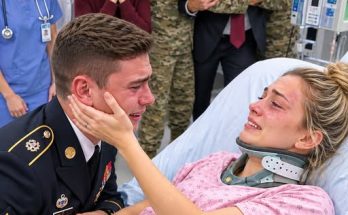
But sitting beside Tessa's hospital bed, I had no instructions.
No map.
No plan that could guarantee the outcome.
I had to accept something I had spent most of my adult life trying to avoid.
I could not control what happened next.
Tessa was awake more often now.
Sometimes she managed a few words.
Sometimes she simply watched me from her pillow.
There were mornings when she looked stronger.
Then an hour later, the effort of staying awake exhausted her.
I learned not to mistake a good morning for a finished recovery.
The doctors had warned me.
Healing would take time.
Her injuries had been serious.
And the loss of our child was something no medical procedure could repair.
I understood that.
At least, I understood the words.
Living through them was different.
One morning, I entered her room carrying a cup of black coffee.
I had been standing near the nurses' desk when I heard her voice.
"Elias?"
I looked toward the bed.
She was awake.
"I'm here."
She watched me cross the room.
"Coffee again?"
I looked down at the cup.
"Some habits are difficult to break."
Her mouth moved into the smallest smile.
It was the first time I had seen that expression since returning home.
I stopped beside her bed.
For a moment, I forgot what I had been about to say.
She noticed.
"What?"
I shook my head.
"Nothing."
She looked at me.
"You're staring."
I sat down.
"I missed that smile."
Her eyes softened.
Then she looked toward the window.
The moment passed quietly.
I had learned not to hold on too tightly when something good happened.
Tessa could smile.
She could also cry five minutes later.
Both were part of what she was experiencing.
I did not want her to feel responsible for keeping me comfortable.
She had spent enough years doing that for other people.
The nurse came in shortly afterward.
She checked Tessa's condition and spoke to her about the next steps in recovery.
I listened from the chair.
Before all this, I had been the one receiving instructions about dangerous situations.
Now I was learning the ordinary language of hospital care.
Rest.
Monitoring.
Assistance.
Patience.
The nurse adjusted the blanket.
"You're making progress, Tessa."
My wife gave a tired nod.
"Doesn't feel like much."
"I know."
The nurse's voice was gentle.
"But it matters."
After she left, Tessa stared at her hands.
I waited.
Then she spoke.
"I used to do everything without thinking."
I looked at her.
"What do you mean?"
She lifted one arm slightly.
The movement made her wince.
"Even something small feels difficult now."
I moved closer.
"Don't force it."
She gave me a tired look.
"You sound like a doctor."
"I've been listening to them."
That brought another faint smile.
Then her expression changed.
"I hate this."
I nodded.
"I know."
She looked at the equipment beside the bed.
"I hate needing help."
I wanted to tell her she would be strong again.
I wanted to promise that everything would return to normal.
But I had already learned how dangerous easy promises could be.
So I gave her the only answer I trusted.
"You can need help."
She looked at me.
"That doesn't change who you are."
Her eyes filled.
I took her hand.
We stayed quiet for a while.
I thought about how many times she had helped me without being asked.
When I came home exhausted, she let me sleep.
When I was troubled by something I could not discuss, she sat beside me without demanding an explanation.
When I left again, she smiled even though I could see the worry in her eyes.
She had never treated my need for support as weakness.
I wanted to offer her the same kindness.
But I was beginning to understand that I could not simply decide to be good at it.
I had to learn.
That afternoon, Reaper came to the hospital.
He stopped outside Room 412.
Through the glass, I saw him speaking with Viper.
Both men had become familiar figures in the corridor.
They were not there to frighten hospital staff.
They were there because we knew what the Sterling family had been capable of.
Although Silas and his sons were detained, I had not forgotten how far their influence once reached.
I stepped outside.
Reaper looked at me.
"How is she?"
"More awake."
"Good."
He glanced toward the room.
"She's been asking about you?"
I nodded.
"Mostly whether I'm eating."
Reaper almost smiled.
"That sounds like her."
I looked toward Tessa.
"Yes."
For a moment, I remembered the life we had before the hospital.
Reaper had seen it.
Not often.
But enough to know that Tessa was more than the woman in the medical bed.
He remembered her laughing.
He remembered her asking questions about his work that he was not always able to answer.
He remembered the way she treated the men in my unit as friends rather than employees.
I appreciated that more than I could explain.
Reaper handed me a brief update.
The Sterling investigation was continuing.
The financial records had opened several lines of inquiry.
The officials connected to the family were facing scrutiny.
And the nine Sterling men remained in federal custody after their requests for bail had been denied.
I read the information.
Then I returned it.
"Nothing changes for Tessa?"
"Nothing that requires her to deal with them today."
I nodded.
"Good."
He watched me for a moment.
"Captain, you should get some rest."
I almost laughed.
"You're starting to sound like the nurses."
"Maybe they're right."
I looked down at my hands.
He waited.
Then I said something I had been thinking about for days.
"I don't know if I can keep doing this."
Reaper frowned slightly.
"The hospital?"
I shook my head.
"The deployments."
He did not answer.
I continued.
"Being gone for months. Coming home for a little while. Leaving again."
He looked toward the window.
I knew he understood.
He had lived that life.
So had Viper.
We had all accepted sacrifices that most people would never see.
But acceptance did not make those sacrifices painless.
I leaned against the wall.
"I used to believe that if I kept doing my job, everything at home would still be there when I returned."
Reaper watched me.
"Now?"
I looked through the glass.
Tessa was resting.
The photograph remained beside her bed.
"Now I know better."
He was quiet.
I did not expect him to solve the problem.
I was not asking him to.
But speaking the thought aloud made it real.
For the first time in twelve years, I was considering a life without the military.
Not a temporary break.
Not another period of leave.
An actual departure.
The idea frightened me in a way I had not expected.
The Army had given my life structure.
It had given me men I trusted.
It had given me work I believed mattered.
I had lost friends doing that work.
Leaving felt almost like turning away from them.
I looked at Reaper.
"Does that make sense?"
He nodded.
"More than you think."
I breathed out slowly.
"I don't know who I am without it."
He looked at me.
"You're Tessa's husband."
I swallowed.
He continued.
"That part didn't come from the uniform."
I looked away.
I had spent years defining myself by what I could do under pressure.
Now somebody was reminding me that I had another identity.
One I had almost allowed to become secondary.
I thought about the wedding.
Tessa standing beside me.
The way she smiled when we exchanged our vows.
She had not married a mission.
She had married me.
Reaper touched my shoulder.
"You don't have to decide everything in this corridor."
I nodded.
He was right.
There were still responsibilities I needed to consider.
People I would have to speak with.
Commitments that would not disappear simply because I wanted them to.
But the direction of my thoughts had changed.
I returned to Tessa's room.
She was awake.
Her eyes moved toward me as I sat down.
"Everything okay?"
I thought about giving the familiar answer.
Everything's fine.
Nothing to worry about.
Instead, I decided to be honest.
"I'm thinking about some things."
She watched me.
"What things?"
I hesitated.
Then I looked at her.
"Us."
She remained quiet.
I continued.
"What life looks like when you leave here."
Her gaze dropped toward her hands.
"I haven't thought that far."
"I know."
I moved my chair closer.
"You don't have to."
She looked back at me.
"I don't want you making decisions because you feel guilty."
That stopped me.
She knew me too well.
I had not told her about my conversation with Reaper.
But she had already recognized something in my face.
I took a moment before answering.
"I do feel guilty."
Her expression changed.
"Elias."
"I wasn't here."
She tightened her fingers around mine.
"You were doing your job."
I nodded.
"I know."
She waited.
"But that doesn't mean I want to keep living the same way."
She watched me for a long moment.
Then she asked, "What are you saying?"
I looked toward the window.
The city lay beyond the glass.
People were moving through their ordinary lives.
I thought about our house.
The nursery.
The plans we had made.
Then I looked back at my wife.
"I'm thinking about leaving the service."
Her eyes widened slightly.
I had expected surprise.
Perhaps even disagreement.
She knew how much my career meant to me.
She knew the men who had become my brothers.
She had never asked me to abandon that part of myself.
She was quiet for a long time.
Then she whispered, "For me?"
I shook my head.
"For us."
She looked away.
I continued.
"And because I don't think I can pretend I'm the same man who left on that last deployment."
Her eyes filled.
I leaned closer.
"I'm not making the decision today."
She nodded faintly.
"But I want you to know I'm considering it."
She studied my face.
"Would you miss it?"
I almost smiled.
"Every day."
She looked sad.
"Then don't give it up just because you're afraid."
I took her hand.
"I'm not afraid of being a soldier."
I paused.
"I'm afraid of giving all my life to one responsibility and finding out too late that I neglected another."
She closed her eyes.
I waited.
When she opened them again, she whispered, "I never wanted you to stop being yourself."
I looked at her.
"I know."
That was what made the conversation difficult.
Silas had spent years trying to make me feel ashamed of my work.
Tessa never had.
She had been proud of me.
She had accepted the uncertainty.
She had carried the worry quietly.
And now she was concerned that I might lose something important because of what her family had done.
I brushed her hair away from her face.
"I'm still figuring out who I am."
She gave a faint smile.
"Me too."
Those words stayed with me.
She was not simply recovering from injuries.
She was trying to understand who she would be after losing our child and discovering the full cruelty of her family.
We were both standing at the edge of a life we had not chosen.
Neither of us knew how to move through it.
But for the first time since the hospital call, I felt we were facing that uncertainty together.
That evening, the physician returned.
He checked her condition.
He spoke about the progress she had made.
He reminded us that recovery would be gradual.
I listened carefully.
Tessa asked a few questions.
Her voice was still weak.
But she was beginning to speak for herself again.
I found that more encouraging than any update about the Sterling investigation.
After the doctor left, she looked toward the window.
"Do you remember the nursery?"
I felt my chest tighten.
"Yes."
"The way the light came in?"
I nodded.
She looked at me.
"I used to stand there in the afternoon."
I remembered.
The photograph had been taken there.
She continued.
"I thought about what it would sound like when the baby was home."
I lowered my eyes.
For a moment, I could not speak.
She looked at the photograph.
"I don't know what to do with that room now."
I wanted to tell her we would close the door.
Or leave everything untouched.
Or move somewhere else.
But those decisions belonged to both of us.
And she was not ready to make them.
So I said, "We don't have to decide."
She watched me.
"Not yet?"
"Not until you're ready."
Her eyes filled.
Then she nodded.
I sat beside her until she fell asleep.
The hospital became quiet.
I looked at the photograph.
Then I thought about the words I had spoken to Reaper.
I don't know who I am without it.
For twelve years, the military had been the center of my life.
But as I watched Tessa breathing steadily, I began to see something I had missed.
A life could have more than one purpose.
And sometimes the hardest decision was not whether to fight.
It was deciding what deserved the rest of your time.
Click here to continue reading: PART 10: A Sealed Letter Found During the FBI Raid Revealed That Tessa’s Mother Had Feared the Same Cruelty Twenty-Two Years Earlier
I Was Thousands of Miles From Home When a Hospital Nurse Called and Told Me My Pregnant Wife Was Fighting for Her Life
Part 9 of 15