I kept thinking about the letter.
Not about the envelope itself.
Although I could still picture my name written across the front.
Not even about the money.
I kept thinking about what Grandfather had understood.
He knew I wanted to help people.
He knew I wanted to become a doctor.
And he knew I could sometimes confuse being needed with being loved.
That was difficult to admit.
Especially after what had happened.
I had spent much of my life trying to be useful.
When someone needed help, I offered it.
When something went wrong, I tried to understand what I could do.
Sometimes that was a good quality.
Sometimes I made myself responsible for things I couldn't control.
Sarah's illness had forced me to confront that.
But I hadn't learned the lesson as well as I thought.
I remembered the day I told Grandfather I needed time away from medical school.
I had worried about disappointing him.
He had always supported my education.
He knew how hard I had worked to get there.
I had been afraid he would tell me I was throwing away an opportunity.
Instead, he listened.
He understood why Sarah needed me.
He understood that I was frightened.
He understood that being present for someone I loved mattered.
And he didn't ask me to prove that I deserved his respect.
That memory had carried me through some of the hardest days of my life.
Now it was attached to something else.
The trust.
Two hundred and fifty thousand dollars.
I still struggled to understand that number.
For years, money had been something I calculated carefully.
How much I owed.
How much I could save.
How long I could manage before another expense appeared.
There had been times when I looked at my student loans and wondered whether I would ever feel financially comfortable.
I kept working.
I applied for assistance.
I accepted opportunities that helped me continue.
I didn't stop pursuing medicine.
Even when my parents believed I had.
Even when the people I wanted to celebrate with weren't there.
I had kept going.
But knowing Grandfather had arranged help for me changed the way I remembered those years.
He hadn't simply been proud of my ambition.
He had taken steps to support it.
And Julian had known about those steps.
That was the part I couldn't put aside.
My brother hadn't merely repeated an ugly rumor.
He had benefited from it.
The false story about my education helped him conceal what he had done with my education fund.
I thought about that repeatedly.
Medical school had become the center of his lies.
He claimed I quit.
He claimed I was irresponsible.
He claimed I couldn't manage my life.
Then, when I tried to prove otherwise, he interfered with my attempts to reach our parents.
And all the while, he was using money that had been designated for me.
I hadn't understood the connection before the accident.
I couldn't have.
I didn't know the trust existed.
I didn't know my grandfather had left a separate fund.
I didn't know Julian had been given temporary responsibility for it.
I didn't know the estate attorney had been trying to make sense of the financial records.
For years, I had been trying to defend myself against accusations without knowing what those accusations were protecting.
That thought made me angry.
Not loudly.
Not in the way I had been angry beside Julian's hospital bed.
This anger was quieter.
It appeared when I remembered a bill.
When I thought about the car's broken heater.
When I pictured Clara telling me she didn't mind postponing our honeymoon.
I had believed those sacrifices were simply part of the life I was building.
And they were.
I had made choices.
I had worked hard.
I had accepted the responsibilities that came with my education.
But I hadn't been given the opportunity to use the support my grandfather intended.
Someone else had decided what would happen to it.
Without asking.
Without telling me.
Without having the right.
I thought about what I had asked Margaret Ellis.
Had the trust been restricted?
Yes.
Had Julian been authorized to move the money without me?
No.
Were there records?
Yes.
The answers were simple.
I found some comfort in that.
After years of arguments about what had supposedly happened, I needed facts that didn't change depending on who was speaking.
My parents had their memories.
Julian had his explanations.
I had messages and letters.
Margaret had the estate documents.
I didn't know everything those documents would show.
I wasn't going to pretend I did.
But I knew they existed.
And I knew the questions about the money were no longer something my family could settle by insisting Julian had meant well.
I thought about my father.
His expression when I asked whether he had ever requested evidence.
He had looked away.
I could still see it.
That small movement had told me more than another argument would have.
He hadn't needed proof.
He had accepted the story because it came from Julian.
That truth bothered me in a way I couldn't easily explain.
When I was younger, I had believed my father valued fairness.
I had believed that if I made a mistake, he would expect me to admit it.
If I accused someone else, he would expect me to explain why.
Yet when Julian accused me of abandoning my education, those expectations seemed to disappear.
No official letter.
No confirmation from the university.
No conversation with me that he was willing to hear.
My father had accepted Julian's version.
Then he had told me to stay away until I apologized.
I wondered how many family conversations had been built around that decision.
How many times my parents had spoken about me as though I were someone they no longer recognized.
How many times Julian had been present.
How many opportunities he had to correct the lie.
I didn't know.
I couldn't know.
And I didn't want to invent answers simply because the uncertainty hurt.
I had already spent too many years imagining what people might be thinking.
That was another thing I needed to stop doing.
I could examine what had happened.
I could ask questions.
I could listen to the answers.
But I couldn't live inside guesses.
I thought about the messages on my phone.
I had kept them because I needed to remember what I had actually said.
My parents had spent years acting as though my explanation was dishonest.
Sometimes, in the middle of the night, I wondered whether I had spoken badly.
Whether I had sounded defensive.
Whether I had failed to explain the approved leave clearly enough.
I knew that wasn't reasonable.
Still, when people reject your account of something for long enough, it can become difficult to trust your own memory.
That was why I kept the screenshots.
Not to punish anyone.
To remind myself.
I had told them Sarah was dying.
I had told them the university had approved my absence.
I had told them I intended to return.
And later, I had told them I was progressing through my training.
The messages were there.
The dates were there.
I had not imagined them.
There was one message I found especially difficult to think about.
The one from the night before Sarah died.
I remembered writing it.
I had been afraid.
Not simply sad.
Afraid.
I had wanted my mother.
That was something I rarely admitted aloud.
I was an adult.
I was studying medicine.
I understood that illness could be cruel.
But I had still wanted my mother to tell me I wasn't alone.
Instead, I had been made to feel as though needing time beside Sarah was something shameful.
My father had told me not to contact them.
My mother had refused to hear another explanation.
And Julian had continued his story.
I thought about the family I had once expected to have.
I hadn't expected perfection.
My parents could be difficult.
Julian and I had disagreements.
I knew families argued.
I knew people could say things they regretted.
But I had assumed there were limits.
I had assumed that when something truly terrible happened, we would stand together.
Sarah's illness had shown me otherwise.
I had needed support.
Instead, I had become the subject of an accusation.
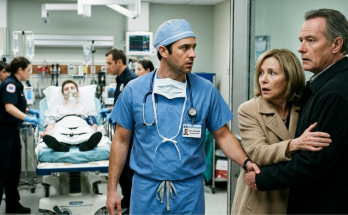
That was why my mother's tears in the corridor had been so difficult to accept.
She was frightened for Julian.
She wanted to see him.
She was asking me to understand that he was her son.
I understood completely.
I knew what it meant to fear losing someone.
But I couldn't forget that I had been her son too when Sarah was dying.
My need for family hadn't been less important because I wasn't the person lying in the hospital bed.
I thought about how I had spoken to her.
I had been sharp.
Perhaps sharper than I would have liked.
I didn't enjoy causing her pain.
But looking back, I couldn't pretend the words came from nowhere.
They came from years of silence.
From unanswered attempts.
From believing I had been discarded because I had disappointed people I loved.
I could regret the pain in that conversation without denying why I felt it.
I thought about my father crying.
That image stayed with me.
He had looked stunned when Julian admitted the missing money.
He had looked ashamed when I described the wedding.
I didn't know what those tears meant.
Maybe he regretted believing Julian.
Maybe he was frightened of what the estate investigation would reveal.
Maybe he was beginning to understand how much he had missed.
I couldn't decide that for him.
And I didn't need to.
For years, I had tried to interpret every silence.
Every unanswered message.
Every sign that my parents might be ready to reconcile.
Now I had to accept that understanding their feelings wasn't my responsibility.
They could speak for themselves.
They could acknowledge what they had done.
But I wasn't going to invent an apology on their behalf.
I thought about Clara.
How she had appeared in the physicians' lounge with coffee and a sandwich.
It wasn't a dramatic gesture.
She hadn't arrived with a solution.
She hadn't promised everything would become easy.
She had noticed I hadn't eaten.
Then she had sat beside me and listened.
That was what I had needed.
During the years when my parents were absent, Clara had become the person I trusted most.
She knew about Sarah.
She knew why my family situation was painful.
She knew how much effort I had put into reaching people who didn't respond.
When I told her Julian was in the hospital, she didn't tell me how I should react.
She asked whether he was alive.
She cared that he was injured.
Then she reminded me that forgiveness was my decision.
Not an obligation created by the accident.
I remembered that.
Because I had already begun feeling guilty.
Julian was recovering from severe injuries.
He looked frightened.
He had cried while confessing what he did.
Part of me wanted to comfort him.
The same part of me that had always wanted to help when someone was suffering.
But Clara's words had reminded me that I could care about his recovery without pretending our relationship was repaired.
I had done what was necessary to save him.
I had followed hospital policy afterward.
Another attending surgeon was overseeing his treatment.
Those were responsible decisions.
They were enough.
I didn't need to become the person who reassured him that everything would be forgotten.
I looked again at the envelope my grandfather had written.
Arthur.
Just my name.
Not Doctor.
Not the son who made the family proud.
Not the grandson with the promising future.
Arthur.
I had spent years trying to prove I hadn't failed.
Grandfather had never required that proof.
He had wanted me to become a good man.
And he had wanted me to have a life of my own.
I began to understand that the two things weren't separate.
Being a good man didn't mean accepting every injury without protest.
It didn't mean letting someone take what belonged to me.
It didn't mean surrendering the truth because admitting it made someone else uncomfortable.
I could be compassionate.
I could remain honest.
I could do my job well.
And I could still protect myself.
I thought about the meeting scheduled with Margaret.
I had asked to examine the documents.
I intended to do exactly that.
I wasn't going to sign anything without understanding it.
I wasn't going to allow family pressure to replace evidence.
I wasn't going to accept another explanation simply because Julian sounded sorry.
The trust deserved a proper examination.
My grandfather had made those arrangements carefully.
I owed it to him, and to myself, to learn what had happened.
But there was another decision I had to make.
It wasn't about money.
It was about the way I viewed my own life.
For five years, I had treated the absence of my parents as evidence that something was missing from my accomplishments.
My graduation had mattered.
But they weren't there.
My residency had mattered.
But they weren't there.
My wedding had been one of the happiest days of my life.
But they weren't there.
I had allowed those empty places to affect the way I remembered everything else.
I couldn't change the empty places.
I couldn't bring Sarah back.
I couldn't make my parents attend a ceremony that had already happened.
I couldn't recreate the years Julian had taken from us.
But I could stop treating those absences as proof that my life was incomplete.
I had become a doctor.
I had married Clara.
I had survived grief that once seemed impossible to bear.
I had built something meaningful.
Those things were real.
They didn't become more real because my parents finally discovered them.
And they didn't become less real because my brother had tried to conceal them.
I thought about the day Julian arrived in my emergency department.
He needed a surgeon.
I was there.
I had saved his life.
That fact would remain true whatever happened next.
I could be proud of my work without turning it into an excuse to ignore what he had done.
For the first time, I saw those two truths clearly.
Julian was my brother.
Julian had betrayed me.
Both were true.
I didn't need to choose one and pretend the other didn't exist.
I looked at Grandfather's letter once more.
The warning about sacrifice still hurt.
Perhaps because it described something I had spent years refusing to see.
I had been trying to make my family love me again.
Not by asking directly.
But by becoming successful enough that they might reconsider.
The thought made me sad.
Then it made me tired.
And finally, it made me a little less afraid.
I didn't have to keep proving I deserved to be someone's son.
I already was.
Whether my parents understood what they had lost was something they would have to face themselves.
Click here to continue reading: PART 7: My Parents Had Finally Learned I Was a Doctor, but Their Tears Could Not Restore the Years They Chose to Miss
I Had Just Saved My Brother’s Life When My Parents Finally Realized the Son They Rejected Had Become a Surgeon
Part 6 of 15