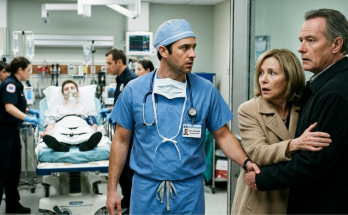
I kept remembering Julian's face when he admitted taking the money.
He was lying in a hospital bed.
His left arm was immobilized.
His injuries were still serious.
And he had looked at me with the expression of someone who knew he'd run out of excuses.
I had asked where Grandfather's money went.
He said he transferred it.
I asked whose account received it.
His.
I remembered how quiet the room became.
For years, I had believed my brother was simply jealous.
I hadn't known his jealousy was connected to something financial.
I hadn't known he had access to a separate education trust.
And I hadn't known he had spent the funds Grandfather intended for me.
I remembered the amount.
Two hundred and fifty thousand dollars.
It still seemed unbelievable.
I thought about the years I worked to finish my training.
The scholarships.
The loans.
The extra shifts.
The old car with the broken heater.
The meals I ate when I was too tired to prepare anything else.
Those memories were ordinary parts of my life.
I had accepted them as necessary sacrifices.
But learning about the trust made me see them differently.
I had been struggling while money intended to support me was being used by someone else.
Julian knew.
He had known all along.
That was the part I couldn't easily forgive.
He wasn't a stranger who took advantage of an unfamiliar account.
He was my brother.
He knew what medical school meant to me.
He knew how hard I'd worked.
He knew that Sarah's illness had interrupted my training.
And he knew that I had returned.
Yet he continued telling our parents otherwise.
I thought about the accusation that I'd abandoned my responsibilities.
It was almost unbearable now.
Julian had told our parents I was unstable.
That I was involved with drugs.
That I couldn't manage my life.
But he was the person who couldn't account for the trust.
He had spent money that wasn't his.
He had hidden the transfers.
He had let years pass while hoping the missing funds would somehow be replaced.
The person accusing me of irresponsibility had been concealing his own.
I didn't enjoy recognizing that.
It would have been easier if I could have laughed at the contradiction.
But there was nothing funny about it.
The accusation had cost me my family.
And the financial deception had cost me the support Grandfather wanted me to have.
I thought about Julian saying he hadn't intended the situation to become so serious.
Perhaps he believed that.
Perhaps the first lie had seemed small to him.
Perhaps he imagined our parents would be angry for a while and then forget.
But there was a point when the consequences became impossible to ignore.
He knew they stopped speaking to me.
He knew they believed I had failed.
He knew I kept sending letters.
He knew the truth wasn't reaching them.
He had opportunities to change that.
Many opportunities.
He didn't.
That was why his explanation about fear didn't satisfy me.
He had been frightened of admitting what he did.
I understood that.
But fear didn't remove responsibility.
Sometimes fear explained why people made bad choices.
It didn't turn those choices into something harmless.
I remembered his confession about the letters.
He said he'd taken more than twenty.
I had demanded the number because I needed to understand the scale of what happened.
He couldn't give an exact total.
That uncertainty bothered me.
More than twenty.
How many more?
I didn't know.
I hadn't seen the letters again.
I didn't know what happened to them afterward.
All I knew was that he intercepted them.
That was enough to make me feel sick.
I thought about the effort that went into writing them.
I hadn't simply put words on paper without thinking.
I considered what to say.
I tried to avoid sounding angry.
I tried to explain what was happening.
I shared achievements because I wanted my parents to know I was progressing.
Sometimes I wrote about missing them.
Sometimes I hoped the letter might be the one that changed everything.
Julian took those chances away.
He didn't merely keep the envelopes.
He replaced their meaning.
He told our parents I was asking for money.
He said I wanted to return because I couldn't support myself.
He suggested the letters were more evidence that I had failed.
I thought about the cruelty of telling parents their son was reaching out for help while preventing them from reading what he actually wrote.
That required more than jealousy.
It required the willingness to keep misleading people.
And Julian had maintained that deception for years.
I remembered something he said.
He expected me to give up eventually.
I had been standing beside his bed when he admitted it.
I felt as though someone had struck me.
He hadn't simply hoped the truth would stay hidden.
He had counted on my exhaustion.
He had expected me to stop trying.
And eventually I did.
I stopped writing letters.
I stopped expecting replies.
I built a life around the absence of my family.
But I never stopped wondering why it happened.
Julian hadn't known what that uncertainty did to me.
Or perhaps he had known and refused to think about it.
I couldn't answer that.
I only knew what I experienced.
There were milestones I wanted to share.
There were moments when I missed home.
There were nights when I wished I could speak to my father.
And there was my wedding.
I remembered standing beside Clara.
I remembered wanting her to meet my parents.
I remembered imagining how Julian might have behaved if he'd been there.
He probably would have made a joke.
Something inappropriate enough to make me shake my head.
I had once believed that was how our relationship would remain.
Ordinary disagreements.
Harmless teasing.
The certainty that we were brothers.
Instead, he had become someone I didn't recognize.
I looked at the memory of him lying in intensive care.
His face was swollen.
His eyes were wet.
He had needed help.
And I had given it.
That mattered to me.
I didn't regret the surgery.
I didn't regret checking his condition when he started coughing.
I didn't regret telling our parents he needed time to recover.
Those were things I would do again.
I had acted according to my responsibilities as a physician.
But I couldn't let my professional compassion become an excuse for ignoring his choices.
I was allowed to care about his recovery.
I was also allowed to be angry.
I thought about the hospital's legal department.
They had wanted to document the relationship between us.
I had told them the truth.
Julian was my brother.
I performed the emergency operation because I was the available trauma surgeon.
I understood that further medical decisions needed to follow hospital policy.
Another attending surgeon took over responsibility for his ongoing care.
That separation was important.
It meant Julian could continue recovering without our personal conflict complicating the treatment.
It also meant I didn't have to remain beside his bed trying to manage everything.
I could step away.
Not from the fact that he was my brother.
Not from the truth about what happened.
But from the belief that his recovery was entirely my responsibility.
I thought about Grandfather's letter again.
The warning seemed painfully appropriate.
I had saved Julian.
But I couldn't save him from the consequences of what he had done.
I couldn't make the trust money reappear.
I couldn't create authorization documents that didn't exist.
I couldn't convince Margaret Ellis to ignore the financial records.
And I couldn't pretend the letters had reached our parents.
The truth existed whether Julian wanted to face it or not.
I thought about his meeting with the attorney.
He told me Margaret had contacted him the previous month.
She wanted documentation.
He couldn't provide it.
He knew the money was missing.
He knew the trust required authorization.
And he knew the investigation was becoming more serious.
That explained why he was frightened.
But I couldn't know whether his confession came from genuine remorse, fear of discovery, or some combination of both.
I didn't want to pretend I could see inside his mind.
I had learned enough about the danger of accepting someone else's version of events without proof.
I would listen.
I would compare what he said with what could be established.
And I would make decisions based on the facts.
That was what I intended to do with the inheritance.
I remembered my conversation with Margaret.
She had spoken about Grandfather with genuine warmth.
She said he'd been proud of me.
She knew he'd wanted me to continue medicine.
And she had explained the protections in the trust.
Withdrawals required my written authorization.
The money was intended for education and professional development.
It couldn't simply be treated as another account belonging to the family.
Those restrictions mattered.
Grandfather had tried to protect the fund.
He had tried to make sure it reached the purpose he intended.
Julian had disregarded that.
I wondered whether he understood the insult to our grandfather's wishes.
He had talked about feeling overlooked.
About Dad praising me.
About Mom showing my scholarship letters.
But Grandfather hadn't created the trust to humiliate him.
He had created it to support my education.
Those were different things.
I wished Julian could understand that my opportunities weren't an attack on him.
I hadn't chosen medicine to make him feel inferior.
I hadn't applied for scholarships to take attention away from him.
I hadn't cared for Sarah to embarrass our parents.
I had been living my own life.
He had turned those choices into a competition.
And when he felt he was losing, he tried to make me lose too.
That was something I couldn't fix for him.
I remembered how Grandfather used to speak about being a good person.
He valued character.
He believed people revealed themselves through the choices they made when no one was watching.
I had heard that idea many times when I was younger.
Back then, it seemed simple.
Be honest.
Treat people fairly.
Do the right thing.
Now I understood how difficult those principles could become when the people involved were your own family.
I wanted to be fair to Julian.
But fairness didn't mean pretending he was innocent.
I wanted to remain compassionate.
But compassion didn't require me to surrender my rights.
I wanted to believe people could change.
But belief wasn't evidence that change had happened.
I needed to remember those differences.
I thought about my parents.
Their reactions had been painful to witness.
My mother cried.
My father cried.
They looked devastated when Julian admitted the trust was missing.
I believed their shock was real.
But I also remembered that they'd known about the attorney's questions for three months.
They had received a letter about the trust review.
And they had accepted Julian's explanation that I'd signed documents authorizing him to manage the money.
They still hadn't contacted me.
That was hard to understand.
After five years of believing one story, they had been presented with a reason to question it.
Instead of asking me, they listened to Julian again.
I couldn't ignore that pattern.
I wondered whether they would ever recognize it themselves.
Not simply apologize for the outcome.
Recognize the choices that produced it.
They had believed accusations without proof.
They had refused to hear my explanation.
They had allowed Julian's version of events to define their relationship with me.
And my father had repeated false information about my wishes to the estate attorney.
Those weren't things I could quietly forget.
I didn't want revenge.
I didn't want to hurt my parents.
I didn't want Julian to suffer.
But I wanted the truth acknowledged without another attempt to minimize it.
I thought about how my father asked me not to make decisions that night.
I had been furious.
I was tired of being told when I was allowed to speak.
When I was allowed to ask questions.
When I was allowed to understand what happened.
But later, I realized that taking time was something I needed too.
I didn't want to make decisions while overwhelmed.
I didn't want to sign anything out of guilt.
I didn't want to promise forgiveness because I felt sorry for Julian.
And I didn't want to reject every possible future conversation simply because I was angry.
I wanted room to think.
That was different from allowing my father to control the situation.
The decision belonged to me.
I looked at the envelope again.
I remembered how carefully Grandfather had written my name.
He had wanted me to receive that letter.
He had wanted me to understand that I didn't need to spend my life proving I deserved love.
For years, I had interpreted success as a way to repair what was broken with my family.
Now I could see the flaw in that thinking.
No degree could force my father to trust me.
No career achievement could make my mother answer a message she refused to read.
No amount of hard work could make Julian tell the truth.
Those choices belonged to them.
I could control my own conduct.
I could continue practicing medicine responsibly.
I could be honest with Clara.
I could examine the estate documents.
I could decide what kind of contact I was comfortable having.
But I couldn't make my family become the people I wanted them to be.
I thought about Julian's apology.
He had said he was sorry.
I heard him.
I didn't pretend otherwise.
But an apology was only the beginning of understanding what had happened.
It couldn't replace the missing money.
It couldn't return the letters.
It couldn't put my parents at my wedding.
It couldn't bring Sarah back.
I needed him to understand that.
And I needed to understand something too.
I wasn't obligated to transform his apology into forgiveness.
Not immediately.
Perhaps not ever.
I could leave that question unanswered while still wishing him a full recovery.
I could respect my profession without allowing family guilt to control me.
I could love my brother and acknowledge that he had betrayed me.
The more I thought about it, the more clearly I understood that my choices didn't need to fit into the simple roles my family had always assigned.
I didn't have to be the successful son.
I didn't have to be the forgiving brother.
I didn't have to be the person who kept everyone together.
I could simply be Arthur.
A man who had worked hard.
A man who had lost someone he loved.
A man who had been hurt by his family.
And a physician who had saved a life when it needed saving.
That was enough.
I looked at the letter once more.
Then I remembered Julian's face when he handed it over.
He seemed ashamed.
Perhaps he finally understood something.
Perhaps not.
I couldn't decide that for him.
What I could decide was how I would respond to the truth.
I would not lie to protect him.
I would not excuse what happened to the trust.
I would not pretend our relationship had already healed.
And I would not allow my anger to make me forget why I became a doctor.
Julian was alive.
He was recovering.
That was a good thing.
But his recovery was not the same as reconciliation.
I could accept one without promising the other.
For the first time, that distinction felt clear.
Click here to continue reading: PART 15: I Saved the Brother Who Took Five Years from Me, but My Grandfather’s Final Words Showed Me What I Could Still Keep
I Had Just Saved My Brother’s Life When My Parents Finally Realized the Son They Rejected Had Become a Surgeon
Part 14 of 15