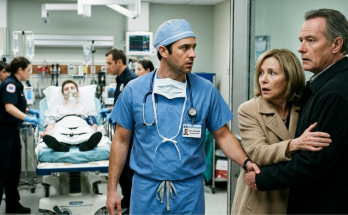
I kept returning to the moment Julian recognized me.
His face had been swollen.
He was exhausted.
The breathing tube had only recently been removed.
He looked frightened when he saw me standing beside his bed.
Then he realized who I was.
Arthur.
His younger brother.
The one he'd told our parents had abandoned medical school.
The one he'd spent years keeping away from them.
The one who had just operated on him.
I remembered his eyes filling with tears.
He asked whether I'd saved him.
I told him yes.
At that moment, I had no idea what he was about to confess.
I knew he'd lied about my education.
I knew my parents had believed him.
I knew the damage those accusations had caused.
But I hadn't known about the letters.
I hadn't known about the trust.
I hadn't known he'd taken money Grandfather left for me.
And I hadn't known he was frightened of what our parents might tell me.
I remembered him asking whether they were at the hospital.
When I said yes, his expression changed.
Then he warned me not to accept their account of what happened.
That should have told me something.
He wasn't simply worried about his injuries.
He was worried about what I might learn.
I pulled a chair closer because he said he had something important to tell me.
I thought I might finally hear an explanation for the lies.
I wasn't prepared to learn he'd intercepted more than twenty letters.
I remembered how I felt when he admitted it.
For a moment, everything seemed distant.
The monitor.
The bed.
The hospital sounds.
I could barely concentrate on his words.
More than twenty letters.
I had written them because I missed my parents.
I had written them because I wanted them to know I hadn't abandoned medicine.
I had written them because important things were happening and I still wanted to share them.
Julian had taken them.
Then he told our parents those letters contained requests for money and excuses.
I thought about the cruelty of that.
He hadn't merely prevented communication.
He had changed what my parents believed I was saying.
He made my attempts to reconnect look like evidence that I couldn't manage my life.
That was what I struggled to understand.
How could he read about my progress and decide to hide it?
How could he know I was getting married and allow my parents to remain absent?
How could he watch me keep trying and never tell the truth?
I remembered his answer.
He thought I would eventually stop.
He was right about one thing.
Eventually, I did stop expecting my letters to make a difference.
But he was wrong if he thought that meant the hurt disappeared.
It remained.
Sometimes quietly.
Sometimes when I saw another family celebrating something ordinary.
Sometimes when I thought about the people who weren't at my wedding.
Sometimes when I remembered Sarah's last days.
I had learned to live around the loss.
That wasn't the same as being unaffected by it.
I thought about how Julian described his jealousy.
He said Dad talked about my future.
He said Mom showed people my scholarship letters.
He said our family gatherings had become conversations about me.
I hadn't realized he resented those things so deeply.
Perhaps I should have noticed he felt overlooked.
That thought came to me sometimes.
Then I reminded myself of something important.
Noticing that someone was unhappy wouldn't have given me control over what they did with that unhappiness.
Julian was responsible for his actions.
He could have spoken to me.
He could have told our parents how he felt.
He could have found another way to deal with his resentment.
Instead, he chose deception.
I hadn't made that choice.
I needed to remember that.
I thought about the trust.
The separate medical education fund.
Two hundred and fifty thousand dollars.
Julian had admitted transferring it into his investment account.
He had admitted spending some on his business.
He had admitted using the rest for personal expenses.
And he had admitted losing most of it.
He said he intended to put it back.
I wanted to know how long he had been telling himself that.
A week?
A month?
Years?
I couldn't know.
But I knew he never told me.
He allowed me to continue my training under financial pressure.
He allowed me to take out loans.
He allowed Clara and me to postpone our honeymoon.
All while knowing Grandfather had left money to help me.
I wondered whether he ever felt guilty before the investigation began.
I wondered whether he thought of me when he used the funds.
I wondered whether he understood how much my education meant to me.
Those questions had no answers I could trust yet.
And I was tired of trying to read his mind.
I didn't need to know every thought he'd had.
The actions were enough to establish the betrayal.
I remembered the meeting I had arranged with Margaret Ellis.
She had known my grandfather for almost twenty years.
She had spoken warmly about him.
She told me he'd been proud of my medical ambitions.
She knew about the protections he placed on the trust.
And she had access to the financial records.
I looked forward to that meeting.
Not because I expected it to make everything easier.
But because I needed to learn what the documents established.
I had spent years living with a story created by Julian.
I didn't want another version of events that depended on his convenience.
I wanted the original agreement.
I wanted to understand what authority he had been given.
I wanted to know how the funds had been moved.
I wanted to examine the records Margaret described.
And I wanted to understand why my father's statements had been accepted as information about my wishes.
Those questions were practical.
They didn't require me to decide whether I forgave anyone.
I liked that separation.
For once, I could deal with something concrete without treating it as a measure of my family's love.
I thought about the hospital's legal department.
They had asked about the relationship between Julian and me.
I had answered honestly.
I explained that I was the available trauma surgeon when he needed emergency treatment.
I explained the family connection.
I agreed that future care should be handled according to hospital policy.
Another attending surgeon took responsibility for his continuing treatment.
That had been the right decision.
I didn't regret it.
Julian needed appropriate care.
He was receiving it.
I didn't need to remain responsible for every part of his recovery.
I thought about how quickly that idea had begun to change my thinking.
When Sarah was dying, I wanted to do everything.
I wanted to be present every moment.
I wanted to understand every detail.
I wanted to find some way to change what was happening.
And when I couldn't, I felt helpless.
Now I understood more clearly that care had limits.
Even the best physicians couldn't guarantee an outcome.
Even the people who loved someone most couldn't control every event.
Grandfather had known that.
He had tried to tell me.
I remembered the letter in my hands.
The cream-colored paper.
The familiar handwriting.
My name on the envelope.
I remembered reaching the passage where he warned me about trying to save everyone.
I had stopped reading.
I couldn't continue.
The words struck too close to something I had spent years avoiding.
I wanted to be needed.
I wanted to be useful.
I wanted to help people.
And sometimes I treated those desires as though they were the same as being loved.
But they weren't.
I could be loved when I was exhausted.
I could be loved when I was uncertain.
I could be loved when I couldn't fix something.
I could be loved when I needed help myself.
Sarah had loved me before I became a physician.
Clara loved me without requiring me to resolve every family problem.
Grandfather had been proud of me before my career was established.
Those relationships mattered.
They reminded me that my value wasn't something I needed to earn through constant sacrifice.
I thought about my parents.
I still loved them.
That was the truth.
Even after everything, I couldn't pretend my feelings had disappeared.
I wanted my mother to be all right.
I wanted my father to understand what happened.
I wanted them to know the person I'd become.
But I wasn't ready to pretend the years of silence hadn't mattered.
I remembered my mother's hand reaching toward my phone.
I had pulled it away.
I wasn't trying to be cruel.
I needed to keep control of the evidence I had preserved.
Those messages had been important to me.
When I doubted my own memory, I looked at them.
When I wondered whether I'd really explained the approved leave, I could read what I'd written.
When I worried that I had imagined the rejection, the messages reminded me of what had happened.
I had kept them for myself.
Not for an argument I expected to win someday.
I hadn't known my parents would appear at my hospital.
I hadn't known Julian would be involved in an accident.
I hadn't known I'd be the surgeon who saved him.
I had simply needed proof that my memories were real.
I thought about my father looking at those messages.
He hadn't known what to say.
I wondered whether he'd finally understood that I had been trying to reach him.
But understanding wasn't the same as repairing the harm.
There would be more to face.
The accusations.
The blocked messages.
The missing letters.
The estate.
The years we had lost.
I wasn't ready to deal with all of it in a single conversation.
And I no longer believed I had to.
I thought about the difference between truth and reconciliation.
The truth could be established through messages, records, and testimony.
Reconciliation required something else.
Trust.
Honesty.
Responsibility.
Time.
I didn't know whether those things could be rebuilt.
I didn't want to make promises I couldn't keep.
I didn't want to tell my parents everything was forgiven simply because they were upset.
And I didn't want to tell Julian we would return to being close because he had survived surgery.
His survival mattered.
But it didn't erase what happened.
I thought about what I had said to my father.
I had spent years making decisions based on the family I hoped we might become.
I had imagined that one more message would help.
One more achievement.
One more explanation.
I had kept giving them chances to understand me without knowing whether they wanted to.
Now I was finished making my life depend on that possibility.
That didn't mean I had stopped caring.
It meant I was beginning to care about myself too.
I remembered Clara sitting beside me.
Her hand around mine.
The sandwich she brought.
The way she listened.
She hadn't demanded that I decide whether to forgive.
She had simply reminded me that I was allowed to feel hurt.
I had been grateful.
Because I wasn't sure I had been allowing myself that.
I had spent years trying to be calm.
Trying to be reasonable.
Trying to make my parents see that I wasn't irresponsible.
Sometimes I had been so focused on defending my choices that I forgot how much the rejection hurt.
I missed them.
That was the simplest truth.
I missed the people I thought they were.
I missed the family I expected to have.
And I missed the version of Julian I had trusted.
There was grief in that.
Not the same grief I felt when Sarah died.
But grief all the same.
I couldn't bring those years back.
I couldn't make my parents attend our wedding.
I couldn't give Sarah another day.
I couldn't recover the letters I had believed were reaching home.
And I couldn't make Julian's deception disappear.
I could only decide what I did with the truth now that I knew it.
I thought about Grandfather's advice.
He hadn't wanted me to spend my life trying to prove I deserved love.
He wanted me to become someone I respected.
I thought about what that meant.
Being honest.
Doing my work responsibly.
Treating people with compassion.
Keeping my promises.
And recognizing when someone else's choices weren't mine to repair.
I had saved Julian.
That was a fact I could live with.
I hadn't punished him for what he did.
I hadn't allowed our history to interfere with the emergency operation.
I had done what I believed was right.
Now I needed to be equally responsible with the rest of the situation.
I couldn't allow anger to replace evidence.
I couldn't let guilt replace judgment.
I couldn't let my family's distress pressure me into decisions I didn't understand.
The estate documents still needed to be examined.
Margaret's investigation was still underway.
Julian's recovery would continue under another attending surgeon.
My parents would have to decide what to do with the truth.
And I would have to decide what kind of relationship, if any, I could eventually have with them.
Those were unresolved questions.
I wasn't going to pretend otherwise.
I looked at the envelope one more time.
Grandfather had written my name with care.
He had believed in me before everything went wrong.
And he had wanted me to remember that being a good person didn't require destroying myself for other people.
I had spent years confusing loyalty with endless sacrifice.
Now I was beginning to see the difference.
I could love my family.
I could hope Julian recovered.
I could listen if my parents wanted to take responsibility.
I could pursue the truth about the trust.
And I could still refuse to let them decide what my life was worth.
For the first time, those choices didn't feel contradictory.
They felt necessary.
I folded the letter carefully.
The paper was old, but the writing was still clear.
I placed it inside the envelope.
I didn't know what the meeting with Margaret would reveal beyond what she'd already told me.
I didn't know whether my parents would ever fully acknowledge their mistakes.
I didn't know whether Julian would become someone I could trust again.
But I knew I wouldn't make those decisions out of fear.
Not fear of losing my family again.
Not fear of disappointing my father.
Not fear of appearing unforgiving.
I had already spent five years living under a judgment that wasn't true.
I didn't intend to spend the next five letting it control me.
My brother was alive.
My grandfather's letter was mine.
And the truth about my life no longer belonged to Julian.
That wasn't the end of everything that needed to be resolved.
But it was the first time I understood that I didn't have to sacrifice myself to resolve it.
Click here to continue reading: PART 13: I Had Spent Five Years Trying to Prove My Worth to My Family, Until My Grandfather’s Letter Made Me See the Truth
I Had Just Saved My Brother’s Life When My Parents Finally Realized the Son They Rejected Had Become a Surgeon
Part 12 of 15