I used to believe there was something I could do to make my parents proud of me again.
A better explanation.
Another achievement.
A message written with exactly the right words.
For five years, I had searched for that one thing.
Now I understood why nothing had worked.
My parents hadn't been waiting for an explanation.
They had already accepted one.
Julian's.
I thought about that as I looked at my grandfather's letter.
The cream-colored paper had become one of the most important things I owned.
Not because it was worth money.
Because it reminded me of someone who had believed me without demanding proof that I deserved his trust.
Grandfather had known I wanted to become a doctor.
He had known I was frightened when Sarah became ill.
He had known I sometimes carried responsibilities that were too heavy for one person.
And he had tried to tell me something I hadn't understood.
I couldn't save everybody.
I couldn't make people love me by sacrificing everything.
And I couldn't build my entire life around proving that I was good enough.
I looked down at my hands.
They were the hands of a surgeon.
I had spent years training them to perform difficult work.
I had learned to make decisions when there was little time.
I had learned to remain steady when frightened families needed answers.
And I had learned that doing everything correctly didn't guarantee the outcome I wanted.
That last lesson had been especially painful.
I learned it before I became a surgeon.
I learned it when Sarah was dying.
I still remembered the hospital room.
The sounds coming from the equipment.
The way her bracelet rested against her wrist.
The quiet moments when I sat beside her and tried not to look frightened.
I knew her condition was serious.
I understood more than I wanted to.
And knowing didn't make it easier.
Sometimes I wished I had understood less.
Perhaps I could have held on to hope without constantly recognizing how little time remained.
But there was no way to escape what was happening.
Sarah was getting worse.
I was losing her.
And the people I needed most had decided I was an embarrassment.
I remembered the telephone call to my parents.
I had explained that my leave from medical school was authorized.
I hadn't been expelled.
I hadn't withdrawn.
I hadn't abandoned my plans.
I had simply needed time to care for someone I loved.
I thought that distinction would matter to them.
It mattered to Grandfather.
He had listened when I told him what I intended to do.
He hadn't treated compassion as irresponsibility.
He had understood why I needed to be with Sarah.
But my parents listened to Julian.
They believed I had ruined my future.
And when I tried to explain, they told me they didn't want another excuse.
I had carried the shame of that conversation for years.
Not because I believed I'd done something wrong.
At least, not entirely.
But because my parents' disappointment became something I couldn't stop thinking about.
Even after Sarah died.
Even after I returned to my education.
Even after I continued progressing through the program.
I kept hearing my father's voice.
The message was simple.
Don't contact us until you're prepared to admit you were wrong.
I had wanted to tell him I wasn't wrong.
I had wanted to show him the university documents.
I had wanted him to understand the difference between abandoning an education and taking an approved leave.
He hadn't been interested.
And eventually, I began questioning whether any explanation would ever be enough.
I remembered sending the messages that remained on my phone.
I kept them because I didn't want to forget what I had actually said.
That may sound strange.
Most people save photographs because they want to remember happy moments.
I saved screenshots because I was frightened of losing confidence in my own memory.
When someone tells you often enough that your account is false, something happens.
You begin examining ordinary details.
You wonder whether you explained yourself badly.
Whether your tone was wrong.
Whether you left something important out.
I had done that for years.
I read my old messages again and again.
The one from Sarah's hospital room.
The one about completing the first stage of medical training.
The one about residency.
The one from my wedding morning.
Each message reminded me of the same thing.
I had tried.
I hadn't disappeared.
I hadn't abandoned my family.
I had continued offering them opportunities to know what was happening in my life.
Julian had made sure those opportunities didn't reach them through my letters.
And my parents had rejected the messages they could have read.
That distinction mattered.
For a long time, I had been tempted to place all the blame on Julian.
His confession made that easy.
He had intercepted more than twenty letters.
He had lied about what they contained.
He had told my parents I wanted money.
He had invented a story about me being unstable.
He had used the education fund my grandfather left.
There was no question about what he'd done.
But there was also no question that my parents had chosen to stop listening to me.
They hadn't asked for official confirmation that I withdrew from school.
They hadn't accepted my offer to show them the paperwork.
They hadn't made an effort to understand Sarah's condition.
They had been willing to believe the worst.
That was a separate wound.
And I couldn't erase it simply because Julian had confessed.
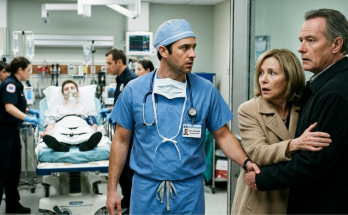
I thought about my mother standing in the hospital corridor.
Her hand was shaking.
She kept pressing a tissue to her mouth.
She looked devastated when she saw my badge.
Dr. Arthur Vance.
Those three words changed the way she looked at me.
I had spent years wanting her to know I'd succeeded.
Yet when the moment finally arrived, I didn't feel victorious.
I felt hurt.
I didn't want my mother to love me because I became a surgeon.
I wanted her to have loved me when I was frightened and exhausted.
I wanted her to have believed me when my future was uncertain.
I wanted her to have answered the telephone when I was sitting beside Sarah.
Instead, she had discovered my career while waiting for news about Julian.
I understood her fear for him.
I understood it completely.
Her son had nearly died.
She wanted to see him.
She needed reassurance that he would survive.
I didn't begrudge her that.
But I remembered the moment she told me he was her son.
I had looked at her and realized how much those words hurt.
He was her son.
So was I.
I had been her son during the five years she wasn't speaking to me.
I had been her son when Sarah died.
I had been her son when I graduated.
I had been her son when I married Clara.
Nothing about my family relationship had changed because I wore a white coat.
Only my mother's understanding of my life had changed.
I wished she could see that.
I thought about my father.
He had looked older than I remembered.
His expression had changed when I showed him the messages.
He had seemed unable to find an answer.
I wondered whether he was remembering the same moments I was.
The call.
The argument.
The decision to cut contact.
I remembered his attempt to explain.
He said he didn't recall speaking to me exactly the way I described.
That sentence had hurt more than he probably realized.
I had remembered his words through years of grief.
I had replayed them while wondering whether I should contact him again.
Now he seemed unsure whether he had said them.
I couldn't make him remember.
I couldn't force him to feel what I had felt.
But I didn't need his agreement to know the effect those words had on me.
I was there.
I heard them.
And I lived with them.
For five years, I had believed my father could make the pain disappear by admitting he'd been wrong.
Now I understood it wasn't so simple.
An admission would matter.
An apology would matter.
But the years would remain.
He couldn't attend a graduation that had already happened.
He couldn't stand beside me on a wedding day that had passed.
He couldn't meet Sarah while she was still alive.
And he couldn't return the nights I had spent wondering why my parents didn't want to hear from me.
Those losses were real.
I didn't know how to make peace with them.
But I was beginning to accept that peace wouldn't come from pretending they were small.
I thought about Clara.
She had never met the version of my family I remembered from childhood.
She knew them through the stories I told.
The pain I sometimes struggled to explain.
The messages I kept.
The unanswered attempts.
She had seen what those years did to me.
And she had never demanded that I stop loving my parents.
That was important.
Because I did love them.
I still wanted them to be well.
I still remembered good things.
I couldn't turn five years of hurt into proof that every earlier memory had been false.
But loving someone wasn't the same as trusting them.
And missing someone wasn't proof that I should let them hurt me again.
Clara seemed to understand that distinction naturally.
I was still learning it.
I remembered the way she brought me coffee and a sandwich.
I had been sitting alone in the physicians' lounge.
I hadn't eaten.
I was trying to make sense of Julian's confession.
She didn't tell me to forgive him.
She didn't demand that I cut him off forever.
She listened.
Then she reminded me that I was allowed to be hurt.
I hadn't realized how much I needed permission to feel something so obvious.
I was angry.
I was grieving.
I was disappointed.
I was relieved Julian had survived.
And I was frightened by how little I understood about the people I'd known all my life.
All those feelings were real.
None canceled the others.
I thought about how I had behaved during Julian's operation.
I had focused on saving him.
I hadn't allowed myself to think about his betrayal.
I couldn't.
A patient needed treatment.
And I was responsible for providing it.
There was something reassuring about that memory.
For four hours, I had known what my duty was.
I didn't have to wonder whether Julian deserved medical care.
He did.
I didn't have to decide whether I wanted to forgive him.
That wasn't relevant to the surgery.
I needed to do my work.
And I did.
But after the operation, the questions changed.
He was alive.
He was recovering.
And suddenly I was being asked to confront a family history I'd spent years trying to understand.
I couldn't treat those questions as medical problems.
There was no procedure to repair trust.
No scan that could measure regret.
No operation that could restore five years.
I thought about Grandfather's warning again.
Perhaps this was what he wanted me to understand.
Being capable of helping someone didn't mean being responsible for making everything right.
I could save Julian's life.
I couldn't make his choices honest.
I could speak to my parents.
I couldn't force them to listen.
I could examine the estate documents.
I couldn't undo the misuse of the trust by wishing it hadn't happened.
Those limits were difficult to accept.
But they were real.
I looked at my grandfather's letter.
He had written it with care.
He had wanted me to read it.
Julian had kept it from me for six years.
That fact still made me angry.
Yet the words had finally reached me.
And they were helping me understand something I hadn't managed to learn through all my professional training.
I didn't need to earn my place in the world by rescuing everyone around me.
I had already built a meaningful life.
I had married a woman who loved me.
I had become a doctor.
I had survived loss.
I had continued working when things were difficult.
Those accomplishments were mine.
They didn't belong to my parents.
They didn't belong to Julian.
And they didn't become more valuable because my family had finally learned about them.
I thought about the meeting with Margaret Ellis.
The original trust agreement still needed to be examined.
The transaction records needed to be understood.
The questions about Julian's use of the money remained.
Those things mattered.
I intended to take them seriously.
But I didn't want the inheritance to become another measure of my worth.
Grandfather hadn't left the fund because I was better than Julian.
He had left it to support my education.
He had trusted that the arrangements would be respected.
They weren't.
That wrong deserved to be acknowledged.
But I didn't need to turn the financial dispute into another competition between brothers.
I had spent enough of my life inside a competition I hadn't chosen.
I wanted the truth.
I wanted accountability.
And I wanted to make decisions with a clear understanding of the facts.
I didn't need to defeat Julian to prove my own value.
He had already shown what he had done.
I looked down at the envelope again.
My name was still there.
Arthur.
I thought about the difference between that name and the one printed on my hospital badge.
Grandfather had written to his grandson.
The hospital identified its surgeon.
Both were parts of me.
But neither depended on my parents' approval.
For the first time, I understood how much of my life I had spent waiting for someone else to confirm that I mattered.
I didn't want to keep waiting.
That realization didn't remove the hurt.
It didn't make me forgive Julian.
It didn't restore my relationship with my parents.
But it changed what I believed I had to do next.
I no longer needed to prove I was worth listening to.
I needed to decide whether the people who had refused to listen were now prepared to hear the truth.
And that was a decision I couldn't make for them.
Click here to continue reading: PART 14: I Could Save My Brother in the Operating Room, but I Could Not Protect Him from the Truth About What He Had Done
I Had Just Saved My Brother’s Life When My Parents Finally Realized the Son They Rejected Had Become a Surgeon
Part 13 of 15