I used to believe that keeping my family happy was worth almost any price.
Then I learned how much they expected me to pay.
Eighty-six thousand dollars.
That was the amount the woman at the bank had just mentioned.
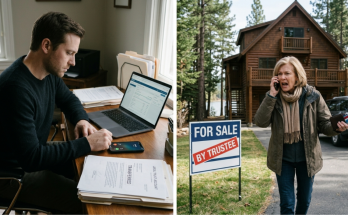
I sat at my desk with my laptop open, trying to understand why anyone had attempted to move that much money out of an account connected to my family trust.
I asked her to repeat the amount.
She did.
My fingers tightened around the phone.
“Who requested it?”
There was a brief pause while she checked her records.
“The request came through access associated with a secondary cardholder.”
I looked at the trust folder sitting beside my computer.
“Did the money leave the account?”
“No. Our system stopped the transaction before it went through.”
I felt a small amount of relief.
Then I remembered what she had said about earlier attempts.
“Was that the only request?”
She explained that the account history showed other unsuccessful activity.
More than one attempt.
More than one warning.
Someone had been trying to get into money they had no authority to move.
And the person I immediately thought of was my father.
I hated that my mind went there so quickly.
I hated even more that I had reasons to suspect him.
“Could you provide the records for all of those attempts?”
“Yes. We can arrange that.”
I asked her to include the access details and anything showing how the requests had been submitted.
She confirmed that the available records would be provided.
I thanked her.
Then I ended the call.
My apartment became quiet.
I could hear the low hum of my computer and a car passing outside.
Nothing else.
I looked at the amount I had written on a piece of paper.
$86,000.
I circled it.
I had never authorized my father to withdraw that money.
I had never asked him to handle a transaction of that size.
I had never even discussed such a transfer with him.
Yet someone had tried.
And I already knew my father had been treating the trust as if its restrictions were optional.
That was what frightened me.
Not simply the amount.
The confidence behind the attempt.
I opened my laptop again.
A message from the real estate agent was still visible in my inbox.
The cabin had been listed.
That decision had already caused more trouble than I could have imagined.
My family was angry.
My mother was acting wounded.
My father wanted explanations.
And several relatives seemed to believe that my property belonged to them because they had enjoyed spending time there.
I looked at the bank note again.
The cabin had been bad enough.
Now there was money.
For years, I had told myself that my parents were merely overbearing.
They liked making decisions.
They liked being in charge.
They liked having the last word.
I had accepted those habits as ordinary family behavior.
Looking back, I had been giving them an excuse.
There was a difference between a parent having an opinion and a parent behaving as though an adult child's property belonged to the entire family.
I had ignored that difference for a long time.
I reached for the folder beside my computer.
Clare had helped me organize it several months earlier.
At the time, I had thought her attention to paperwork was excessive.
She had wanted everything kept together.
The purchase records.
The cabin deed.
The trust agreement.
The financial permissions.
The arrangements connected to managing the property.
I had followed her advice without imagining why I might need those documents.
Now I understood.
I opened the folder and spread the papers across my desk.
The cabin deed was easy to find.
I knew exactly where it was.
I had looked at it many times over the years, usually with pride.
My name was on it.
Not my father's.
Not my mother's.
Not Mark's.
Mine.
That had always seemed perfectly clear to me.
Apparently, it had never been clear to anyone else.
I picked up the photograph beside my computer.
It showed the cabin before the renovations.
The porch was old.
The railing needed replacing.
Weeds had pushed their way along the driveway.
The place looked tired.
I remembered standing outside it when I first bought it.
I had been recovering from my divorce.
My life had felt uncertain.
I wanted something I could work toward.
Something that belonged to me because I had earned it.
The cabin had become that thing.
I had saved for it.
I had taken extra consulting work.
I had spent weekends dealing with repairs instead of resting.
There had been a roof to fix.
Windows to replace.
A heating system to install.
And a dock that required far more attention than I had expected.
I remembered the contractors.
The invoices.
The weekends I had spent looking at unfinished work and wondering whether I had taken on too much.
But I kept going.
When the place was finally comfortable, I felt proud in a way I had not felt for years.
Then my family started coming.
At first, I was glad.
I wanted my parents to enjoy it.
I wanted my brother Daniel to visit.
I wanted relatives to have a pleasant place to spend a few days.
I liked the sound of people laughing on the deck.
I liked seeing my father beside the grill.
I liked watching my mother arrange flowers as though she were preparing for a special occasion.
Those were good memories.
I wasn't pretending otherwise.
The problem was what happened afterward.
Visits became expectations.
Expectations became plans.
And plans were made without me.
Mark, my cousin, began asking for longer stays.
Then he stopped treating the question as though I had a choice.
Other relatives started discussing weekends before checking with me.
My parents began talking about what should be changed around the property.
They discussed maintenance.
Furniture.
Improvements.
And who should have access.
Sometimes I found out about those conversations only after everyone else had already agreed.
I told myself they meant well.
That was my favorite excuse.
They meant well.
They were excited.
They loved the cabin.
They considered it a family gathering place.
I kept telling myself those things because the alternative was uncomfortable.
The alternative was admitting that people I loved were taking advantage of me.
And I had spent a great deal of my life avoiding that conclusion.
The anniversary celebration had finally forced me to face it.
I could still picture myself arriving with a suitcase and a bottle of wine.
I had expected to spend time with my parents.
Instead, my mother made it clear that my presence was not especially welcome.
She told me I could remain, but that I should not expect anyone to be pleased about it.
I had stood there feeling like an intruder.
At my own cabin.
That memory returned whenever I looked at the deed.
I had paid for the building.
I had paid to make it comfortable.
I had allowed my family to enjoy it.
And somehow I had become the person who needed permission to be there.
The bank call brought those feelings back.
Only now, the situation was more serious.
I took out my phone and called Clare.
She answered after a few rings.
“Tell me this isn't another problem with your relatives using the cabin.”
I almost laughed.
I wished it were.
“No. I need your advice about the trust.”
Her tone changed.
“What happened?”
I told her about the bank.
I explained the attempted transfer.
I described the unsuccessful access activity.
Then I mentioned that someone associated with a secondary card had submitted the request.
Clare listened.
She did not interrupt me.
When I finished, she asked whether I had approved any independent access for my father.
I told her I hadn't.
She asked about a power of attorney.
There wasn't one.
Then she asked whether I had ever signed paperwork permitting him to remove funds on his own.
“No. I would remember something like that.”
“Then you need to treat this as more than a dispute between relatives.”
I looked at the papers spread across my desk.
“I know.”
“Keep every record you receive. Save the messages. Don't confront anyone about details you haven't confirmed.”
I wrote her instructions down.
She told me not to delete anything, including conversations that seemed insignificant.
She wanted the bank information preserved.
She wanted the trust documents available.
And she wanted me to avoid saying something in anger that could complicate matters.
I agreed.
Then she said something that made me stop writing.
“You have a habit of changing your mind when your family makes you feel responsible for their unhappiness.”
I looked down.
She was right.
“That isn't going to help you now,” she continued. “You need to remember why you started protecting yourself.”
I didn't answer immediately.
My throat felt tight.
“I'm trying.”
“I know. Just don't undo it because somebody cries or gets angry.”
After the call, I sat quietly for several minutes.
I thought about my divorce.
That experience had taught me something I had not wanted to learn.
When you spend years avoiding conflict, people sometimes begin treating your cooperation as something they own.
You say yes often enough.
Eventually, they stop asking.
That had happened in my marriage.
And I was beginning to understand that it had happened with my family too.
I gathered the papers and put them back in order.
Then I opened the folder of messages connected to the cabin.
There were old discussions about weekends.
Requests for additional guests.
Questions about expenses.
And conversations about improvements that nobody had asked me to approve.
I had saved them because Clare had recommended keeping records.
I had not understood their importance.
Not yet.
That night, I made myself dinner.
I barely tasted it.
My phone remained on the table beside my plate.
Part of me expected my father to call.
Part of me wanted him to.
I wanted a simple explanation.
Something that would make the bank's warning less frightening.
Maybe there had been a mistake.
Maybe a request had been attached to the wrong account.
Maybe the records would show something I had misunderstood.
I wanted that to be true.
But each time I looked at the amount on the paper, my doubts returned.
$86,000.
That wasn't an accidental purchase.
It wasn't a small misunderstanding about shared expenses.
It was a substantial amount of money.
And somebody had attempted to move it without my consent.
Before going to bed, I checked the trust folder one more time.
I found the section dealing with authorized access.
I read it carefully.
Then I read it again.
Nothing in those provisions gave my father the independent authority he appeared to have claimed.
I closed the folder.
My mother had made me feel unwelcome in my own property.
My father had apparently tried to reach money he couldn't freely use.
And the rest of the family was still behaving as though the cabin belonged to everyone.
I had spent years hoping that if I remained generous, they would eventually appreciate me.
That night, I admitted something different.
Generosity had not earned their respect.
It had simply made them comfortable.
And for the first time, I was no longer willing to pay for that comfort.
Click here to continue reading: PART 2: The Morning After the Bank Warning, I Found Messages Showing My Family Had Been Making Plans With Property and Money That Were Mine
I Thought My Family Had Only Taken Advantage of My Cabin Until a Bank Employee Mentioned a Transfer I Never Approved
Part 1 of 15