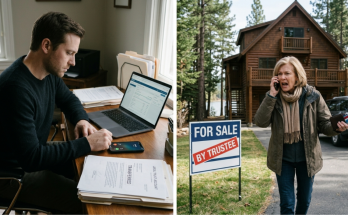
I had been nervous about the family meeting all morning.
Not because I doubted the documents.
I knew what they showed.
I was nervous because I knew my parents.
I knew how my mother could turn a simple disagreement into a question of whether I loved her.
I knew how my father could speak with such certainty that everyone else stopped asking questions.
And I knew how easily I had allowed both of them to influence me.
That Saturday, I decided I wasn't going to repeat the pattern.
I checked my bag before leaving.
The documents were there.
The copies Clare had organized were in order.
My phone was charged.
I had saved every relevant message.
There was nothing else I needed to prepare.
Still, I stood beside my apartment door longer than necessary.
I thought about calling Daniel.
Perhaps I could explain things privately before the meeting.
Perhaps he would understand if I told him what the bank had found.
Then I remembered our last conversation.
He had heard something about money for repairs.
He had avoided answering my questions.
And he had told me he didn't want to become involved.
I put my phone away.
I wasn't going to spend the morning trying to make him comfortable.
Clare met me before we went inside my parents' house.
She was carrying her own folder.
She looked calm.
I envied that.
“Are you ready?” she asked.
“I think so.”
She studied my face.
“You don't have to answer every accusation.”
I looked toward the house.
“That might be difficult.”
“I know. Let me handle the documents.”
I nodded.
Then we walked to the front door.
My mother opened it.
She looked at me first.
Then her eyes moved to Clare.
Her expression changed.
I could almost see her disappointment.
She had wanted me to arrive alone.
Someone she could scold.
Someone she could make feel guilty.
Someone who might agree to a compromise just to stop the argument.
Instead, I had brought a person who knew exactly what the paperwork said.
Mom stepped aside.
I entered.
The living room was crowded.
My father stood near the fireplace.
Mark was seated with his wife.
Daniel sat at the dining table.
Hannah was there with her husband.
My mother had arranged the gathering as though everyone needed to witness what I had done.
I looked around.
For a moment, I felt like a child who had been called into a room to explain bad behavior.
That feeling surprised me.
I was an adult.
I had purchased the cabin myself.
I had maintained it myself.
I had completed a legal sale.
Yet standing in my parents' living room brought back the familiar sense that I was expected to defend myself before anyone would listen.
Clare placed her folder beside the chair.
I sat down.
Nobody offered me coffee.
Nobody asked how I was doing.
My mother remained standing.
She looked toward the others.
Then she began.
“So, are you finally ready to explain yourself?”
I looked at her.
“I'm here to discuss what happened.”
She shook her head.
She said I had sold the family's cabin without considering anyone else's feelings.
I had expected those words.
Still, hearing them hurt.
I looked around the room.
Everyone was watching me.
I kept my voice even.
“The cabin belonged to me.”
My mother sighed.
She said I knew what she meant.
I did.
That was the problem.
She meant that everyone had become accustomed to using it.
She meant that the family had made plans around it.
She meant that because they had enjoyed something for years, I should no longer have the freedom to decide what happened to it.
I didn't say all that.
I simply repeated that the property had been mine to sell.
My father moved away from the fireplace.
He looked annoyed.
He said we needed to stop arguing about technicalities.
I almost laughed.
Technicalities.
The deed was a technicality.
The payments were technicalities.
The trust restrictions were technicalities.
Apparently, everything that established my ownership was something he wanted to dismiss.
He said the cabin had been associated with the family trust.
Everyone had been allowed to visit.
Everyone had contributed in different ways.
I listened.
Then Clare opened her folder.
She asked my father a simple question.
“Can you identify the payments you personally made toward purchasing the property?”
The room became quiet.
My father looked at her.
He clearly hadn't expected to be questioned.
He said the gathering was supposed to be about family.
Clare remained calm.
She explained that the financial facts were relevant because he had claimed shared ownership and contributions.
My father crossed his arms.
He said he had supported the family for years.
I looked down.
There it was again.
Support.
Emotional support.
Family loyalty.
Shared memories.
He kept using those things as though they were the same as paying for property.
Clare waited.
Then she asked whether he had records showing that he had funded the purchase.
He didn't produce any.
My mother interrupted.
She asked why Clare had come.
Her tone was sharp.
I answered before Clare could.
“She represents me.”
Mom looked offended.
She said we shouldn't need a lawyer to discuss family matters.
I looked at the folder.
“We didn't need one when this was only about weekends.”
My father frowned.
I continued.
“Things changed when financial documents were submitted without my permission.”
Nobody spoke.
Mark looked toward my father.
Daniel shifted in his chair.
My mother pressed her lips together.
Clare opened the folder fully.
She placed the purchase records on the table.
Then the deed.
Then the trust agreement.
The papers made small sounds as she arranged them.
I watched my father.
He didn't move.
Clare explained that the cabin had been purchased in my name.
The property had never been jointly owned by the family.
Permission to use it had been granted over the years.
That permission did not transfer ownership.
She spoke plainly.
No accusations.
No emotional language.
Just the documents and what they established.
My mother looked uncomfortable.
She said everyone had always treated the cabin as a shared place.
Clare acknowledged that family members had been allowed to use it.
Then she explained that regular use did not make them owners.
Mark shifted forward.
He said that wasn't how the family understood the arrangement.
Clare looked at him.
She asked whether he had a document showing he held an ownership interest.
He said he didn't.
Then she returned to the deed.
My name was there.
Nobody else's.
I felt my shoulders loosen slightly.
For years, my relatives had spoken with such confidence that I sometimes questioned things I knew were true.
Now the documents were sitting in front of everyone.
There was no need to argue about memory.
No need to debate what somebody had supposedly promised.
The deed said what it said.
Clare placed the maintenance records beside it.
There were payments for the roof.
The windows.
The heating system.
The dock.
The insurance.
The other expenses that had come with keeping the property in good condition.
I recognized the invoices.
Some of them reminded me of weekends I had spent worrying about money.
I remembered checking estimates.
I remembered deciding which repairs could wait.
I remembered taking extra consulting work because I wanted the property finished properly.
My family had enjoyed the results.
But they had never carried those obligations in the way I had.
Clare explained the payment history.
She did not exaggerate.
She did not make speeches about fairness.
She simply showed where the funds had come from.
My father looked toward the papers.
He said the family had helped in other ways.
I nodded.
“I'm not saying nobody ever helped me.”
He looked at me.
I continued.
“But helping me through my divorce didn't make you an owner of the cabin I bought afterward.”
My mother turned away.
She looked hurt.
I felt the old guilt rise.
I almost softened my words.
Then I remembered the bank records.
I remembered the $325,000 proposal.
I remembered the false signature.
I kept quiet.
Clare moved to the trust documents.
She explained that the account had an established structure and specific limits on who could authorize transactions.
Family access was not unlimited financial authority.
My father tried to interrupt.
He said he had been handling things because somebody needed to make decisions.
Clare asked which authorization allowed him to act independently.
He looked toward the documents.
He didn't identify one.
For a moment, nobody spoke.
I watched my mother.
She was holding a tissue.
Mark leaned back.
Daniel stared at the table.
I wondered what they were thinking.
Perhaps they had believed my father's statements without asking questions.
Perhaps they had known the deed was mine and simply hoped I would never insist on what that meant.
I couldn't tell.
And I wasn't going to guess.
Clare finished explaining the ownership records.
Then she looked at my father.
She said there was another matter that needed to be addressed.
The atmosphere changed.
I could feel it.
My father straightened.
My mother looked toward Clare's folder.
Mark stopped moving.
Clare took out the proposed loan document.
She placed it in the center of the table.
The amount was clearly visible.
$325,000.
I watched my father's face.
His expression lost some of its certainty.
Mark leaned forward.
He asked what the paper was.
My mother looked at it.
Then she said it wasn't important.
That response startled me.
She hadn't even allowed Clare to explain it.
Yet she wanted everyone to dismiss it.
Clare didn't react.
She explained that the document was a proposed loan involving the cabin.
The application had been accompanied by a disputed authorization.
I had denied signing that authorization.
The bank had not approved the proposed loan.
And the submission was under further review.
My father began speaking before she finished.
He said he had only been trying to protect the property.
I looked at him.
Protect it.
That was the word he chose.
I remembered the old railing.
The broken windows.
The roof repairs.
All the years I had spent maintaining the place.
I had protected the cabin by paying for it.
My father had apparently tried to protect it by arranging a loan against it.
I didn't understand how he could say that with a straight face.
I asked him what improvements required $325,000.
He looked at me.
Then he said the family needed to plan for the future.
I waited.
He didn't explain.
Clare asked whether the proposed borrowing had ever been approved by the owner.
My father looked down.
I could hear my mother's breathing.
The room felt smaller than it had when I entered.
Then I looked at the names on the document.
My father's.
My mother's.
Mark's.
I knew what the next conversation needed to address.
For years, everyone had wanted to talk about what I owed the family.
Now the paperwork was showing what some of them had expected to receive from me.
And for the first time, my father was not the person deciding which questions could be asked.
Click here to continue reading: PART 10: When Clare Revealed the Three Names on the $325,000 Loan, My Cousin Had to Explain What He Really Knew About the Cabin
I Thought My Family Had Only Taken Advantage of My Cabin Until a Bank Employee Mentioned a Transfer I Never Approved
Part 9 of 15