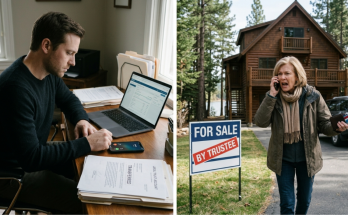
I hadn't told my family about the accepted offer.
That was deliberate.
I knew they would eventually discover the sale.
The agent had to do her work, and the property couldn't remain a secret forever.
But I wanted the transaction handled correctly before my relatives found another way to interfere.
I also wanted the bank's review to continue without unnecessary confrontation.
Clare had been clear about that.
Keep the records.
Follow the process.
Don't give anyone an opportunity to destroy or alter evidence.
I had repeated those instructions to myself whenever I felt tempted to call my father.
I wanted to know what he had been thinking.
I wanted to ask him how the management authorization had been submitted.
And I wanted to know why my mother and Mark had been listed as intended recipients of the proposed loan.
But I waited.
For once, I allowed the documents to matter more than my need for an immediate explanation.
On Thursday afternoon, I was in my apartment preparing dinner.
The kitchen smelled of food cooking.
My bag was on a chair.
The trust folder was closed on my desk.
It had been a fairly ordinary day.
I was glad of that.
Then the doorbell rang.
I wasn't expecting anyone.
I turned down the heat and went to the door.
My father was standing outside.
He had a folder under one arm.
His expression was tight.
He looked past me into the apartment.
“Are you going to let me come in?”
For a moment, I considered saying no.
I was tired.
I didn't want another argument.
But he was my father, and I still hadn't completely lost the habit of making room for him.
I stepped aside.
He entered without saying much.
Then he walked into the living room as though he had come to conduct a meeting.
I closed the door.
“Where's Mom?”
“At home.”
He placed the folder on my coffee table.
He said she had been upset for days.
According to him, she had barely stopped crying.
I didn't respond.
I knew my mother was unhappy.
She had made sure I knew.
But her tears did not explain the attempted transfer.
They did not explain the loan proposal.
And they did not explain a signature that wasn't mine.
My father remained standing.
He looked around the room before turning back toward me.
“We have to settle this.”
I looked at the folder.
“What have you brought?”
He sat down and opened it.
He called it a family agreement.
The phrase made me uneasy.
I had heard enough about family arrangements to know that my relatives usually meant something very different from what I meant.
To me, an agreement required everyone involved to understand and approve the terms.
To my parents, it often seemed to mean that they had already decided something and expected me to accept it.
I sat across from him.
He slid the papers toward me.
I began reading.
The proposed arrangement placed the cabin under shared family management.
It discussed maintenance.
Insurance.
Taxes.
Future improvements.
It also proposed using the trust to cover those expenses.
I read slowly.
My father watched me.
He seemed impatient.
Near the end, I found the section dealing with management authority.
He would become the primary manager.
I stopped.
Then I looked at the bottom of the document.
There was a place for my signature.
I felt an unpleasant sense of familiarity.
A signature.
Again.
This time, the line was blank.
He wanted me to fill it.
I turned back to the first page and reread the proposal.
The document was written as though the arrangement would benefit everyone.
But I couldn't find any meaningful protection against the very problems I had been trying to stop.
My father would manage the property.
The trust would fund the expenses.
The relatives would continue enjoying access.
And I would remain the person whose approval made the whole arrangement possible.
I closed the folder.
“No.”
My father stared at me.
“You haven't given it any thought.”
“I read it.”
“You barely looked at it.”
“I saw what it says.”
He leaned forward.
He began explaining why shared management made sense.
The family had been using the cabin for years.
My mother had become attached to it.
Everyone wanted to continue the tradition.
He believed the arrangement would prevent further disagreements.
I listened.
Then I told him the proposal did not solve the problem.
It simply gave him formal control over something he had already been treating as his.
He didn't like that.
He said I was being unfair.
I looked at the papers.
“Dad, why should the trust pay for improvements you decide to make?”
He said the improvements would benefit the whole family.
I asked who had agreed to them.
He answered with another speech about cooperation.
I asked again.
“Who approved these expenses?”
His expression hardened.
He said I was making a simple issue complicated.
I almost smiled.
That was familiar.
Whenever I asked a question my parents disliked, the question itself became the problem.
Not the missing answer.
Not the unauthorized decision.
My insistence on knowing.
I put the folder back on the table.
“I won't sign it.”
He shook his head.
Then he began talking about the years of memories our family had made at the cabin.
The celebrations.
The weekends.
The meals.
He said those experiences meant something.
I agreed.
Of course they meant something.
I wasn't trying to erase them.
But those memories didn't change the deed.
I told him that.
He looked frustrated.
“Why are you so determined to keep reminding everyone whose name is on the paperwork?”
I looked directly at him.
“Because you keep acting as though it doesn't matter.”
He pressed his lips together.
Then he told me our family had made sacrifices for me.
I waited.
He mentioned the divorce.
He said my mother and he had been there when I needed support.
I felt something tighten in my chest.
My divorce had been difficult.
I had never denied that.
My parents had offered emotional support during that period.
I had appreciated it.
But I had not asked them to purchase the cabin.
I had not asked them to fund the renovations.
And I had never promised them ownership in return for being my parents.
I explained that as calmly as I could.
“I paid for the property after the divorce.”
He looked away.
“I know that.”
“I took extra work. I saved. I handled the repairs.”
“We were there for you.”
“Yes. And I was grateful.”
He seemed pleased with that part.
Then I continued.
“But helping me through a difficult time didn't give you ownership of what I bought afterward.”
His face changed.
He told me I was thinking like a stranger rather than a daughter.
That hurt.
I wished it didn't.
But it did.
Even after everything, I still cared what my father thought of me.
I wanted him to understand why I was upset.
I wanted him to say he had made a mistake.
I wanted him to acknowledge that my property was mine to manage.
Instead, he sat in my living room demanding that I sign it over to his control.
I looked at the document again.
He had brought it as though the decision had nearly been made.
All that remained was my signature.
And somehow he still seemed surprised that I was refusing.
I took a breath.
Then I asked the question that had been bothering me since the anniversary celebration.
“Dad, would you still have wanted me at the cabin if I hadn't been the person who owned it?”
He frowned.
He asked what kind of question that was.
I told him it was a genuine one.
He shifted in his chair.
I continued.
“When Mom told me I wasn't really welcome at the anniversary gathering, did you think that was acceptable?”
He looked annoyed.
He said the party had been stressful.
I waited.
He said people sometimes spoke carelessly when they were tired.
I asked whether he had spoken to her afterward.
He didn't answer.
I thought about standing outside with my suitcase.
The bottle of wine had felt heavy in my hand.
I remembered how foolish I had felt.
I had arrived expecting to be part of the celebration.
Instead, I had been made to feel like somebody whose presence had to be tolerated.
I looked at my father.
“You knew I was hurt.”
He sighed.
He said I was holding on to something that should have been forgotten.
That sentence settled something inside me.
I had spent so long trying to make my parents understand the injury.
But my father wasn't interested in understanding.
He wanted me to stop mentioning it.
Because if I stopped mentioning it, he could continue asking for what he wanted.
I pushed the agreement toward him.
“I won't be signing this.”
He stared at me.
Then he stood.
He began gathering the papers with sharp movements.
The folder slipped slightly in his hands.
He corrected it and tucked everything under his arm.
He told me I was being selfish.
He said I was making a serious mistake.
I stayed seated.
He expected me to become upset.
I could see that.
In the past, I would have defended myself.
I would have explained my intentions.
I might even have asked him to sit down again so we could try to find a compromise.
But there was nothing left to compromise about.
I had no intention of giving him management authority.
Not after what Clare had shown me.
He walked toward the door.
Then he turned.
He warned me that my mother would be devastated when she learned how far I had taken the situation.
I looked at the folder beneath his arm.
I thought about the disputed signature.
The business email.
The proposed loan.
I stood.
“Then maybe you should tell her what happened with the papers you sent to the bank.”
He stopped moving.
For several seconds, he looked at me without speaking.
It was the first time that afternoon he seemed unsure of what to say.
I watched his face.
His anger had not disappeared.
But something else had appeared beside it.
Alarm.
He did not ask which papers I meant.
He did not demand an explanation.
He simply looked at me.
Then he opened the door.
And left.
I stood there listening to his footsteps fade.
My dinner was still waiting in the kitchen.
I had forgotten about it.
I returned to the stove and turned off the heat.
Then I sat down.
I wasn't celebrating.
I hadn't won anything.
My father had come to my home and asked me to give him control over property that I owned.
I had refused.
That should have been an ordinary boundary.
Instead, it felt like a major confrontation.
I thought about how much energy I had spent over the years trying to keep him pleased.
I had allowed his opinions to shape decisions that should have been mine.
I had let his disappointment make me question myself.
And now he was leaving angry because I had declined to sign another document.
I looked toward the living room.
The folder was gone.
I was glad.
But I knew the conversation was not finished.
That evening, my mother called.
I watched her name appear on the screen.
The phone rang until the call ended.
I didn't answer.
A few minutes later, a voicemail appeared.
I hesitated before playing it.
Then I listened.
My mother sounded upset.
She said Dad had come home and told her I had accused him of trying to steal.
She said he had spent his life taking care of the family.
She couldn't believe I would question his character over documents.
Her voice trembled.
She asked how I could embarrass him that way.
Then she said I was putting his reputation at risk.
I listened to the entire message.
When it ended, I sat quietly.
She had not asked whether the documents were genuine.
She had not asked why a disputed authorization had been submitted.
She had not asked whether the attempted transfer had been approved.
Her concern was his reputation.
Not the money.
Not the cabin.
Not what had happened to me.
I replayed the voicemail.
I wanted to be certain I had understood her.
Then I saved it.
Clare had asked me to preserve communications.
So I did.
I added the date to my notes.
I wrote down that my father had visited with a proposed family management agreement.
I recorded that I had declined to sign.
Then I placed the notes with the other documents.
For a moment, I looked at my phone again.
My mother had always known how to make me feel responsible for her distress.
A shaking voice.
A reference to family sacrifices.
A reminder that my father was upset.
Those things had worked on me for years.
I wasn't immune to them now.
I still felt guilty.
But guilt was no longer enough to change my decision.
I knew what the deed said.
I knew what the trust agreement allowed.
I knew what the bank had confirmed.
And I knew I had never signed the document Clare had shown me.
My parents didn't need to agree with those facts.
They were still facts.
I returned to the kitchen.
The food had cooled.
I put it on a plate and sat down to eat.
It wasn't a pleasant dinner.
But it was quiet.
Nobody was shouting.
Nobody was demanding a key.
Nobody was asking me to sign away control of something I owned.
I finished eating and washed the dishes.
Then I checked the message from the real estate agent.
The sale was still moving forward.
The buyers remained interested.
The arrangements for closing were being prepared.
I read the message and felt something I hadn't felt during my father's visit.
Certainty.
The cabin would be sold.
I wasn't going to let another conversation about family loyalty change that.
I turned off the kitchen light.
Then I went to bed without calling my parents back.
Click here to continue reading: PART 7: My Cousin Found Out the Cabin Was Being Sold, and Within Minutes the Whole Family Was Demanding I Cancel the Deal
I Thought My Family Had Only Taken Advantage of My Cabin Until a Bank Employee Mentioned a Transfer I Never Approved
Part 6 of 15