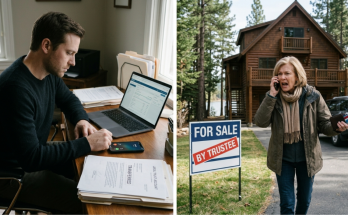
I had expected selling the cabin to feel like losing something.
Instead, the morning of the closing felt unusually calm.
I still had things to do.
Documents to review.
Signatures to provide.
Final details to confirm.
But I wasn't arguing with my family.
I wasn't trying to convince anyone that I had the right to make the decision.
The sale was moving forward because I had chosen to proceed.
That was unfamiliar.
I arrived with my paperwork organized.
Clare had helped ensure that everything necessary was available.
The deed had been reviewed.
The trust arrangements had been examined.
The outstanding expenses had been accounted for.
I had asked enough questions to understand what was being signed.
I was not taking anything for granted.
After seeing the disputed management authorization, I had become especially careful with signatures.
I read the documents slowly.
I checked the names.
I checked the figures.
I looked at the terms.
Then I signed where required.
My own handwriting.
My actual consent.
I noticed the difference.
It was a small thing, perhaps.
But after someone had apparently tried to imitate my signature, the act of signing a document I fully understood felt important.
I wasn't giving anyone else permission to decide for me.
I was making the decision myself.
The buyers were Robert and Susan.
They were a quiet couple.
They had two teenage children.
They wanted somewhere their family could spend weekends together, away from the usual demands of daily life.
When the agent had first described them, I had felt a little sad.
Their plans sounded so much like mine had when I bought the cabin.
But meeting them changed that feeling.
They weren't demanding access to something that belonged to somebody else.
They were purchasing a property they wanted.
They understood that ownership came with obligations.
And they seemed genuinely pleased about the place.
During the final walkthrough, I found myself noticing details I had stopped appreciating.
The windows.
The repaired porch.
The heating system.
The rooms that had once required so much work.
I remembered the first time I walked through the property before buying it.
I had seen problems everywhere.
But I had also seen possibilities.
Now those possibilities had become real.
The place was comfortable.
The work had been done.
And another family was preparing to enjoy it.
I watched Robert move through the property.
He asked practical questions.
I answered them.
He seemed interested in understanding how things worked.
I appreciated that.
Susan spent time looking at the rooms.
Then she walked outside toward the dock.
I followed a little later.
She was standing near the water.
The lake was quiet.
Sunlight reflected from the surface.
I had stood in that same place more times than I could count.
Sometimes with coffee.
Sometimes while waiting for contractors.
Sometimes after a long week when I wanted nothing more than an afternoon without arguments.
Susan looked back toward me.
She said the property was beautiful.
I thanked her.
Then she explained that Robert had grown up near a lake.
They had wanted to find somewhere that reminded him of those years.
They had searched for a place where their children could spend time outdoors and make memories together.
I listened.
I could hear the excitement in her voice.
It was simple.
There was no demand.
No accusation.
No assumption that I owed her anything.
She was grateful that the purchase was happening.
I looked at the dock.
I remembered arranging for it to be rebuilt.
I remembered the invoices.
I remembered worrying about the additional expense.
Now Susan was standing there smiling at the view.
I felt something soften inside me.
The cabin wasn't being wasted.
It wasn't going to disappear.
It was going to become someone else's home.
I told her I hoped her family would enjoy many happy weekends there.
She thanked me.
Her words were ordinary.
But they meant more than she could have known.
I had spent years allowing relatives to use the cabin.
They had thanked me sometimes.
Of course they had.
But as the years passed, gratitude had been replaced by expectation.
Susan's appreciation reminded me how different things felt when someone respected what you had provided.
For a moment, I considered telling her why I was selling.
I could have explained the anniversary celebration.
The arguments.
The unauthorized rentals.
The bank's warnings.
The documents with my disputed signature.
But I didn't.
Those problems didn't belong to Robert and Susan.
They were buying a peaceful place.
I wasn't going to make their first memories of it about my family's behavior.
So I simply smiled.
Then we returned toward the house.
The final walkthrough ended without any problems.
The remaining closing arrangements were completed that afternoon.
When everything was finished, the cabin belonged to Robert and Susan.
I sat quietly for a moment after signing the final documents.
There was no dramatic feeling.
No sudden excitement.
No overwhelming sadness.
Mostly, I felt tired.
I had spent so much energy protecting the property from people who believed they were entitled to control it.
Now I no longer had to do that.
The property was theirs.
I hoped they would take good care of it.
I hoped their children would enjoy the lake.
And I hoped nobody in their family would ever make the person paying for the home feel unwelcome there.
The sale proceeds were handled through the documented closing process.
The agreed expenses and remaining obligations were settled.
The financial arrangements were recorded carefully.
Clare also ensured that the money held in the separate legal account was handled according to the trust agreement.
That included funds connected to rental income collected without my authorization.
I had learned more than I wanted to know about how the cabin had been used when I wasn't there.
There had been stays I had believed involved relatives or family friends.
Later, records showed that money had been collected.
Dates.
Deposits.
Messages.
Payments.
I had not approved those rentals.
And I had not given Mark or anyone else permission to collect income from my property.
It was difficult to accept that people I trusted had treated my home as something they could use to make money.
But the evidence existed.
Clare had helped me preserve it.
Every transaction needed to be accounted for.
I didn't want guesses.
I didn't want vague explanations.
I wanted the records to show what had happened.
When the closing was complete, I returned to my apartment.
I put my keys on the table.
Then I sat down.
I had sold the cabin.
The sentence felt strange.
I said it quietly to myself.
“I sold it.”
For a long time, I had believed I would keep that property for the rest of my life.
I thought it would always be there.
A place I could return to after a difficult week.
A place where I could sit near the lake and remember how far I had come since my divorce.
But I had also learned that the meaning of a place could change.
The cabin had once represented independence.
Then it had become the center of expectations that seemed to grow every year.
I couldn't return it to what it had been simply by keeping the deed.
And I didn't want to spend my future defending it.
I opened my laptop.
The family group chat remained muted.
There were still unread messages.
I didn't check them.
The sale had been completed.
I wasn't going to invite another argument about a decision that was no longer available for debate.
Instead, I sent Clare a message confirming that I was home.
She replied that the closing documentation was in order.
Then she reminded me that the bank's investigation was still ongoing.
The property sale was complete.
The financial matter was not.
I read her message twice.
It would have been comforting to believe everything had ended that afternoon.
But the disputed loan application still existed.
The attempted $86,000 transfer was still part of the records.
And the questionable authorization still needed examination.
Selling the cabin had protected my future from further disputes about access.
It had not erased what people had already attempted.
A few days later, Clare contacted me with another update.
The bank had provided additional information.
My father had communicated with a financial representative on several occasions.
He had represented himself as someone authorized to handle matters involving the cabin's finances.
The records connected those claims to the proposed management arrangement.
I listened without interrupting.
Clare explained that the bank had also confirmed the disputed authorization was part of the paperwork submitted for review.
The document containing my supposed signature was not merely something my father had kept in a private folder.
It had actually been presented in connection with financial business.
I felt my stomach tighten.
“Did they confirm he was using it?”
“They confirmed the submission and the representations associated with it. The signature itself remains disputed.”
I looked at my desk.
The trust folder was still there.
I remembered how my father had arrived at my apartment with another agreement.
That document had also required my signature.
He had seemed certain I would eventually sign.
I thought about his face when I mentioned the bank paperwork.
He had stopped arguing.
He had left without asking which documents I meant.
At the time, I hadn't wanted to draw conclusions from his reaction.
Now the records gave that moment more weight.
He had not simply been talking to relatives about how the cabin should be managed.
He had been communicating with a financial institution.
And he had claimed authority that I had never granted.
I asked Clare what would happen next.
She explained that the bank had referred the matter for further examination.
The disputed authorization would be reviewed through the appropriate channels.
She wanted me to continue avoiding public accusations.
No family messages explaining everything.
No emotional statements.
No confrontation with Mark.
And no private arguments with my father about the evidence.
I agreed.
I didn't want another fight.
I wanted the truth established properly.
Still, I couldn't stop thinking about the amount of money involved.
The $86,000 transfer had been stopped.
The $325,000 loan had not been approved.
Those facts mattered.
Neither transaction had gone through as proposed.
But I was troubled by how close my family had come to creating serious financial problems for me.
I thought about how differently the situation might have developed if the bank hadn't flagged the activity.
Or if Clare hadn't encouraged me to organize my records.
Or if I had continued avoiding uncomfortable conversations because I didn't want my parents to be angry.
I knew I couldn't answer those questions.
But they made me appreciate how important the documents had become.
For years, I had believed that trust between family members meant not needing paperwork.
My father had encouraged that attitude.
He spoke about loyalty.
He spoke about shared responsibilities.
He spoke about the family acting together.
But when money and property became involved, words had not protected me.
The deed had.
The trust agreement had.
The bank records had.
And Clare's insistence on documenting everything had given me a way to respond without relying on another argument.
I closed my laptop.
Then I walked into the living room.
The photograph of the old cabin was still on my desk.
I picked it up.
The damaged porch looked almost unfamiliar now.
I remembered standing in front of it and wondering whether I could afford the renovations.
I had been frightened then too.
But it had been a different kind of fear.
I had worried about contractors and bills.
Not whether my own parents would respect my signature.
I placed the photograph back in its frame.
I wasn't going to throw it away.
The cabin had been part of my life.
There had been good memories.
I had worked hard.
I had built something valuable.
The fact that my family later mistreated me did not erase those achievements.
I wanted to remember that.
Over the following days, I continued providing Clare with anything she requested.
I sent the saved messages.
I checked the dates on the records.
I confirmed which documents I had signed and which I had never authorized.
It was tiring.
Sometimes I felt angry all over again.
Sometimes I wanted to stop thinking about the entire matter.
But I understood that the investigation needed patience.
There would not be a single conversation that settled every question.
There would be records.
Reviews.
Formal responses.
And decisions made by the people responsible for examining the disputed transactions.
I could live with that.
What I could not do was pretend the documents were unimportant simply because the people involved were my relatives.
Then my mother began insisting on a family meeting.
She said everyone needed to sit down and stop the fighting.
She wanted the matter discussed together.
I read her message and felt the old pressure return.
I knew what she wanted.
She wanted a conversation where emotion would matter more than documentation.
She wanted everyone in the same room.
She wanted me to feel the weight of their disappointment.
A year earlier, I might have agreed immediately.
I would have told myself that meeting was the mature thing to do.
I would have hoped that if I explained everything carefully, my parents would finally understand.
This time, I contacted Clare first.
I told her about the request.
She considered it.
Then she explained that any discussion involving the disputed documents needed to be handled with appropriate legal guidance.
She did not want me attending a meeting where relatives could pressure me into making statements or agreements without understanding the consequences.
I agreed.
If there was going to be a meeting, I wanted the records present.
I wanted the facts available.
And I wanted someone beside me who understood what the documents actually meant.
Clare said she would accompany me.
That changed how I felt about attending.
I wasn't going to sit alone while my father insisted he had authority over the cabin.
I wasn't going to argue about whether the trust belonged to everybody.
And I wasn't going to apologize for selling property I had legally owned.
The meeting was arranged for Saturday afternoon at my parents' house.
My mother wanted the relatives there.
I knew Daniel would attend.
Mark would probably come.
Hannah had been involved in the family discussions too.
I didn't know whether anyone was prepared to acknowledge what had happened.
But I wasn't going there to demand an apology.
I was going because the confusion about ownership and financial authority needed to end.
That evening, I gathered the documents Clare wanted me to have available.
The purchase records.
The deed.
The trust agreement.
The maintenance expenses.
The insurance information.
The rental income records.
And the documents connected to the proposed loan.
I arranged them carefully.
Then I looked at the family group chat.
There were messages about the meeting.
My mother wanted everyone to behave respectfully.
My father had said very little.
Mark seemed impatient to have the matter settled.
I wondered what they believed was going to happen.
Perhaps they thought I would be embarrassed into admitting I had acted unfairly.
Perhaps they believed the sale could still be challenged through family pressure.
Perhaps they were simply angry that the cabin was gone.
I didn't know.
And I no longer wanted to spend hours guessing.
The property had new owners.
The sale was complete.
The trust remained protected.
The disputed financial activity was being reviewed.
Those were the facts.
I placed the documents in my bag.
Then I made coffee and sat down.
For a long time, I looked at the photograph of the cabin.
I thought about Robert and Susan.
By now, the property was theirs.
Their children would have a place to spend weekends.
The dock would be used again.
The porch would still catch the morning light.
And I would no longer have to wonder who was staying there without asking me.
I felt sad.
But I also felt free.
The next day, I would enter my parents' house with Clare beside me.
I would not be bringing a bottle of wine.
I would not be asking whether I was welcome.
I would be bringing the documents that showed what I owned, what I paid, and what I had never agreed to authorize.
For once, I wasn't going to rely on my family's version of events.
I was going to rely on the records.
Click here to continue reading: PART 9: I Walked Into My Parents’ House With My Lawyer, and for the First Time My Father Could Not Control the Story Everyone Heard
I Thought My Family Had Only Taken Advantage of My Cabin Until a Bank Employee Mentioned a Transfer I Never Approved
Part 8 of 15