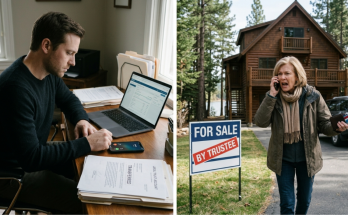
My mother looked away when I mentioned the anniversary celebration.
She knew which day I meant.
I could see it in her face.
For months, I had tried to convince myself that her words had been spoken without thought.
I had imagined she was tired.
Busy.
Stressed about hosting everyone.
I had searched for reasons to excuse her.
But sitting in that room, surrounded by people who had benefited from my generosity, I realized I had never asked her to explain what she meant.
I had simply carried the hurt.
And tried to forget it.
I looked at her.
“Do you remember when I arrived at the cabin for your anniversary?”
She pressed the tissue between her fingers.
She said she remembered the gathering.
I nodded.
“I arrived with my bag and a bottle of wine.”
Nobody spoke.
I could picture the scene clearly.
The cabin looked beautiful.
There were people inside.
I had expected to join the celebration.
Instead, my mother had met me with an expression that made me feel I had interrupted something.
I had been told I could stay.
But she had also made it clear that nobody particularly wanted me there.
I looked down for a moment.
Even now, remembering those words made my stomach tighten.
I had bought that cabin.
I had paid to renovate it.
I had allowed my family to use it.
And somehow, on the day of my parents' anniversary celebration, I had become the person who needed permission to remain.
I looked back at Mom.
“You made me feel like I had no place there.”
She shook her head.
She said I had misunderstood her.
I waited.
She added that organizing the celebration had been stressful.
There had been a lot to handle.
People were arriving.
She had been tired.
I listened.
Then I asked why she had spoken to me that way.
She didn't answer.
I gave her time.
She looked at her tissue.
Then at my father.
Then back toward the table.
I had spent years filling silences like that.
When Mom didn't answer, I usually offered an explanation for her.
I would say she hadn't meant it.
I would say she was under pressure.
I would say I understood.
That was how we avoided difficult conversations.
This time, I didn't help her.
I simply waited.
Her silence continued.
I felt sad.
Not angry.
Sad.
Because I had wanted a simple acknowledgment.
I wanted her to say she had been wrong.
I wanted her to recognize that humiliating me in front of the family had hurt.
But she seemed more interested in explaining why the day had been difficult for her.
I looked around the room.
My father was staring at the documents.
Daniel kept his eyes lowered.
Mark looked uncomfortable.
Hannah remained quiet.
I wondered whether any of them remembered that day the way I did.
Perhaps they had barely noticed.
Perhaps the conversation had seemed ordinary to them.
Perhaps they had become so accustomed to Mom speaking sharply to me that they no longer recognized it as cruel.
I didn't know.
I didn't need to know.
I remembered.
That was enough.
I looked at my mother again.
“I stood outside a house I paid for, feeling as though I had arrived somewhere I wasn't invited.”
Her eyes filled with tears.
She said she hadn't intended to hurt me.
I wanted to believe her.
I really did.
But I had heard that explanation many times before.
She hadn't meant it.
She was tired.
She was stressed.
She was upset.
There was always a reason.
And I was always expected to accept it.
I asked her why she had not apologized afterward.
She looked toward my father.
Then she said she thought I understood.
I stared at her.
Understood.
That word stayed with me.
I had understood that she was stressed.
I had understood that hosting guests required effort.
I had understood that family gatherings could be tiring.
What I had not understood was why any of those things made it acceptable to tell me I was unwanted in my own home.
I didn't raise my voice.
I didn't need to.
I told her that the anniversary celebration had changed how I felt about the cabin.
Before that day, I had believed my relatives understood what the property meant to me.
I thought they appreciated being invited.
I thought they knew I wanted them there because I loved them.
But when Mom made me feel unwelcome, I realized something had changed.
They no longer treated the cabin as my home.
They treated it as a family possession.
And I was only welcome when my presence suited their plans.
My mother began crying again.
My father looked annoyed.
He said I was making too much of one unpleasant conversation.
I looked at him.
“One conversation?”
He crossed his arms.
I continued.
“What about the weekends arranged without asking me?”
He didn't respond.
“What about the money collected from guests?”
Mark shifted in his chair.
“What about the trust access?”
My father looked down.
“And what about the loan proposal?”
The room went quiet.
I hadn't intended to list everything.
But once I began, I couldn't pretend the anniversary celebration had happened in isolation.
It was part of a pattern.
My relatives made decisions.
I paid the costs.
They enjoyed the benefits.
And when I objected, I was told I was selfish.
I looked at the papers Clare had arranged.
I had spent years convincing myself that being a good daughter meant making life easier for everyone else.
I shared the cabin because I wanted my family to be happy.
I paid the expenses because the property belonged to me.
I accepted last-minute requests because I didn't want anyone disappointed.
I overlooked rude comments because I wanted family gatherings to remain peaceful.
I had thought all those choices made me generous.
Some of them probably had.
But I had also used generosity to avoid saying no.
And my relatives had become accustomed to that.
I admitted it aloud.
“I let this go on for too long.”
Daniel looked up.
I continued.
“I kept agreeing because I thought that was what family expected from me.”
My voice shook slightly.
I paused until I could continue.
“I thought if I gave enough, everybody would be happy.”
Nobody interrupted.
I looked toward my mother.
“But there was always another request.”
Another weekend.
Another guest.
Another improvement.
Another expense.
Another conversation about who should have access.
I had never been asked whether I was comfortable with how the arrangements were changing.
People simply assumed I would cooperate.
And when I finally stopped, they acted as though I had betrayed them.
My father shook his head.
He said I was exaggerating.
I felt something settle inside me.
I had expected that response.
For years, whenever I tried to describe something painful, my father made it sound smaller than it was.
I was too sensitive.
I misunderstood.
I remembered things incorrectly.
I was making trouble.
But the documents on the table were not feelings.
The payment history was not a misunderstanding.
The deed was not an exaggeration.
The rental deposits were not imagined.
And the disputed signature was not something I had invented.
I looked directly at him.
“I'm telling you what happened.”
He didn't answer.
I didn't ask him to agree.
I was finished trying to persuade him that my experience mattered.
I looked around the room.
“I didn't sell the cabin because I wanted to hurt anyone.”
My mother wiped her eyes.
“I sold it because I couldn't keep living with the way everyone treated it.”
I thought about the nights I had spent wondering whether I was being unreasonable.
I had worried about disappointing my parents.
I had worried about losing contact with relatives.
I had worried that selling the cabin would make everyone believe I was greedy.
Those worries had kept me awake.
But they hadn't changed the facts.
I had purchased the property.
I had carried the financial responsibility.
And I had the right to decide whether to keep it.
I told them that.
Then I added something I had needed to say for a long time.
“Being related doesn't mean one person has to provide everything while everyone else decides what they deserve.”
I looked at Daniel.
He lowered his eyes.
I looked at Mark.
He was staring at the rental papers.
I looked at my father.
He appeared angry.
Then I looked at Mom.
She was crying quietly.
I felt an old urge to apologize.
The urge was so strong that I almost spoke.
I wanted to tell her I hadn't meant to upset her.
I wanted to say we could discuss things later.
I wanted to make the room comfortable again.
Then I remembered the suitcase.
The wine bottle.
The cabin doorway.
I had stood there feeling unwanted.
My mother had not hurried to comfort me.
She had continued hosting her celebration.
I understood that her pain mattered.
But mine mattered too.
I stayed in my chair.
Clare allowed the room to remain quiet for a while.
Then she began gathering the documents.
She explained that the disputed financial matters would continue through the proper legal process.
The authorization remained under review.
The attempted transfer had been stopped.
The proposed loan had not been approved.
And questions about unauthorized transactions would be addressed formally.
She made it clear that the meeting was not a place to settle disputed financial claims through pressure or promises.
That was a relief.
I had been worried someone would try to persuade me to sign something before leaving.
My father had already arrived at my apartment with a proposed family management agreement.
I wasn't going to repeat that experience.
Clare placed the loan documents back into her folder.
Then the rental records.
Then the ownership papers.
One by one, the pages disappeared from the table.
I watched them go.
The evidence was still there.
But it no longer needed to remain spread across my parents' living room.
Everyone had seen enough to understand that the situation was more serious than a disagreement about weekend access.
My father stood first.
He looked at Clare.
Then at me.
He said the entire meeting had been unnecessary.
I didn't respond.
He walked out of the room.
Mark followed soon afterward.
He didn't look at me.
His wife went with him.
I wondered what they would say to each other later.
But their conversation was no longer my responsibility.
Hannah and her husband remained quiet.
Daniel sat at the table for a moment longer.
He looked as though he wanted to speak.
Then he stood.
I didn't ask him to explain himself.
I was tired of chasing conversations that other people refused to have honestly.
My mother stayed on the sofa.
The tissue box rested beside her.
I stood and picked up my bag.
Clare was ready to leave.
I walked toward the door.
My mother called after me.
I stopped.
She looked at me with wet eyes.
Then she asked whether I was truly going to prevent the family from using the cabin again.
For a moment, I didn't understand the question.
We had spent the afternoon discussing ownership.
The documents.
The disputed loan.
The unauthorized rentals.
I had explained why I sold the property.
And she was still talking about access.
I looked at her.
“Mom, the cabin doesn't belong to me anymore.”
She stared at me.
I continued.
“Robert and Susan bought it. It's their home now.”
She began crying harder.
I felt terrible.
Not because I regretted the sale.
Because I could see that she was finally beginning to understand that the old arrangement was gone.
There would be no more family weekends at my expense.
No more assumption that she could decide who stayed.
No more treating me as an inconvenience in a property I maintained.
I wanted to walk back and sit beside her.
I wanted to put my arm around her.
That instinct hadn't disappeared.
She was still my mother.
I still loved her.
But I knew what would happen if I tried to comfort her by weakening my decision.
The conversation would become another negotiation.
The boundary would become temporary.
And eventually, I would be expected to give something else.
I didn't go back.
I told her I hoped she could eventually understand why I had needed to make that choice.
Then I opened the door.
Clare followed me outside.
The air felt different.
I could hear ordinary neighborhood sounds.
A car passing.
A door closing somewhere nearby.
Nothing dramatic.
I stood beside my car for a moment.
Clare looked at me.
She asked whether I was all right.
I considered the question.
I wasn't happy.
I wasn't relieved in the way I had expected.
I felt exhausted.
But I also knew I had said what needed to be said.
“I think I will be.”
She nodded.
Then she reminded me that the financial process would continue.
Any future communication involving the disputed documents should remain documented.
I agreed.
I thanked her for coming.
She told me I had handled a difficult conversation carefully.
I appreciated that.
But I didn't feel proud yet.
I felt sad that I had needed a lawyer to explain to my own family that my property had belonged to me.
I got into my car.
For a while, I sat without starting the engine.
I thought about my mother on the sofa.
I thought about my father's expression when Clare showed the loan.
I thought about Mark's wife learning about the rental payments.
And I thought about Daniel sitting quietly while the adults around him argued over money and ownership.
I couldn't repair all those relationships in one afternoon.
I couldn't make everyone apologize.
And I couldn't force my father to admit what the documents appeared to show.
But the meeting had accomplished something important.
The family could no longer say they hadn't been shown the records.
The deed had been there.
The payments had been there.
The proposed loan had been there.
And the rental history had been there.
For years, I had tried to preserve peace by keeping uncomfortable facts to myself.
That afternoon, I had stopped doing it.
I started the car.
Then I drove home.
I didn't call my mother.
I didn't message Daniel.
I didn't open the family group chat.
I simply went back to my apartment and closed the door.
For the first time in years, I had told my family the truth without trying to soften it until they felt comfortable.
And although the truth had hurt, I knew I wasn't going to take it back.
Click here to continue reading: PART 12: After the Family Meeting, Relatives Turned Against Me, but the Bank Records Finally Put an End to My Father’s Claimed Authority
I Thought My Family Had Only Taken Advantage of My Cabin Until a Bank Employee Mentioned a Transfer I Never Approved
Part 11 of 15