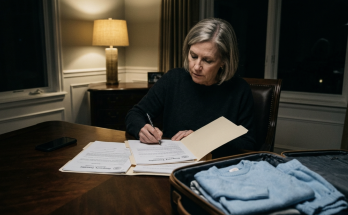
The message came through my attorney.
My mother-in-law wanted to speak with me.
Alone.
I stared at the email longer than necessary.
“No,” my sister said from across the table.
“I didn’t ask yet.”
“You made the face.”
“What face?”
“The face where you’re about to consider something terrible because you think being fair requires suffering.”
I ignored her.
The request surprised me.
Since the courthouse, my mother-in-law had communicated only through attorneys or family intermediaries.
She remained loyal to her son publicly.
She disputed my version of earlier incidents.
She complained that I was keeping her grandchildren away.
Now, days before another important hearing, she wanted a private conversation.
My attorney strongly advised against anything unstructured.
“If you want to hear what she says, we can arrange it safely.”
“Why would she suddenly want to talk?”
“We don’t know.”
“What if she wants to apologize?”
My attorney paused.
“That’s possible.”
“What do you think?”
“I think motive matters less than boundaries.”
I hated how often good advice sounded unsatisfying.
I wanted a prediction.
Was my mother-in-law finally breaking from her son?
Was she trying to manipulate me?
Was she frightened about court?
Was she worried about losing the grandchildren?
Nobody could tell me.
Eventually, I agreed to a meeting under conditions.
Not alone.
Not at anyone’s home.
My attorney would be nearby.
My sister would not attend because my mother-in-law refused to speak in front of her.
A neutral professional would be present.
The meeting took place in a small conference room.
My mother-in-law arrived first.
When I entered, she stood.
For a moment, I saw the woman I once knew before everything became divided into sides.
She had held my babies.
Brought soup when I was sick.
Helped decorate birthday cakes.
There were genuine memories between us.
That was what made betrayal complicated.
People did not become strangers just because you finally understood what they had done.
She looked older.
Tired.
Her hands shook when she sat.
“Thank you for coming.”
I did not say you’re welcome.
We sat across from each other.
The mediator reminded us of the boundaries.
My mother-in-law nodded impatiently.
Then she looked at me.
“I don’t know how we got here.”
The sentence almost made me leave.
I felt anger rise.
“You were in the shed.”
She looked down.
“I know.”
“Then you know exactly how we got here.”
Her mouth tightened.
“I mean before that.”
“So do I.”
Silence.
She rubbed her hands together.
“I never wanted any of this.”
Neither did I.
But the phrase felt too easy.
I waited.
She continued.
“My son has always had a temper.”
There it was.
A beginning.
Not enough.
But different.
“How long have you known?”
She looked toward the mediator, then back at me.
“Known what?”
“That he hurts people when he’s angry.”
Her eyes filled.
I did not soften.
“How long?”
“Since he was young.”
My chest tightened.
“How young?”
She hesitated.
“Teenage years.”
I stared at her.
For years, she had told me his temper came from stress.
Work.
Marriage pressure.
Fatherhood.
Now she was moving the beginning backward.
“What happened?”
“He fought with his father.”
“That’s not what I asked.”
She flinched.
I heard my own firmness and barely recognized it.
“What did he do?”
“He broke things.”
“What else?”
“He hit walls.”
“What else?”
She closed her eyes.
“His father.”
The room went still.
“He hit his father?”
“Once.”
Her answer came too quickly.
I recognized the pattern.
Once.
Isolated.
A mistake.
The same language.
“Was it once?”
She looked at me.
“No.”
I breathed slowly.
“What else?”
“He had a girlfriend in college.”
I felt cold.
“What about her?”
“They fought.”
“What did he do?”
“She said he pushed her.”
My hands tightened in my lap.
“What did you believe?”
My mother-in-law started crying.
“I believed my son.”
Of course.
“What did he say?”
“That she was trying to ruin him because he ended things.”
I almost laughed.
Not because anything was funny.
Because the story was painfully familiar.
“She told you he pushed her?”
“Yes.”
“And you decided she was lying?”
“I didn’t know.”
“You chose.”
Her tears continued.
“I chose my child.”
The sentence angered me.
“No. You chose his version.”
She looked stunned.
“There’s a difference.”
She wiped her face.
“He was my son.”
“And I was your daughter-in-law.”
“I know.”
“And your grandchildren were watching.”
Her shoulders collapsed slightly.
“I know.”
I leaned back.
That phrase again.
I know.
I wanted specifics.
“When did you first know he was hurting me?”
She looked away.
“I suspected for a long time.”
“How long?”
“Years.”
The word sat between us.
“Before the shed?”
“Yes.”
“Before I tried to leave?”
She did not answer.
I felt my heart pounding.
“Before?”
“Yes.”
I closed my eyes.
Four years ago, I had packed bags.
My mother-in-law called that night.
I remembered.
She asked me to think about what separation would do to the children.
She told me her son loved me.
She said all marriages went through dark periods.
Now I understood she had not been ignorant.
“You knew then.”
“I knew you were unhappy.”
“No.”
I leaned forward.
“You knew I was afraid.”
She began crying harder.
“I knew he could be difficult.”
“That is not the same sentence.”
“No.”
“What did you know?”
She looked at me.
“I saw the bruises.”
The words barely registered.
I had expected them.
Still, hearing them felt like being struck.
“Which ones?”
“The one on your arm.”
“When?”
She described a summer barbecue.
I remembered wearing a long sleeve in warm weather.
She had asked whether I was cold.
I said the air-conditioning inside bothered me.
She had known.
“Anything else?”
“The cut near your ribs.”
My breathing changed.
“How?”
“You changed clothes at our house once. I saw the bandage.”
I stared at her.
“You never asked me.”
“I didn’t know what to say.”
“You knew what to say when you wanted me to forgive him.”
She covered her face.
The mediator asked whether we needed a pause.
“No,” I said.
My mother-in-law nodded shakily.
“There’s more.”
I went still.
She lowered her hands.
“He told me things.”
“What things?”
“That you made him crazy.”
My stomach turned.
“That you threatened to leave. That you didn’t respect him. That sometimes he had to scare you before you listened.”
I felt nauseated.
“He told you that?”
“Not exactly those words.”
“But that meaning?”
“Yes.”
“And what did you do?”
She stared at the table.
“I told him to control himself.”
I almost could not process the answer.
Not stop.
Not get help.
Not stay away from me.
Control himself.
As though the violence were bad because it was sloppy.
“What did you tell me?”
She whispered.
“To be patient.”
The room disappeared around the sentence.
All those conversations.
All those cups of coffee.
Her hand over mine.
Marriage is hard.
He loves you.
Don’t make permanent decisions during temporary anger.
Give him room.
Think about the children.
She had known enough.
Not everything.
Enough.
“You helped him keep me there.”
“I thought I was keeping the family together.”
I felt the old rage rise.
Then something else joined it.
Understanding.
Not forgiveness.
Understanding.
My mother-in-law believed family unity was a moral achievement even when maintained through fear.
She had measured success by whether people remained under one roof.
Not by what happened beneath it.
“Why are you telling me now?”
She looked at me for a long time.
“Because he blamed me.”
I blinked.
“What?”
“After the recording came out.”
Her face changed.
“He said I made everything worse.”
I almost laughed again.
Of course he did.
“He said if I had kept you calmer, none of it would have happened.”
The cruelty of it was almost elegant.
He had blamed me for provoking him.
Now he blamed his mother for failing to manage me.
Responsibility always traveled outward.
Never inward.
My mother-in-law twisted a tissue between her fingers.
“He said the court only took the recording seriously because I talked too much.”
That was also true in a narrow sense.
Her words on the recording were devastating.
But the implication mattered.
Not that she had enabled abuse.
That she had been careless enough to admit it.
“He’s angry with you because you got caught?”
Her face crumpled.
“I think so.”
I stared at her.
For the first time, she seemed to understand something I had learned slowly.
Protecting him had never guaranteed his loyalty.
Control did not create gratitude.
It created expectation.
As long as she defended him, she was useful.
The moment her words became evidence against him, she became another person to blame.
“What do you want from me?”
“I want to see the children.”
There it was.
Not surprising.
At least it was honest.
“They’re afraid of you.”
She looked wounded.
“Why?”
The question shocked me.
“You stood in the doorway.”
She looked away.
“My youngest remembers you watching.”
“I never touched her.”
“You taught her something worse.”
Her eyes returned to mine.
“What?”
“That adults can watch someone being hurt and call it deserved.”
She began crying again.
This time, I felt no need to comfort her.
“I love those children.”
“I believe you.”
She looked surprised.
“Love is not the question.”
I had learned that sentence recently.
It applied to my husband too.
Love did not guarantee safety.
Love did not erase choices.
“I would never hurt them.”
“You hurt them by helping normalize what happened in our house.”
Her face tightened.
“That’s not fair.”
The old phrase.
Fair.
I almost smiled.
“No. It isn’t.”
She fell silent.
The mediator asked whether there was anything else she wanted to disclose.
My mother-in-law hesitated.
Then she nodded.
“There was another night.”
My body went rigid.
“What night?”
“Two years ago.”
She described a family gathering.
My husband had been drinking.
We argued after everyone left.
I remembered.
He had grabbed my neck briefly in the garage.
Not choking fully.
Not long enough to leave obvious marks.
I had never told anyone.
Not even my sister.
“How do you know?”
My voice barely worked.
My mother-in-law looked terrified.
“I came back.”
“For what?”
“My purse.”
I stared at her.
“You saw?”
“Part of it.”
“What part?”
“He had you against the car.”
My hands went numb.
Memory came back sharply.
Cold metal against my spine.
His forearm near my collarbone.
His breath.
The garage light.
Then footsteps.
He released me suddenly.
I had always assumed he heard a neighbor.
It had been his mother.
“What did you do?”
She whispered.
“I left.”
I stopped breathing.
“You left?”
“I was scared.”
I stared at her.
“For yourself?”
She covered her mouth.
That was answer enough.
She saw her son pin me against a car.
And left.
Later, she called me.
I remembered that too.
She asked whether everything was okay.
I said yes.
She accepted it.
No.
She needed it.
“You called me afterward.”
“Yes.”
“You asked if I was okay.”
“Yes.”
“And when I lied, you let me.”
Her tears returned.
“I wanted to believe you.”
“No.”
My voice shook.
“You wanted me to give you permission not to act.”
She closed her eyes.
The mediator remained silent.
There was nothing to soften.
My mother-in-law nodded.
“Yes.”
One word.
Finally.
Not misunderstanding.
Not stress.
Not loyalty.
Yes.
I looked at her and felt something unexpected.
Not victory.
Grief.
She could have helped me two years ago.
Four years ago.
Earlier.
Maybe I would not have listened.
Maybe I would have stayed.
But she could have stood somewhere other than beside him.
She had not.
“Will you tell the truth in court?”
Her eyes opened.
She looked frightened.
“I don’t know.”
I stood.
“Then we’re done.”
“Wait.”
I looked down at her.
She gripped the edge of the table.
“He’ll never forgive me.”
I felt almost nothing at the sentence.
“That’s what you’re afraid of?”
“He’s my son.”
“And I’m the woman he tied to a beam.”
She looked away.
I picked up my bag.
Then she said my name.
I stopped.
“I’ll tell them.”
I turned.
“What?”
“The court.”
Her voice shook.
“I’ll tell the truth.”
I studied her face.
I wanted to believe her.
That instinct was dangerous.
So I did something new.
I did not decide based on hope.
“Tell my attorney.”
She nodded.
“Make a statement.”
Another nod.
“Don’t tell me. Tell the people who need to hear it.”
Her expression changed.
She understood.
Private remorse was no longer enough.
For years, everything damaging had happened in private.
Apologies.
Threats.
Excuses.
Promises.
I was done accepting private truth followed by public denial.
I left the room.
My attorney met me in the hallway.
“What happened?”
I leaned against the wall.
“She knew.”
Her face softened.
“How much?”
“Enough.”
I told her about the college girlfriend.
The bruises.
The garage.
The years of suspicion.
The conversation with her son.
My attorney listened without interrupting.
Then I told her my mother-in-law said she would make a formal statement.
“Do you believe her?” she asked.
I thought about it.
“I believe she meant it in the room.”
“That’s not the same thing.”
“No.”
We both knew fear might change her mind.
Her son might call.
Another relative might intervene.
Loyalty might reassert itself.
The next morning, my attorney called.
“She contacted counsel.”
I sat down.
“And?”
“She is requesting to amend parts of her prior statement.”
My chest tightened.
“She’s doing it?”
“It appears so.”
“What exactly is she admitting?”
“Prior knowledge of volatile behavior, observations of injuries, and that some portions of her earlier account were incomplete.”
I closed my eyes.
Not everything.
But enough to crack something open.
“Is she admitting she saw the garage incident?”
“Yes.”
My hands began trembling.
For years, I thought that moment existed only in my memory and his.
Now it had a witness.
Not a good witness.
Not a brave witness.
Still a witness.
That evening, I told my therapist what happened.
She asked how I felt.
“Angry.”
“Anything else?”
“Relieved.”
“Anything else?”
I hated the next answer.
“Sad for her.”
“Why?”
“Because she spent her whole life protecting him, and he still turned on her.”
My therapist nodded.
“Feeling sad for her doesn’t require you to trust her.”
I looked at her.
That distinction mattered.
Compassion without access.
Understanding without reconciliation.
Forgiveness, maybe someday, without returning to danger.
I was beginning to learn that boundaries did not require hatred.
When I got home, my youngest was at the table doing homework.
She looked up.
“Did you see Grandma?”
I froze.
“How did you know?”
“Auntie said you had a meeting.”
I glanced toward the kitchen.
My sister shouted, “She cornered me!”
My daughter almost smiled.
Then she became serious.
“What did Grandma say?”
I sat beside her.
“She admitted she should have done things differently.”
My daughter stared at the worksheet.
“Did she say sorry?”
“Yes.”
“Do you forgive her?”
Again, that question.
I answered differently this time.
“I can care that she’s sorry without being ready to trust her.”
My daughter thought about it.
“Can I do that too?”
“Yes.”
She nodded.
“I think that’s what I want.”
I kissed the top of her head.
“Then that’s enough.”
Later, after everyone slept, I opened my timeline again.
I added the garage incident.
Then beside it, I wrote:
Witness: his mother.
I stared at the words.
The secret history of our family was changing.
Not because the past changed.
Because people were finally refusing to carry it silently.
The next hearing was three days away.
For the first time, my husband would enter a courtroom knowing his mother might no longer repeat the version he needed.
And for the first time, the person who had protected his story longest had begun to step outside it.
Click here to continue reading: PART 13: When His Mother Finally Testified Against Him, My Husband’s Calm Disappeared—and the Court Saw What We Had Lived With
The Night My Husband Ordered Me Into the Shed, My Daughter Quietly Reached for Her Phone
Part 12 of 16