The days that followed were difficult in ways I had not expected.
I had thought the hardest part would be telling Daniel to leave.
Then I thought it would be discovering the loan.
After that came the missing money.
Each time, I believed I had reached the worst of it.
But living in the same house while everything was being investigated brought a different kind of pain.
I still heard my son's footsteps.
I still saw his coffee cup on the counter.
I still heard Oliver coming home from school.
Only now, every ordinary sound reminded me of what had happened.
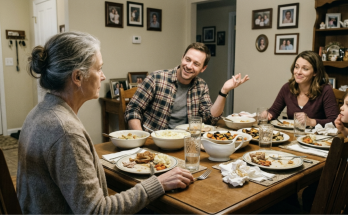
There were no more comfortable conversations around the dining table.
Daniel avoided me.
Marissa barely spoke unless she had something to complain about.
And I had stopped pretending that silence meant peace.
The first thing I did was follow the advice I had received about protecting my finances.
I went through my banking information.
I changed the passwords Daniel might have known.
I made sure he could no longer use access I had previously allowed.
I replaced my bank cards.
I reviewed account details with the bank.
Each task seemed small.
A password.
A card.
A confirmation.
But I knew why I was doing it.
I had learned that family trust could not replace financial security.
For years, I had treated access to my information as an ordinary favor.
If Daniel needed my identification for paperwork, I gave it to him.
If he offered to help with online banking, I accepted.
I had never expected to need proof of what he was doing.
Now I was correcting that mistake.
I was not proud of having ignored the warning signs.
But I was proud that I had finally begun taking them seriously.
The bank continued looking into the three transfers.
The amounts were written in my notes.
$4,800.
$2,200.
$1,500.
I had copied them carefully because I did not want confusion later.
The total was $8,500.
It was money Daniel had acknowledged taking.
The lender was also investigating the thirty-eight-thousand-dollar agreement.
I preserved the photograph.
I kept records of the calls.
I gave Robert Hayes the information he requested.
Nothing about the process felt simple.
There were questions I could answer.
There were other questions I could not.
I knew I had never signed the loan.
I knew Daniel had admitted taking money from my bank account.
I knew Marissa had acknowledged knowing about the transfers.
But I did not know every detail of how the agreement had been arranged.
I did not know where the missing folder had gone.
And I refused to guess.
Robert told me to separate what I knew from what I suspected.
I followed that advice.
It helped me stay focused when my feelings threatened to overwhelm me.
I also had to deal with the house.
I had given Daniel and Marissa twenty-four hours to leave during the argument.
At the time, I had been angry and exhausted.
I wanted the arrangement to end immediately.
But Robert explained that I needed to handle their departure according to the applicable legal requirements.
They had lived in my home for two years.
Their belongings were there.
Oliver had been living there as well.
I could not simply throw their possessions outside because I was upset.
I could not ignore the proper process.
That mattered to me.
I did not want to become someone who used anger as an excuse for doing things carelessly.
So I worked with Robert to prepare the appropriate notice.
The move would happen within the legally required timeframe.
I made it clear that the living arrangement was ending.
There would be no more extensions based on promises I had already heard too many times.
Daniel knew my decision.
Marissa knew it too.
Neither was happy.
But I stopped discussing whether I was being unfair.
That argument had gone on long enough.
At night, I could hear them talking upstairs.
Sometimes their voices grew loud.
Sometimes I heard Daniel trying to explain something.
Sometimes Marissa answered sharply.
Then there would be long periods of silence.
I did not go upstairs to ask what was happening.
That was new for me.
Before, if I heard them arguing, I would worry.
I would wonder whether another bill needed to be paid.
I would offer to watch Oliver.
I would try to do something that might ease the tension.
I had convinced myself that being useful was the same as being loved.
Now I was learning to stay out of problems that belonged to them.
It was harder than I expected.
One evening, I heard Marissa crying behind their bedroom door.
I stood in the hallway for a moment.
My hand almost moved toward the door.
Then I remembered the loan agreement.
I remembered the bank transfers.
I remembered what she had said about Daniel replacing the money before I noticed.
I walked back to my room.
I was not refusing to care about her.
I was refusing to become responsible for fixing another situation I had not created.
That distinction mattered.
During those days, Oliver became quieter.
That worried me more than anything else.
He was usually a talkative child.
He liked telling me what had happened at school.
He liked showing me his drawings.
He could spend several minutes explaining why one flower needed more water than another.
Now he often watched the adults before speaking.
I hated seeing that.
He seemed to be trying to understand whether everyone was angry with everyone else.
I did not want him to believe he had caused any of it.
When Daniel and Marissa allowed us to spend time together, I kept our routines as normal as possible.
We read books.
We spent time in the garden.
We talked about school.
I did not discuss the loan or the bank investigation with him.
Those were adult matters.
He deserved to be a child.
One afternoon, he came into the garden while I was checking the flowers.
He stood beside me with the watering can.
“Grandma, can I do that part?”
I handed it to him.
“Of course.”
He began watering carefully.
He had learned not to pour everything into one spot.
I watched him move from plant to plant.
For a while, neither of us spoke.
Then he looked toward the house.
“Mommy says we're getting a different place.”
I nodded.
“That's right.”
“Will it have flowers?”
I smiled.
“I don't know, sweetheart.”
He thought about that.
“Maybe we can put some there.”
“Maybe you can.”
He returned to watering.
I could see that he was trying to imagine what his new home would look like.
I wanted to tell him that everything would be wonderful.
But I did not know that.
So I stayed with what I could promise.
Wherever he lived, I would still love him.
That was true.
I did not need to make promises about things I could not control.
The next morning, I made pancakes.
Oliver had always liked helping me with breakfast.
He usually stood close enough to watch the batter spread across the pan.
That morning, I added too much cinnamon.
I realized it as soon as I tasted the first pancake.
I frowned.
Oliver noticed.
“What's wrong?”
I looked at him.
“I think Grandma got carried away with the cinnamon.”
He took a bite.
Then another.
His face changed.
I expected him to complain.
Instead, he started laughing.
“That's a lot!”
I laughed too.
It was the first time I had laughed without forcing myself since the argument.
For a few minutes, we were simply making breakfast.
No debt.
No paperwork.
No angry conversations.
Just a little boy eating pancakes at my table.
I wanted to remember that morning.
Not because the pancakes were good.
They were not.
But because Oliver was still able to laugh in a house where the adults had made everything difficult.
I watched him reach for another piece.
I thought about how carefully children notice things.
He knew his parents were worried.
He knew they were packing.
He knew his grandmother was upset.
But he still wanted to sit with me and eat breakfast.
That made me love him even more.
On the fourth evening, I was sitting in my bedroom with a book.
I had been trying to read the same page for several minutes.
My mind kept returning to the bank.
I was thinking about the questions Robert had asked.
Then someone knocked softly.
“Grandma?”
I put the book down.
“Come in, sweetheart.”
Oliver opened the door.
He was holding a folded piece of paper.
He looked unusually serious.
I smiled.
“What have you got there?”
He walked over and held it out.
“I made something for you.”
I took the paper.
It had been folded carefully.
I opened it.
Inside was a drawing of a small house.
There were four people standing in front of it.
A man.
A woman.
A boy.
And an older woman holding a watering can.
I recognized myself immediately.
Oliver had drawn the watering can because he knew how much time we spent together in the garden.
Above the picture, he had written two words.
MY FAMILY.
I stared at the drawing.
For a moment, I could not speak.
He moved closer.
“Do you like it?”
I nodded.
“I love it.”
He watched my face.
“Are you crying?”
I wiped my eyes.
“A little.”
He looked worried.
“Is it bad?”
I shook my head.
“No, sweetheart. Sometimes people cry because something means a lot to them.”
He seemed relieved.
I pulled him close.
He put his arms around my shoulders.
I held him longer than usual.
Then he whispered something I had not expected.
“I don't want you to be by yourself all the time.”
I closed my eyes.
So that was what he had been thinking.
Not about the money.
Not about who owned the house.
He was worried that I would be lonely.
I moved back enough to see his face.
“Oliver, you don't need to worry about me.”
He looked uncertain.
“But we'll be gone.”
I brushed his hair away from his forehead.
“Yes, your family will have another place to live.”
He nodded.
“But that doesn't mean I won't see you.”
He looked at the drawing.
“Daddy said we might not come back.”
I felt a familiar ache.
Daniel had already used that possibility during the argument.
I had hoped he would stop involving Oliver.
Apparently, the child was still hearing things that frightened him.
I did not want to criticize his father.
I did not want Oliver to feel that he had to choose between us.
So I spoke carefully.
“Your parents and I have things we need to work out. Those are not your problems.”
He looked at me.
“Are you mad at Daddy?”
I hesitated.
I could not honestly say that everything was fine.
But I also knew that Oliver did not need the details.
“Your daddy and I are having a difficult time.”
He nodded slowly.
“Does that mean you don't love him?”
The question hurt.
I thought about Daniel sitting on the sofa, crying after admitting he had taken my money.
I thought about the boy he had once been.
I thought about the man he had become.
Then I looked at Oliver.
“No, sweetheart. I still love your daddy.”
He seemed to consider that.
“Even if you're upset?”
“Yes.”
He looked relieved.
I continued.
“People can love each other and still have things they need to fix.”
He leaned against me.
I held him close.
For a few minutes, neither of us spoke.
Then he lifted his head.
“Will you still love me?”
I felt tears return.
“Always.”
He looked directly into my eyes.
“Really?”
“Really.”
He hugged me again.
I kept one hand on his back and the other on the drawing.
It was only a piece of paper.
But I knew I would keep it.
The picture reminded me of what I was trying to protect.
Not just my savings.
Not just the house.
The possibility that Oliver and I could still have a loving relationship after his parents moved.
I did not want anger to take that away from us.
Eventually, he stepped back.
He looked toward the hallway.
Then he lowered his voice.
“I heard Mommy and Daddy talking.”
I waited.
He glanced at the paper.
“Daddy said he might need to sell the car.”
I felt my stomach tighten.
I had no idea what decisions Daniel was making about his finances.
I knew he had serious debts.
I knew he had no savings.
I knew he was under pressure.
But I did not want Oliver carrying those worries.
I touched his shoulder.
“That's something your parents will decide.”
He nodded.
“Okay.”
“You don't have to solve it for them.”
He looked at me.
“I know.”
I hoped he did.
Children sometimes say they understand because they want adults to stop worrying.
I had done that myself when I was young.
I looked at the drawing again.
“Can I keep this?”
He smiled.
“It's yours.”
I thanked him.
Then he went back upstairs.
I listened until his footsteps disappeared.
The room felt different after he left.
I sat on the bed holding the paper.
Four people.
One house.
One watering can.
MY FAMILY.
Oliver had drawn everyone together.
I wondered whether he believed the family would disappear when his parents moved away.
That thought nearly broke me.
I wanted to go upstairs and tell Daniel he could have another month.
I wanted to ask Marissa to stop packing.
I wanted to make the hurt disappear from Oliver's face.
For a moment, the old habit returned so strongly that I stood up.
I walked toward the bedroom door.
Then I stopped.
I remembered why we were here.
Daniel had not simply failed to pay rent.
He had put my name on a loan without permission.
He had taken retirement money from my account.
Marissa had known about the transfers.
Those things were real.
Loving Oliver could not make them disappear.
If I allowed Daniel and Marissa to remain because I was afraid of upsetting my grandson, nothing would change.
They would continue depending on me.
I would continue feeling used.
And Oliver would keep living in a home where the adults could not be honest about money or responsibility.
I sat down again.
I unfolded the drawing.
Then I placed it carefully beside my book.
I could love Oliver.
I could welcome him into my garden.
I could still make pancakes when he visited.
But I did not have to surrender my home to prove any of those things.
That evening, I looked out toward the old maple tree.
The little wooden bench my husband had built was still beneath it.
I had spent many afternoons sitting there while Oliver played nearby.
I wanted him to have more afternoons like that.
I wanted him to remember me as someone who loved him.
Not as the person who paid every bill.
Not as the person who gave his parents whatever they demanded.
Just Grandma.
A woman who loved him enough to tell him the truth he could understand.
And who finally loved herself enough to stop pretending that everything was fine.
I picked up the drawing once more.
I folded it along the lines Oliver had made.
Then I put it somewhere safe.
The decision about Daniel and Marissa remained unchanged.
They would move out.
Oliver would always have a place in my heart.
And I would do everything I reasonably could to make sure he knew that those two things could both be true.
Click here to continue reading: PART 7: Two Weeks After My Son Called Me a Freeloader, the Moving Truck Arrived and He Finally Offered Something Without Asking for More
My Son Called Me a Freeloader at My Own Dinner Table, and My Grandson’s Question Made Everything Harder to Ignore
Part 6 of 15