I used to think helping my parents was something I would never regret.
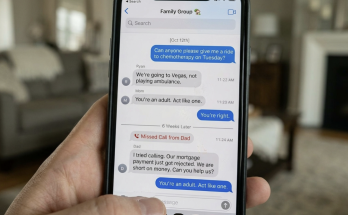
Then I needed a ride home from chemotherapy.
One ride.
That was all.
Not money for treatment.
Not someone to stay beside my bed for weeks.
Not a promise that they would rearrange their entire lives around my illness.
I needed somebody I trusted to make sure I got home.
And somehow, that became too much to ask.
My name is Robin.
For six years, I had been helping my parents keep their house.
The mortgage was $1,840 every month.
I knew that number better than I knew the cost of most things I bought for myself.
It appeared in my bank records so often that I hardly noticed it anymore.
That was probably the first mistake I made.
I had allowed something enormous to become ordinary.
My parents had once been close to losing their home.
I stepped in because I could help, and because the thought of them losing the place they lived frightened me.
I didn't see myself as a hero.
I saw myself as their daughter.
There was a difference.
At least, I believed there was.
I never wanted them to feel that they owed me affection because I helped financially.
I didn't want every conversation to become a discussion about bills.
So I rarely brought up the payments.
I sent the money.
I checked that it had gone through.
And I continued with my own life.
Looking back, I had confused keeping quiet with keeping peace.
They were not the same thing.
My parents had a home they could continue living in.
I had the comfort of believing that I was protecting them.
For a long time, that seemed like enough.
There was also an emergency cushion.
I had deposited money into a family savings account so unexpected household expenses would not turn into another crisis.
I wanted them to have something available when things became difficult.
That was the whole idea.
The money had a purpose.
It was meant to protect the household, not to become somebody else's spending money.
My brother Jake had been given access to that account by our parents two years earlier.
I knew he was involved with some of the household finances.
I didn't think that access meant the money would be used in ways I had never approved.
Maybe I should have asked more questions.
Maybe I should have examined every transfer.
I didn't.
I trusted my parents to recognize what I was providing.
And I trusted my brother not to take advantage of it.
Both assumptions would eventually hurt me.
But before any of those financial questions came into the open, there was my cancer treatment.
Chemotherapy had changed the way I thought about time.
Appointments mattered.
So did transportation.
So did knowing that I would be able to get home afterward.
I had my own apartment.
I paid rent.
I had ordinary living expenses, medical appointments, and a life that still needed to function while I was receiving treatment.
I was trying to manage all of it.
I wasn't asking my parents to take over.
That point mattered to me.
I wanted to remain independent as much as I reasonably could.
But independence did not mean I never needed another person.
There came a moment when I asked my family for help getting home from chemotherapy.
I expected the request to be understood.
I wasn't prepared for the response.
My family had already spent money on a trip.
There were plans in place.
I understood that.
I didn't ask anyone to cancel the trip.
I wasn't asking them to give up a vacation permanently.
I was asking whether one person could help me get home safely.
Instead, I was made to feel unreasonable.
The message I received was that my parents were not some kind of medical transportation service.
I remember the humiliation more clearly than I remember the exact words.
Because that was what the rejection felt like.
Humiliation.
I had been sending $1,840 every month to protect their home.
And when I needed a single ride, my illness seemed to become an inconvenience.
The money and the treatment were not the same thing.
I understood that.
Paying someone's mortgage did not mean they owed me every hour of their time.
I would never have wanted that arrangement.
But there was something deeply wrong with the way my family could depend on me without hesitation while making my smallest request for care feel excessive.
I tried to make sense of it.
Maybe they were overwhelmed.
Maybe they didn't understand what chemotherapy involved.
Maybe they thought I could manage without them.
I kept looking for an explanation that didn't leave me feeling quite so unwanted.
That was another habit I had developed.
When my family disappointed me, I looked for a reason that would make their behavior easier to accept.
I rarely gave myself permission to be hurt.
I was sitting on my kitchen floor when the weight of that refusal finally reached me.
I can still remember being there.
My apartment was supposed to be the place where I could recover from the strain of everything happening outside it.
Instead, I was sitting on the floor trying to understand why asking for help had left me feeling so ashamed.
I thought about the mortgage.
I thought about the emergency savings.
I thought about the years of payments I had made without demanding attention or praise.
Then I thought about how little I had asked for in return.
One ride.
That comparison was painful.
Not because I believed money could purchase love.
Because I had believed love was already there.
I had never sent those payments expecting to use them in an argument.
The idea would have embarrassed me.
Family help was supposed to be given freely.
But I was beginning to understand that giving freely did not mean giving without limits.
And it certainly did not mean accepting disregard.
For six years, I had treated the mortgage as a responsibility I could not abandon.
I worried about what would happen if the money stopped.
I worried that my parents would struggle.
I worried that Jake would accuse me of being selfish.
I even worried that someone would say I had changed because I was sick.
Those worries kept circling back to the same question.
What about me?
I had a medical condition that required continuing treatment.
I needed to protect my savings.
I needed to keep paying my rent.
I needed enough stability to focus on my health.
Yet I was still thinking first about whether my parents could afford their house.
That realization stayed with me.
I began looking at the financial support I had provided with different eyes.
The mortgage payment was only the most obvious expense.
There were other costs.
There were deposits into the household savings account.
There were transactions connected to keeping my parents financially secure.
Over time, those amounts had become significant.
I had always known the individual payments.
I hadn't forced myself to look at the whole picture.
When I finally did, the scale of it was difficult to ignore.
Every transfer represented money I had earned and chosen not to keep.
I had made those choices because I believed I was helping people who appreciated the sacrifice.
I wasn't sure I believed that anymore.
That didn't mean I stopped loving my parents.
I did love them.
I loved my father.
I loved my mother.
I even loved Jake, although loving him had become complicated.
But affection was no longer enough to persuade me that the arrangement was healthy.
I needed to draw a line.
And the line had to involve the money.
I decided I would no longer make the monthly mortgage payments.
That decision frightened me more than I expected.
For years, I had measured my usefulness by whether I could prevent a problem before it reached my parents.
I had become the person who quietly made sure the household stayed financially steady.
Now I was choosing to stop.
I knew what people might say.
That I was punishing my parents.
That I was letting my illness make me emotional.
That family members should help each other no matter what.
I could already imagine Jake calling me dramatic.
But I couldn't ignore what had happened.
My family had shown me what they considered reasonable when I needed help.
I was finally asking myself what was reasonable for me.
The answer was not another mortgage transfer.
For six weeks, I stayed with that decision.
The money I would normally have sent remained available for my own needs.
My treatment continued to matter.
My rent continued to matter.
My daily expenses continued to matter.
Nothing about those responsibilities disappeared simply because my parents had financial problems.
I had spent years acting as though their emergency automatically came before my own.
I could no longer afford to live that way.
And I didn't mean only financially.
There was an emotional cost to being the dependable person in a family that rarely considered what dependability demanded.
People became comfortable with what you gave them.
They adjusted their expectations.
Eventually, what had once been generous became something they believed they were entitled to receive.
I could see that happening to me.
I had not meant to allow it.
But I had.
The strange thing was that I still wanted my parents to understand.
I wanted them to recognize what they had done without needing to be persuaded by numbers.
I wanted my mother to understand how frightened and alone I had felt.
I wanted my father to realize that chemotherapy was not an ordinary errand.
I wanted Jake to stop treating my help as an obligation.
Those were not unreasonable hopes.
But I was beginning to recognize that hoping for understanding was different from receiving it.
I couldn't force anyone to care.
I could only decide what I was willing to keep doing.
Then my family arranged a Sunday meeting about money.
I knew what the discussion would probably involve.
The mortgage had stopped receiving my monthly support.
The people who had depended on those payments wanted answers.
For once, I wasn't going to arrive with apologies.
I wasn't going to explain my illness as though it needed to be justified.
And I wasn't going to promise to fix the problem simply because everyone looked worried.
I had financial records.
I had bank statements.
I had enough information to show exactly what I had contributed.
So I put the records together.
I organized the expenses.
I prepared to explain what six years of help actually looked like.
My friend Latoya would be beside me at the meeting.
That mattered.
I needed someone there who knew that I was not inventing my pain.
Someone who could sit next to me while I said things I had been afraid to say for years.
The folder became important to me.
It wasn't just paperwork.
It contained proof of payments that had quietly supported my family while my own life kept moving around them.
For years, I had treated those records as private information.
Now I was preparing to put them in front of the people who benefited from them.
I didn't want to humiliate my parents.
I didn't want to win an argument.
I wanted the truth to be visible.
That was all.
Still, I knew the meeting would be difficult.
My parents had grown used to the money arriving.
Jake had grown used to speaking as though he understood the family finances better than I did.
And I had grown used to avoiding arguments whenever possible.
This time, none of us would be able to rely on those old habits.
I would have to speak.
They would have to listen.
And whatever happened afterward, the mortgage would no longer be something I carried alone.
Before that Sunday, I had thought the most painful part of the story was being refused help after chemotherapy.
I didn't yet know how much information had been kept from me.
I didn't know how Jake had been describing his own financial contributions.
I didn't know what my parents believed about the money going into their accounts.
I only knew I had reached my limit.
For the first time in six years, I was going to sit in my parents' living room without offering to solve their financial problems.
I was going to bring the folder.
I was going to tell them what I knew.
And I was going to keep the money I needed to take care of myself.
Click here to continue reading: PART 2: At Our Sunday Family Meeting, My Brother Claimed He Had Been Paying Half the Mortgage Until I Opened the Bank Records
I Had Spent Six Years Keeping My Parents in Their Home, but One Ride From Chemotherapy Changed What I Believed About Family
Part 1 of 15