I kept waiting to feel certain.
Certain that stopping the mortgage payments had been the right decision.
Certain that my parents would eventually understand.
Certain that the truth about Jake would become clear.
Certain that nobody could accuse me of abandoning my family.
But certainty didn't arrive.
What I had instead was a collection of facts I could no longer ignore.
I had paid $1,840 toward my parents' mortgage each month for six years.
My documented financial support totaled $146,930.
I had contributed to the emergency savings.
Jake had moved money from that savings account into the mortgage account and presented it as his own contribution.
Some household funds had been used for the Las Vegas vacation.
Celeste had told me about additional withdrawals connected to his personal debts.
And she had found a loan application involving my parents' property.
Dad said he hadn't signed the document.
Those facts were enough to explain why I could no longer trust the old arrangement.
They were also enough to remind me why I had stopped paying in the first place.
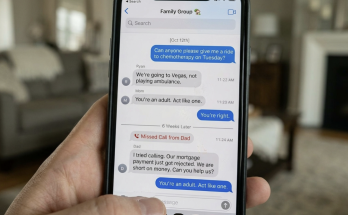
I was receiving chemotherapy.
I needed to protect the money required for my treatment and daily life.
And my family had shown me that I couldn't assume they would be there whenever I needed help.
That last realization still hurt.
I wanted to believe that love meant people would notice when you were struggling.
I wanted to believe that years of generosity would be remembered with kindness.
I wanted to believe that asking for one ride home from treatment would never become an argument about inconvenience.
But I had learned otherwise.
I had been sitting alone on my kitchen floor when the meaning of their refusal finally reached me.
I remembered feeling embarrassed.
I hadn't done anything wrong.
I hadn't demanded too much.
Yet I felt ashamed for needing help.
That was what stayed with me.
Not simply the fact that nobody agreed to drive me.
It was the feeling that my illness had become an unwanted obligation.
I thought about my parents' trip.
They had already paid for it.
I knew that.
I understood that changing plans could be difficult.
I never expected them to cancel everything because of me.
But I had hoped they would respond with concern.
I had hoped the conversation would begin with whether I was okay.
Instead, I was made to feel as though I should have solved the transportation problem without involving them.
I wasn't asking to become the center of their lives.
I was asking for a little care.
And when that care wasn't offered, I began questioning how much of myself I had been giving.
The mortgage was the clearest example.
Every month, money left my account.
Every month, the household depended on it.
Every month, I treated the payment as something I was responsible for making.
I had allowed the arrangement to become almost automatic.
I didn't stop to ask how much longer it should continue.
I didn't ask whether my parents could create another plan.
I didn't ask whether Jake's financial contributions were actually coming from his own income.
I didn't want to make the arrangement uncomfortable.
I thought silence was a form of kindness.
Now I understood how much that silence had cost.
I had spent years avoiding conversations that might have revealed the truth earlier.
I didn't blame myself for Jake's choices.
Those were his.
He had made decisions about borrowing.
He had used money from the household account.
He had told our parents things about his supposed contributions.
And according to Celeste, he had been making claims about deserving the house.
I hadn't authorized any of that.
But I did recognize that I had been reluctant to question the financial arrangement.
I had trusted too easily.
I had wanted to believe that everyone understood the money was intended to protect our parents.
And I had kept replacing funds without examining every reason they were disappearing.
That was something I needed to acknowledge.
Not to punish myself.
To learn from it.
I had treated family money as though it operated under different rules from every other financial commitment.
If someone outside the family used money for an unauthorized purpose, I would have wanted an explanation.
If a stranger claimed credit for deposits I had made, I would have challenged the claim.
If an unfamiliar person presented a loan application containing signatures the property owner denied providing, I would have recognized the need for immediate professional review.
But with my brother, I had wanted to believe the best.
That was understandable.
It was also dangerous.
I thought about Celeste's call again.
Her voice had been quiet.
She had asked me not to tell Jake she contacted me.
I remembered the uneasiness I felt before she explained.
I had expected another argument about the mortgage.
Instead, she told me about eighteen months of financial trouble.
Credit card debt.
Car payments.
Loans from other people.
Another personal loan.
I hadn't known the full extent of Jake's difficulties.
I didn't even know how long he had been struggling until she told me.
That information didn't make me feel satisfied.
It made me sad.
I didn't want my brother to be in financial trouble.
I didn't want his life to collapse.
I didn't want my parents to discover that someone they trusted had been misleading them.
But I also couldn't pretend his difficulties justified what he did.
His debts were his responsibility.
He could have been honest.
He could have asked for help.
He could have explained his situation to our parents.
He could have stopped claiming money he hadn't provided.
Instead, he allowed them to believe he was making substantial contributions toward the mortgage.
He used the household account.
And he apparently wanted those supposed contributions to influence what happened to the house.
That was not simply financial mismanagement.
It was a betrayal of trust.
I didn't know every conversation Jake had with our parents.
I couldn't claim that I did.
Celeste had told me Mom was receptive to putting the house in his name.
Dad had been uncertain.
Those were the details I knew.
But I knew enough to understand why the false contribution story mattered.
Jake was not merely trying to avoid embarrassment.
He was presenting himself as someone whose financial support justified future ownership.
I thought about how strange that was.
I had never asked my parents to reward me with the house.
I hadn't considered the mortgage payments an investment.
I hadn't calculated what percentage of the property my contributions might represent.
I simply wanted them to keep living there.
That was the whole reason I helped.
But Jake had apparently been making a very different argument.
He had been using the language of sacrifice and responsibility.
And he had been doing it while the money he claimed to contribute came from funds I had supplied.
That hurt deeply.
I wondered whether he understood how unfair it was.
I wondered whether he had convinced himself that managing the transfers made them his contributions.
I wondered whether he believed my financial support would continue indefinitely.
But I couldn't answer those questions.
And I couldn't make my decision depend on his explanation.
The transactions were what they were.
The money came from the household savings.
The savings had been supported by my deposits.
And Jake had represented the transfers as his own.
That was enough.
I thought about the family meeting.
I had arrived expecting to discuss the mortgage.
I had brought the folder because I wanted facts available.
I had hoped the numbers would make the conversation straightforward.
Instead, the meeting became one of the most painful experiences I could remember.
My parents questioned my decision.
Jake challenged the total.
Mom seemed offended that I kept records.
Dad suggested I wasn't handling the family issue properly.
And I found myself explaining why being refused help after chemotherapy had hurt me.
I had never imagined I would need to make that argument.
I thought the pain would be obvious.
But it wasn't.
Or perhaps my family had been too focused on the mortgage to recognize it.
I couldn't know exactly what they felt.
I only knew how they responded.
And their responses left me feeling as though my value was tied to the money I provided.
That was a terrible thing to realize about people I loved.
I didn't want to believe it.
I had resisted the thought for weeks.
I kept searching for another explanation.
Maybe they were frightened about the house.
Maybe they didn't understand chemotherapy.
Maybe they thought I had more financial resources than I really did.
Maybe Jake's claims had confused them.
Those possibilities might explain some of their behavior.
But they didn't erase the way I was treated.
I had been hurt.
That remained true regardless of their intentions.
I needed to stop measuring my own pain against the explanations I could invent for other people.
I was allowed to recognize what happened.
I was allowed to feel disappointed.
And I was allowed to change what I was willing to provide.
I thought about Latoya's hand touching my arm during the meeting.
That small gesture still meant a great deal to me.
She hadn't tried to take control of the conversation.
She hadn't interrupted my parents.
She hadn't demanded that Jake apologize.
She had simply been there.
For someone who had been made to feel unreasonable for needing help, that quiet support mattered.
I had wanted the same kind of consideration from my family.
Not constant attention.
Not expensive gifts.
Not promises that they would solve every medical problem.
Just the reassurance that I wasn't alone.
I thought about the contrast between that gesture and the mortgage payments.
One involved an enormous amount of money.
The other cost nothing.
Yet the simple act of reaching toward me when I was upset made me feel more supported than years of conversations about what I owed the family.
That realization was painful.
It made me question how often I had confused being useful with being loved.
I had become useful when my parents needed financial help.
I could pay the mortgage.
I could maintain emergency savings.
I could keep track of expenses.
I could solve problems before they became crises.
Those abilities had become part of how my family saw me.
But I was more than the person who paid.
I was a daughter.
I was a sister.
I was someone undergoing treatment for cancer.
I was someone who could become frightened.
Someone who could need assistance.
Someone who deserved kindness even when I wasn't providing anything.
That shouldn't have been difficult to understand.
Yet I had spent years acting as though I needed to earn consideration through responsibility.
I had kept giving.
I had avoided complaining.
I had tried to make everything easier.
And when I finally asked for something small, I discovered how uncomfortable my family was with the idea that I might need them.
I didn't want to spend the rest of my life repeating that pattern.
I wanted to remain generous.
I wanted to help people when I could.
But I no longer wanted generosity to mean ignoring my own needs.
I thought about the difference between helping and rescuing.
Helping meant offering what I could reasonably provide.
Rescuing meant feeling responsible for preventing every consequence.
I had been rescuing my parents financially.
At least, that was how it had begun to feel.
If the mortgage needed money, I sent it.
If the savings needed replenishment, I contributed.
If the household risked becoming unstable, I worried about what else I should do.
I had made their financial security my responsibility.
But I had no authority over how every decision was made.
That combination had become unhealthy.
I carried the cost.
Other people made choices.
And when those choices created problems, I felt responsible for solving them.
I couldn't continue living that way.
Especially while receiving treatment.
My illness had changed my priorities.
I needed money available for appointments and care.
I needed to pay rent.
I needed to cover ordinary expenses.
And I needed the freedom to make decisions based on my own health.
Those responsibilities were not selfish.
They were part of taking care of myself.
I knew that intellectually.
Emotionally, I was still learning.
The old guilt didn't disappear simply because I understood the situation better.
I still worried about my parents' home.
I still imagined how frightened Mom must feel.
I still thought about Dad looking at the loan application with trembling hands.
I still wished Jake had been honest before everything became so complicated.
But I no longer believed my worry meant I had to send another payment.
That was an important change.
For six years, worrying about the house had been enough to make me act.
Now I could worry without automatically reaching for my money.
I could care without taking over.
I could offer truthful information without promising a financial rescue.
I could recognize my father's fear without making myself responsible for eliminating it.
Those distinctions were new to me.
They felt uncomfortable.
But they also felt necessary.
I thought about Dad's admission at the coffee shop.
He had trusted the version of events that was easiest to believe.
That sentence had explained much of what happened.
He hadn't wanted to see Jake as dishonest.
He hadn't wanted to question the household arrangement.
He hadn't wanted to confront the possibility that one child was carrying the financial burden while the other claimed credit.
And I hadn't wanted to confront those possibilities either.
We had both avoided something.
The difference was that I had been providing the money.
And Dad had been accepting the explanation.
Now the truth had become impossible to ignore.
The records were available.
The transfers were documented.
Celeste had disclosed the additional financial problems.
And the application raised questions about the property.
I couldn't make the remaining uncertainty disappear.
I didn't know how the lender would respond.
I didn't know what legal advice Dad would receive.
I didn't know what the signatures would ultimately establish.
I didn't know whether Jake would acknowledge what he had done.
And I didn't know whether my parents would fully understand why I stopped paying.
Those were real uncertainties.
I wasn't going to invent answers to make myself feel better.
What I could do was recognize the decisions already made.
I had stopped the mortgage transfers.
I had preserved the financial records.
I had shown my family the total amount I contributed.
I had identified the source of Jake's supposed payments.
I had explained why the chemotherapy incident changed my willingness to continue.
And I had encouraged Dad to take the loan application seriously.
Those were actions I could stand behind.
I didn't need to apologize for them.
I thought about the moment I left my parents' house.
Latoya stood beside me.
Jake was still upset.
Mom had been crying.
Dad called my name before I reached the door.
I turned because he was my father.
Despite everything, I wanted to hear what he had to say.
He apologized for the way they handled my chemotherapy transportation.
I thanked him.
That exchange mattered.
It showed me that an apology could be accepted without erasing a boundary.
I didn't have to pretend everything was repaired.
I didn't have to promise another payment.
I didn't have to comfort everyone immediately.
I could simply acknowledge that he had said something important.
Then I could leave.
That was what I did.
At the time, I thought leaving was the hardest decision.
Then Celeste called.
Then I saw the application.
Then Dad admitted how little he had questioned Jake.
Each discovery made the situation more painful.
But none changed the reason I had walked away.
I needed to take care of myself.
I needed financial stability.
And I needed relationships that did not depend on my willingness to keep paying.
I still hoped my parents would remain in their home.
I still hoped they would obtain the advice necessary to understand the loan application.
I still hoped Jake would take responsibility for his financial decisions.
But hope was no longer a promise that I would provide the money to make everything work out.
That distinction was the boundary I intended to keep.
The mortgage belonged to my parents.
Jake's debts belonged to him.
The questions about the application required proper investigation.
And my treatment belonged at the center of my own decisions.
I could not make everyone happy.
I could not guarantee what happened next.
I could not erase the past six years.
But I could finally stop treating my own wellbeing as the least important part of the family.
That decision didn't require another meeting.
It didn't require my brother's approval.
And it didn't require my parents to agree with me.
It was mine.
Click here to continue reading: PART 13: My Father Had Finally Seen the Proof, but I Was Still Struggling to Accept How Easily My Family Had Overlooked Everything I Gave
I Had Spent Six Years Keeping My Parents in Their Home, but One Ride From Chemotherapy Changed What I Believed About Family
Part 12 of 15